Nick Walker Unveils the Biomechanical Strategy Behind His 2026 Mr. Olympia Leg Development

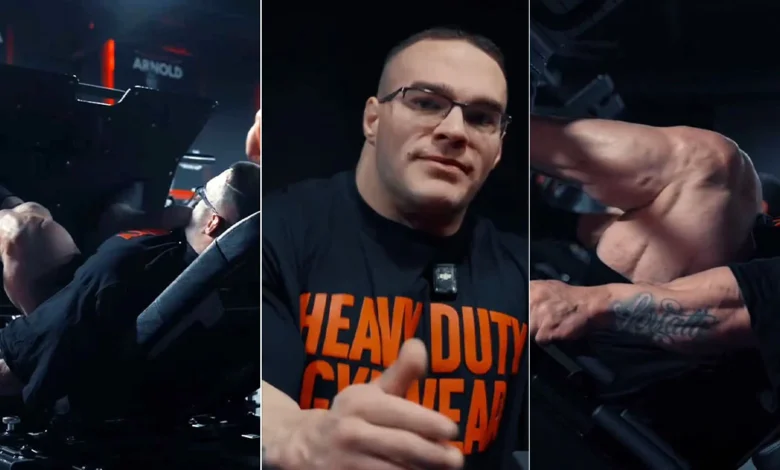
Nick Walker achieved the pinnacle of professional bodybuilding in 2026 by securing his first Sandow trophy at the Mr. Olympia contest, marking a career-defining moment that cemented his status as one of the most formidable athletes in the sport’s history. The victory was the culmination of years of intense physiological experimentation and rigorous training, with Walker—affectionately known as "The Mutant"—consistently pushing the boundaries of muscular hypertrophy. In a recent disclosure to his two million Instagram followers, Walker revealed a core component of his lower-body training regimen: a modified, angled-stance leg press technique that he credits as the primary driver for his significant gains in outer quadriceps sweep.
The Road to the Sandow: A Chronology of Progress
To understand the significance of Walker’s 2026 victory, one must look at the trajectory of his professional career. Emerging as a dominant force in the National Physique Committee (NPC) and subsequently the IFBB Professional League, Walker garnered immediate attention for his freakish muscular density. His journey to the 2026 Olympia title was not linear; it was defined by incremental improvements in symmetry, conditioning, and, most notably, leg development.
Following his notable performances in previous years—including top-tier placements at the 2023 and 2024 Olympia—Walker identified the "outer sweep" of his quadriceps as a specific area for refinement. Critics and judges often pointed to the balance between his massive upper body and his lower extremities as the deciding factor in close contests. By 2025, Walker began heavily documenting his preparation for the Pittsburgh Pro and the Olympia stage, signaling a strategic shift in his training volume and intensity. The 2026 Olympia final proved that these adjustments were not merely aesthetic but structural, as he narrowly edged out perennial contenders Samson Dauda and Derek Lunsford to claim the title.
Biomechanical Analysis of the Angled Stance
The cornerstone of Walker’s lower-body development is his unconventional approach to the leg press. While standard bodybuilding literature often dictates that narrow foot placement is the gold standard for targeting the outer quadriceps, Walker’s anecdotal evidence and subsequent results suggest a departure from conventional dogma.
In his instructional breakdown, Walker demonstrates a stance where his feet are positioned roughly at hip width, but with the toes flared outward, resembling the hands of a clock at the ten-to-two position. By removing his footwear to increase proprioceptive feedback and surface connectivity, Walker creates a stable base that allows for deeper knee flexion.
From a biomechanical perspective, this stance increases the recruitment of the vastus lateralis—the muscle responsible for the "sweep" on the outer thigh. While traditional narrow-stance protocols aim to isolate the muscle through limited range of motion, Walker’s approach leverages the eccentric (negative) portion of the lift. By descending slowly and pausing at the bottom of the movement, he subjects the muscle fibers to maximal tension under stretch, a stimulus often associated with superior hypertrophy.
Addressing the Critics: The Reality of Muscle Recruitment
Professional bodybuilding is frequently subject to scrutiny regarding "optimal" exercise execution. Walker’s technique has faced skepticism from purists who argue that a wide or angled stance inevitably shifts load away from the quadriceps and onto the adductors and hamstrings. Walker, however, addresses these criticisms with a pragmatic philosophy.
"Yes, there will be some hamstring involvement, and yes, there will be some adductor involvement," Walker stated in his recent briefing. "But that is an acceptable trade-off. I am achieving the primary objective, which is to isolate and overload the outer sweep. If secondary muscle groups are recruited to support the load, it does not diminish the effectiveness of the movement for my specific goal."
This perspective aligns with contemporary sports science research, which suggests that complete isolation is rarely achieved in compound movements. Instead, the focus for elite athletes is often on "intentionality"—the ability to mentally focus on the target muscle group while performing a movement that naturally involves multiple joints and muscle systems. For Walker, the trade-off is validated by the objective results: a pair of legs that provided the necessary contrast and mass to win the most prestigious title in the sport.
Data-Driven Hypertrophy and Training Volume
The efficacy of Walker’s training can be contextualized by the volume of his preparation. Throughout his 2026 campaign, Walker maintained a training frequency that balanced heavy mechanical loading with recovery cycles. His use of the leg press as a "bread and butter" exercise implies a high-volume approach, likely incorporating drop sets, rest-pause techniques, or heavy compound loading to ensure progressive overload.
For the average lifter, the implications of Walker’s technique are significant. It highlights the importance of individualized biomechanics. Human anatomy—specifically the structure of the hip joint and the femur—varies significantly between individuals. What constitutes a "correct" stance for one athlete may cause injury or suboptimal engagement for another. Walker’s success serves as a reminder that the best training programs are those that are adapted to the athlete’s unique skeletal structure rather than rigid adherence to generalized manuals.
The Broader Impact on Modern Bodybuilding
The 2026 Mr. Olympia result and the subsequent transparency regarding Walker’s training methods have triggered a broader conversation within the fitness industry about the evolution of bodybuilding protocols. As the sport moves toward an era where athletes are increasingly relying on data-driven feedback and social media-based coaching, the "Mutant" approach offers a bridge between old-school grit and modern physiological analysis.
Furthermore, Walker’s victory underscores the importance of the "outer sweep" in the judging criteria for modern professional bodybuilding. Judges continue to emphasize balanced proportions, and Walker’s ability to manipulate his physique to achieve that balance through specific, intentional training variations has set a new standard for the division.
Expert Perspectives on Leg Development
While Walker remains the primary advocate for his specific leg press stance, conditioning coaches and athletic trainers often note that the "stretch-mediated hypertrophy" he emphasizes is a well-documented phenomenon. By prioritizing the deep eccentric phase of the movement, Walker is maximizing the time under tension for the muscle fibers while they are at their longest length.
Many high-performance coaches argue that this specific technique—when performed with strict control—is safer than explosive, heavy-load training that ignores the negative portion of the rep. By controlling the weight, Walker minimizes the risk of patellar or lower-back strain, which are common issues in heavy leg pressing. The fact that he is able to maintain this intensity at the professional level, even after years of competition, speaks to the sustainability of his chosen methodology.
Conclusion: The Future of Training
As Nick Walker continues his reign as the Mr. Olympia, his influence on training trends is likely to persist. His commitment to publicizing his training secrets provides aspiring bodybuilders with a roadmap for how to experiment, adapt, and refine their own physiques. Whether his angled-stance leg press becomes a staple in every gym or remains a specialized tool for those with similar body structures, the principle remains clear: success in bodybuilding is not found in following a singular, dogmatic path, but in the relentless pursuit of what works for the individual athlete.
In the wake of his 2026 victory, Walker’s "Mutant" brand has become synonymous with a results-oriented approach to training. By embracing criticism and utilizing it as fuel to refine his craft, he has demonstrated that the difference between a contender and a champion often lies in the willingness to think differently about the fundamental movements of the sport. As the bodybuilding community looks toward the next cycle of competition, the legacy of Walker’s 2026 performance will undoubtedly be defined by the technical precision and physiological focus that he brought to the stage. For those seeking to replicate his success, the lesson is clear: find the movement, master the range of motion, and do not be afraid to challenge the status quo.