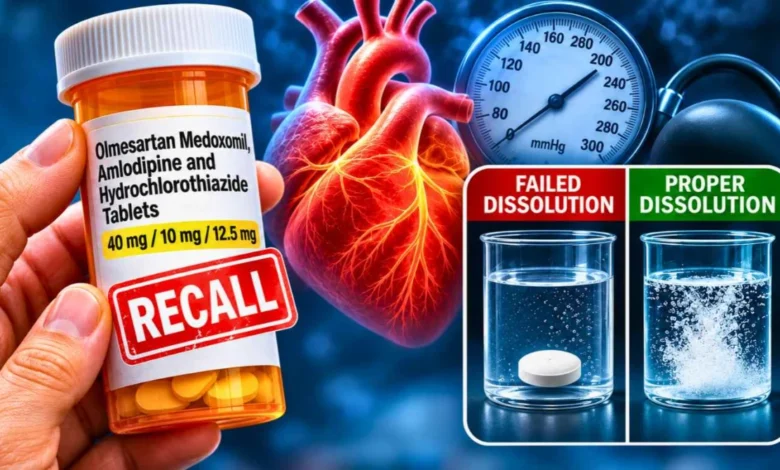
The pharmaceutical landscape in the United States has faced a significant disruption as Macleods Pharma USA initiated a nationwide recall of nearly 3,800 bottles of a critical, multi-drug blood pressure medication. The recall, which officially gained FDA classification on October 26, 2026, centers on a failure in laboratory dissolution testing, a standard quality control process designed to ensure that pharmaceutical products break down and absorb into the bloodstream at the intended, life-sustaining rate.
The product in question is a combination therapy consisting of olmesartan medoxomil, amlodipine, and hydrochlorothiazide—a potent triple-action regimen prescribed to manage hypertension, a condition affecting nearly half of all American adults. For patients who rely on these daily tablets, the news of the recall serves as a sobering reminder of the complexities of global pharmaceutical supply chains and the vital necessity of rigorous quality assurance.
The Scope of the Recall and Identification
The recall, initiated by the New Jersey-based subsidiary of the Indian pharmaceutical giant Macleods Pharmaceuticals, was triggered on October 7, 2026. The specific medication affected is identified as olmesartan medoxomil, amlodipine, and hydrochlorothiazide tablets in the strength of 40 mg/10 mg/12.5 mg.
For consumers currently managing blood pressure, identifying whether their medication is subject to this recall requires careful inspection of the physical packaging. The recall specifically targets two batch sizes: 30-count bottles under NDC 33342-246-07 (Lot number 12251163A) and 90-count bottles under NDC 33342-246-10 (Lot number 12251163B). Both batches carry an expiration date of May 31, 2027.
Patients who utilize mail-order pharmacies or local retail outlets where pills are frequently transferred into generic amber vials are at a higher risk of being unaware of the recall. In such cases, the lot number may not be readily visible on the label. Medical experts advise these individuals to contact their local pharmacist, who retains the master records of dispensed medications and can verify if the lot number provided matches the defective supply.
Understanding Dissolution Failure
To the layperson, the concept of "dissolution testing" may seem like an abstract laboratory requirement, but it is a cornerstone of patient safety. Pharmaceutical dissolution is the process by which a solid drug substance enters into a solution, which is a prerequisite for systemic absorption in the gastrointestinal tract.
When a tablet fails to dissolve correctly, it implies that the active pharmaceutical ingredients (APIs) are not being released at the intended rate. In the case of blood pressure medication, this variability can be hazardous. If the drug dissolves too slowly, the patient may not achieve the necessary plasma concentration to effectively lower their blood pressure, potentially leaving them at risk for hypertension-related complications such as stroke or heart failure. Conversely, if the dissolution is inconsistent, it creates a fluctuating therapeutic window that prevents the steady-state control required for effective cardiovascular management.
The FDA has classified this as a Class II recall. According to federal guidelines, a Class II recall is initiated in situations where use of or exposure to a violative product may cause temporary or medically reversible adverse health consequences, or where the probability of serious adverse health consequences is remote. While the risk of catastrophic failure is low, the potential for uncontrolled hypertension makes the recall a high-priority health concern for those affected.

A Chronology of Recent Pharmaceutical Volatility
The October 2026 action is not an isolated incident but rather part of a broader trend of supply chain and manufacturing scrutiny within the generic drug industry. In September 2026, just weeks prior to the Macleods announcement, India-based Inventia Healthcare conducted a significant recall of over 13,500 bottles of 25 mg chlorthalidone tablets. That recall was also prompted by failure to meet dissolution standards, highlighting a systemic challenge in the manufacturing of cardiovascular generics.
These events contribute to a growing narrative of instability in the generic drug market. Hypertension medications, which are among the most widely prescribed drugs in the world, are often manufactured in facilities across the globe. As supply chains have stretched to meet high global demand, the pressure on quality control departments to maintain consistent performance—especially regarding tablet integrity and shelf-life stability—has intensified.
For the healthcare industry, these successive recalls underscore the need for heightened vigilance. Between the volatility of raw material sourcing and the logistical challenges of international distribution, the window for error has expanded. Health organizations, including the American Heart Association, frequently emphasize that patients should never discontinue blood pressure medication without first consulting their physician, even if their specific lot is subject to a recall. The risk of sudden hypertension—a "rebound" effect—often outweighs the immediate risk posed by the defective tablet, making physician-led transitions to new supplies essential.
Broader Implications for Patient Health
The prevalence of triple-action combination pills reflects the modern medical approach to hypertension, which emphasizes multi-target therapy to minimize the number of pills a patient must ingest daily. By combining an angiotensin II receptor blocker (olmesartan), a calcium channel blocker (amlodipine), and a diuretic (hydrochlorothiazide), physicians can address multiple physiological pathways that regulate blood pressure.
However, the complexity of these formulations makes them more susceptible to manufacturing issues. Because three distinct chemicals must be compressed into a single tablet, the chemistry of the "excipients"—the binders and fillers used in the pill—is delicate. Any deviation in the manufacturing environment, such as temperature, humidity, or compression force, can alter the dissolution profile of the finished product.
The economic implications for patients are also significant. Many patients rely on these generic formulations specifically for their cost-effectiveness. When a recall occurs, the sudden unavailability of a stable, low-cost medication can force patients to switch to more expensive name-brand alternatives or, worse, experience gaps in their treatment regimen due to administrative delays at the pharmacy level.
Official Response and Expert Guidance
As of late 2026, Macleods Pharma USA has maintained a relatively quiet profile regarding the recall, having not issued a broad press release for consumers. This lack of direct communication places the burden of notification on pharmacists and healthcare providers.
Experts in pharmacovigilance suggest that the current system of recall notification is often fragmented. While the FDA publishes these notices on its enforcement portal, the bridge between the federal regulator and the end-user remains the local pharmacy. Patients are urged to take the following proactive steps:
- Verification: Physically examine the medication bottle for the specific NDC and lot numbers mentioned.
- Consultation: If a match is found, do not throw the medication away immediately. Contact the pharmacist to confirm the lot number and receive instructions on how to return the product and obtain a safe replacement.
- Monitoring: For those who have been taking the affected medication, monitoring blood pressure levels at home is advised. If a patient experiences symptoms such as headaches, dizziness, or blurred vision—common signs of elevated blood pressure—they should seek medical attention immediately.
- Consistency: Ensure that the new, replacement medication is obtained through an authorized, reputable pharmacy to avoid potential supply chain issues.
Conclusion
The recall of nearly 3,800 bottles of blood pressure medication serves as a critical reminder of the importance of pharmaceutical oversight. In an era where healthcare is increasingly reliant on complex, mass-produced generic medications, the stability and quality of these products remain the bedrock of public health. While the FDA’s Class II classification indicates that the risk of harm is relatively low, the necessity for patients to remain informed and proactive cannot be overstated. As the investigation into the manufacturing processes at the affected facilities continues, the broader medical community remains focused on ensuring that the global supply of essential hypertension medications returns to a standard of absolute reliability. Patients are encouraged to remain in close contact with their healthcare providers to navigate these changes and ensure their cardiovascular health remains stable and protected.
Related posts: