Atrial fibrillation, commonly known as Afib, stands as the most prevalent clinical arrhythmia worldwide, characterized by an irregular and often rapid heart rate that disrupts the normal pumping of blood. Millions of individuals globally are affected by this condition, which poses a severe public health challenge due to its association with a significant burden of morbidity and mortality. Patients diagnosed with atrial fibrillation face heightened risks of severe cardiovascular complications, including ischemic strokes, heart attacks, and progressive heart failure. As the medical community continuously seeks effective interventions to manage and prevent this escalating health crisis, mounting clinical research points toward a powerful, lifestyle-driven solution: targeted nutritional therapy centered on whole-food, plant-based diets.
The Hidden Dangers of Low-Carbohydrate Diets
Recent epidemiological and clinical investigations have provided critical insights into dietary patterns that may actively promote the onset of cardiac arrhythmias. Notably, low-carbohydrate diets—frequently popularized for rapid weight loss and metabolic management—have been closely linked to an increased risk of developing atrial fibrillation. This counterintuitive finding stems from several physiological mechanisms.
First, individuals adhering strictly to low-carbohydrate regimens frequently restrict their intake of essential protective plant foods, such as fresh vegetables, whole fruits, and whole grains. These food groups are rich in vital anti-inflammatory compounds and antioxidants that protect cardiovascular tissue. Reducing the consumption of these nutritional elements removes a vital layer of cardiac protection.

Second, low-carbohydrate diets inherently shift macronutrient consumption toward higher proportions of dietary protein and animal fats. This nutritional shift can trigger systemic oxidative stress, characterized by an overproduction of reactive oxygen species and free radicals. Oxidative stress is known to damage endothelial function and myocardial tissue, thereby establishing a physiological environment conducive to arrhythmias.
Finally, low-carbohydrate eating patterns have been associated with a broader elevation in overall mortality rates, including heightened risks of death specifically attributed to cardiovascular diseases and various malignancies. Because traditional risk factors for heart disease serve as direct precursors to atrial fibrillation, adopting a diet that exacerbates cardiovascular risk ultimately increases vulnerability to irregular heart rhythms.
Unpacking the Trigger Foods: Alcohol and Dark Fish
While the exclusion of beneficial plant foods creates nutritional vulnerabilities, certain specific dietary components have been directly implicated in triggering or worsening atrial arrhythmias. Medical data underscores the necessity of monitoring both alcohol consumption and the intake of specific types of seafood.
Alcohol consumption remains a well-established independent risk factor for cardiac arrhythmias, often referred to colloquially as "holiday heart syndrome." Even moderate alcohol intake—estimated at as little as one standard drink per day—correlates with an incremental increase in the relative risk of developing atrial fibrillation by approximately eight percent. The exact electrophysiological mechanisms remain under investigation, but alcohol’s direct toxic effects on myocardial cells, alterations in autonomic tone, and promotion of atrial remodeling are primary suspects. Conversely, popular stimulants like coffee and caffeine have generally not been shown to increase the long-term risk of arrhythmia in the broader population, providing reassurance to coffee drinkers without underlying sensitivities.
More surprisingly, findings from long-term epidemiological investigations such as the Framingham Heart Study have highlighted potential risks associated with the frequent consumption of "dark fish." Researchers classified dark fish varieties as salmon, mackerel, swordfish, bluefish, and sardines. An exploratory analysis of the cohort revealed that participants who consumed more than four servings of dark fish per week exhibited a significantly elevated risk of developing atrial fibrillation compared to non-consumers, whereas consumption of fish in general showed no adverse correlation. While omega-3 fatty acids are traditionally praised for certain cardiovascular metrics, these specific findings suggest that high intakes of dark fish may carry unforeseen electrophysiological consequences that warrant further clinical scrutiny.
The Power of Plant-Based Nutrition in Risk Factor Management
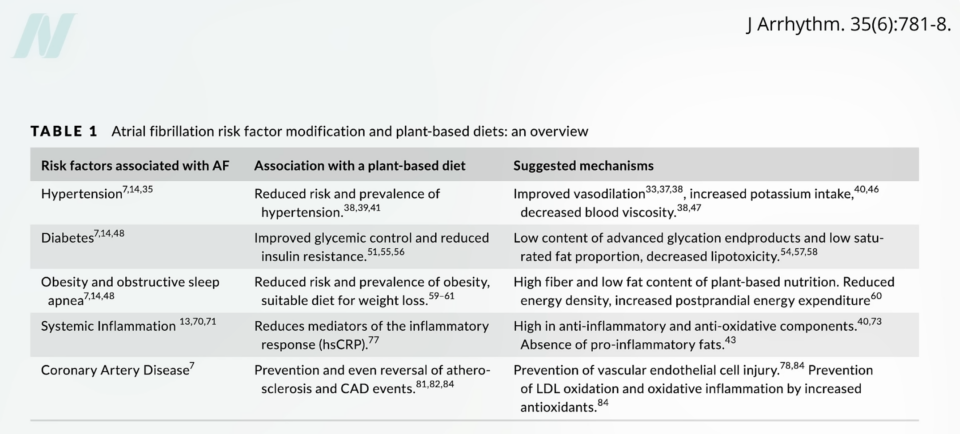
The true therapeutic strength of a whole-food, plant-based diet lies in its profound ability to prevent, arrest, and reverse the primary underlying risk factors that drive atrial fibrillation. Epidemiological and clinical data indicate that high blood pressure, type 2 diabetes mellitus, obesity, thyroid dysfunction, and systemic inflammation account for the vast majority of all new atrial fibrillation cases.
Hypertension alone accounts for roughly one-fifth of all new diagnoses of atrial fibrillation. Plant-based diets directly target high blood pressure by enhancing endothelial-dependent vasodilation—the natural capacity of arteries to expand and contract smoothly—while supplying high levels of dietary potassium, lowering blood viscosity, and delivering potent anti-inflammatory and antioxidant agents.
Furthermore, clinical data demonstrates a strong inverse relationship between animal product consumption and hyperthyroidism, a known contributor to arrhythmias. Studies indicate that individuals following strictly plant-based diets experience roughly half the prevalence of hyperthyroidism compared to regular meat consumers, with vegetarian and pescatarian diets offering intermediate levels of protection.
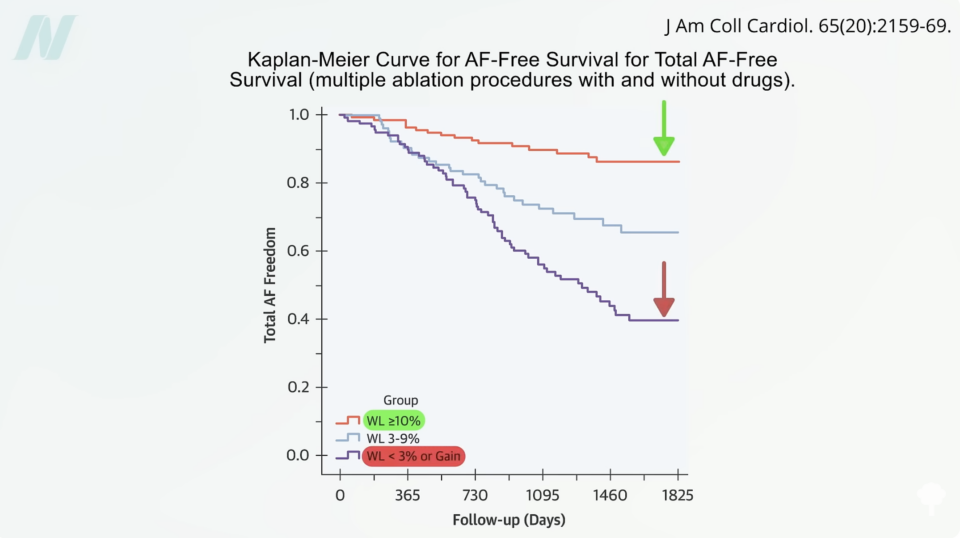
Obesity represents another major catalyst, responsible for another substantial portion of atrial fibrillation diagnoses. However, clinical weight management trials have shown that sustained weight loss yields dramatic improvements in arrhythmia burden. Research tracking overweight and obese patients with atrial fibrillation demonstrated that individuals who successfully lost 10 percent or more of their body weight experienced a profound reduction in arrhythmia recurrence, leaving them with only a 10 percent probability of persistent atrial fibrillation five years later. In stark contrast, individuals who lost minimal weight or gained weight faced a 60 percent likelihood of ongoing cardiac irregularity. By facilitating natural, sustainable weight loss, whole-food plant-based nutrition addresses this critical mechanical and metabolic burden.
A Clinical Case Study: Reversing Advanced Cardiovascular Disease
To evaluate the true curative potential of dietary intervention in advanced cardiac disease, researchers have examined detailed clinical case reports involving patients with severe, multi-faceted cardiovascular pathology. One notable published case involves an 82-year-old male patient presenting with polypharmacy—relying on a complex regimen of multiple pharmaceuticals due to advanced coronary artery disease, a history of myocardial infarction, ischemic cardiomyopathy, hyperlipidemia, hypertension, and persistent atrial fibrillation. The patient suffered from debilitating cognitive impairment, chronic fatigue, lightheadedness, and physical weakness.
Recognizing that conventional pharmaceutical management merely masked symptoms without resolving the root cause of his declining health, the patient elected to overhaul his lifestyle. Under clinical observation, he transitioned to an unrefined, whole-food, plant-based diet coupled with moderate physical activity.
The physiological response was rapid and profound. Within three months of adopting the dietary protocol, the patient’s low-density lipoprotein (LDL) cholesterol plummeted by 37 percent, dropping from 115 mg/dL to 72 mg/dL. As his metabolic markers improved under medical supervision, his attending physicians progressively discontinued his antihypertensive medications, statins, and beta-blockers. Despite the cessation of pharmacological therapy, his blood pressure remained completely normalized and his serum lipid profile remained optimal.
Most remarkably, the patient’s persistent atrial fibrillation completely resolved. His secondary symptoms of ischemic cardiomyopathy and cognitive decline—including brain fog, fatigue, and muscular weakness—also reversed entirely. In retrospective accounts, the patient reported regaining the physical vitality to lift weights and walk or run on a treadmill for an hour daily. Free from the neurological side effects of polypharmacy, he described waking up with mental clarity and physical endurance that he had not experienced in years.
Implications and Broader Medical Perspectives
The convergence of epidemiological data, risk-factor modification trials, and clinical case evidence highlights a paradigm shift in cardiology. While surgical ablations, rate-control medications, and anticoagulants remain indispensable tools for acute stabilization and stroke prevention in atrial fibrillation patients, they do not address the systemic nutritional and metabolic drivers of the disease.
Medical analysts emphasize that dietary modifications must be elevated to a primary pillar of cardiovascular care. By systematically eliminating pro-inflammatory animal products, added oils, refined sugars, and excessive alcohol, while maximizing the intake of nutrient-dense vegetables, fruits, whole grains, and legumes, patients possess a powerful therapeutic instrument. As clinical research continues to illuminate the profound connection between nutrition and cardiac electrophysiology, lifestyle medicine offers renewed hope for patients seeking not merely to manage their symptoms, but to fundamentally reclaim their cardiovascular health.