Study of 57,793 Adults in 24 Countries Links Varied Social Activity to Better Cognitive Scores

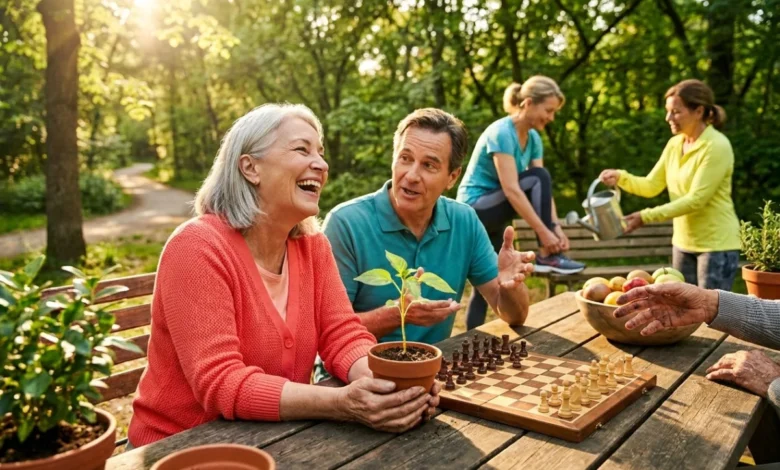
A massive, multi-national investigation involving 57,793 adults across 24 countries has provided compelling new evidence suggesting that diverse social engagement serves as a significant protective factor against cognitive decline. The study, which tracked participants over a median period of six years, represents one of the most comprehensive efforts to date to quantify the relationship between lifestyle habits and the preservation of memory and executive function as the global population ages.
The research arrives at a critical juncture in public health. As the prevalence of neurodegenerative conditions such as Alzheimer’s disease and other forms of dementia continues to rise, the global medical community has shifted its focus from purely pharmacological interventions toward lifestyle-based preventative measures. According to a 2026 report by the Alzheimer’s Association, there is a stark disconnect between public perception and actionable knowledge: while nearly 90% of American adults prioritize brain health, only 9% report having a clear understanding of the evidence-based strategies required to maintain it.
Methodology and Scope of the Investigation
The study utilized a longitudinal design, requiring participants to report their engagement in various structured social activities—including volunteering, participation in sports clubs, and enrollment in educational classes—at regular intervals. Researchers assessed cognitive performance using standardized testing modules that measured memory, attention, and executive function.
The median follow-up period of six years allowed researchers to observe the trajectory of cognitive scores over time rather than relying on a single snapshot of performance. However, the study’s authors were quick to acknowledge the inherent methodological complexities of long-term aging research. Observational studies of this scale are subject to "attrition bias," a phenomenon where the healthiest or most engaged participants remain in the study, while those whose cognitive function declines most rapidly are more likely to drop out due to illness, relocation, or an inability to complete testing requirements. Despite these limitations, the sheer scale of the cohort and the geographic diversity of the participants provide a robust dataset that reinforces the growing consensus regarding the "use it or lose it" hypothesis of cognitive health.
The Role of Social Complexity and Cognitive Reserve
Central to the researchers’ findings is the concept of "cognitive reserve." This term refers to the brain’s ability to improvise and find alternate pathways to complete tasks, even when its primary neural structures are compromised by age-related changes or pathology. Unlike brain size, which remains relatively static in adulthood, cognitive reserve is dynamic.
Imaging studies cited in the accompanying research suggest that individuals with higher levels of cognitive reserve often exhibit more efficient neural networking. Scans indicate that these individuals can achieve the same cognitive outputs as their peers while utilizing less metabolic energy, or conversely, that their brains can work harder to compensate for specific deficits. This efficiency is closely linked to neuroplasticity—the brain’s inherent capacity to form new synaptic connections and reorganize existing functional pathways when challenged by new information or novel social environments.
By participating in sports or volunteering, individuals are not merely engaging in physical or altruistic tasks; they are subjecting their brains to complex, multi-dimensional stimuli that require emotional intelligence, motor coordination, and rapid decision-making. These experiences, the researchers suggest, provide the necessary friction to stimulate neural growth, effectively acting as a "mental workout" that bolsters the brain’s resilience against the onset of cognitive impairment.
Comparative Analysis: Volunteering and Sports Clubs
The data revealed that while all social engagement was generally positive, two categories of activity yielded the most consistent results across all 24 participating countries: volunteering and organized sports club participation.
The success of these two activities may lie in their structured, recurring nature. Volunteering often requires a commitment to a specific role, regular interaction with diverse groups of people, and the navigation of complex organizational tasks. Sports clubs, meanwhile, integrate physical activity—which is already established as a primary driver of cardiovascular health—with the social demands of team dynamics and rule-based competition.
This finding aligns with previous smaller-scale studies. One notable study of adults over the age of 65 found that regular attendance at a "gentle" community group—such as a book club or a social gathering—correlated with lower cognitive risk, particularly among those who were not otherwise physically active. This suggests that social engagement can serve as a primary intervention for populations that may struggle to meet the strict physical exercise guidelines recommended for cardiovascular health.
The Limits of Causation and Observational Data
While the correlation between social activity and cognitive maintenance is strong, researchers cautioned against interpreting these findings as a direct causal link. The study is observational, meaning it tracks existing habits rather than testing the impact of mandated activity. Consequently, it remains difficult to disentangle whether social activity prevents cognitive decline, or whether individuals who are already experiencing early-stage cognitive decline are simply less likely to participate in such activities.
Furthermore, the study did not isolate the "dose" required for optimal results. There is no evidence to suggest that a packed, high-stress calendar is superior to a moderate, enjoyable routine. In fact, the report emphasizes that the primary goal should be sustainability. The most effective activities are those that a person finds inherently rewarding and can integrate into their lifestyle over the long term.
Medical experts note that the traditional view of aging—which once held that intellectual capacity inevitably and linearly declines after a certain age—has been debunked by more nuanced longitudinal data. We now understand that different types of intelligence, such as crystallized knowledge and fluid reasoning, change in different ways, and that individual outcomes vary wildly based on lifestyle, environment, and health management.
Broader Implications for Public Health
The implications of this study are significant for healthcare policy and geriatric medicine. As the global population shifts toward a higher median age, social isolation has emerged as a major public health crisis. Loneliness is increasingly linked to depression, cardiovascular disease, and premature mortality, and this new data suggests that the cognitive cost of social withdrawal is equally high.
Public health initiatives should focus on creating "social infrastructure"—environments that facilitate low-barrier access to sports, volunteering, and educational opportunities for older adults. By framing these activities as "cognitive medicine," policymakers can encourage better participation rates and promote a more holistic approach to healthy aging.
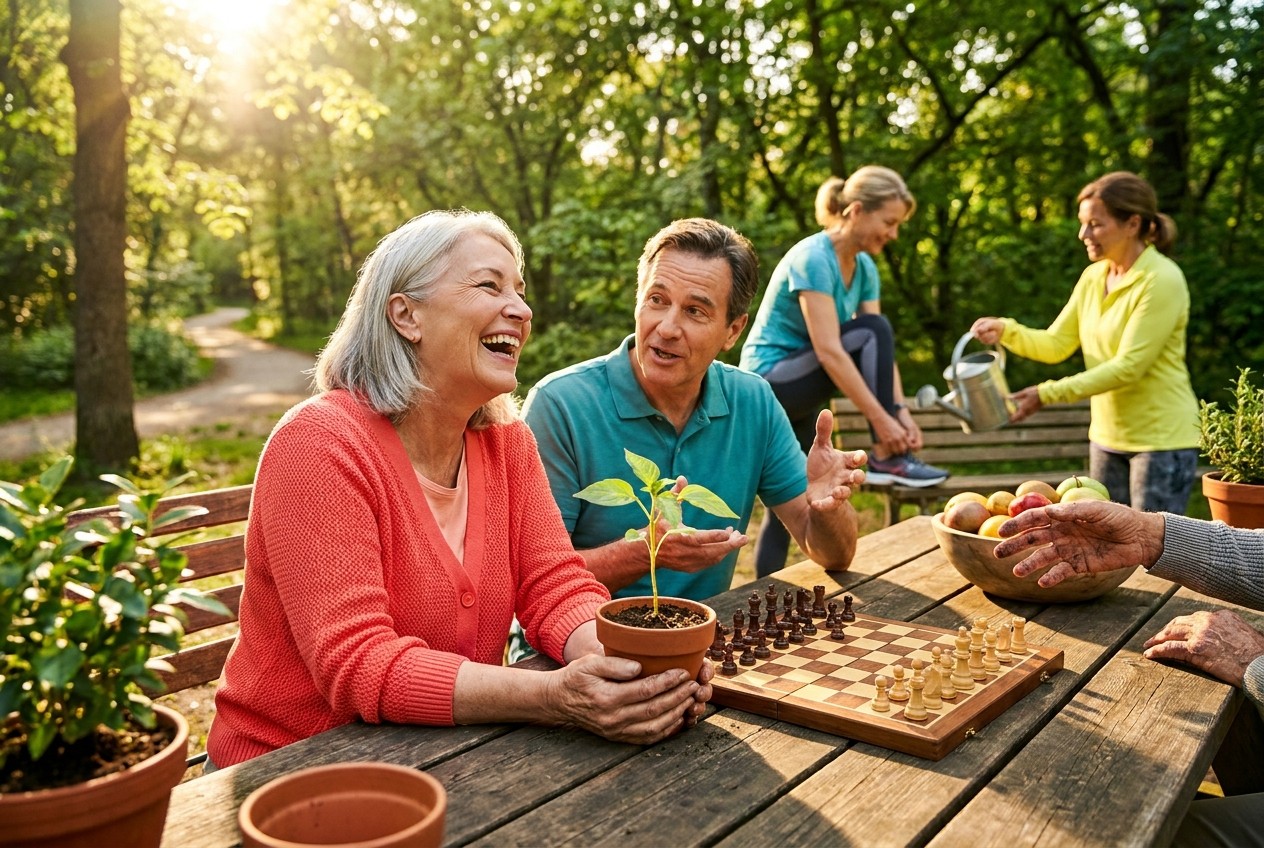
For individuals, the takeaway is one of empowerment rather than prescription. The findings suggest that the path to better cognitive aging does not necessarily require rigorous training regimens or expensive interventions. Instead, it involves reclaiming the social connections that define human life. Whether through mentoring, participating in a local gardening club, or joining a recreational sports league, the integration of consistent, varied, and enjoyable social interaction appears to be a potent tool in preserving the mind.
Future Research Directions
While the current study provides a landmark contribution to the field, it also opens the door to several unresolved questions. Future research is expected to focus on the biological mechanisms that connect social interaction to brain health. Scientists are currently exploring how social stimuli might influence neuroinflammation, hormone regulation, and the expression of genes associated with neural repair.
Additionally, as digital connectivity becomes more common, researchers are beginning to investigate whether online social interaction offers the same cognitive benefits as face-to-face engagement. Preliminary evidence suggests that the nuance, unpredictability, and sensory complexity of in-person interactions may be superior for maintaining brain health, but more rigorous testing is required to verify these hypotheses.
As the scientific community continues to peel back the layers of cognitive aging, the message remains clear: the brain is not a static organ, but a dynamic, plastic system that thrives on engagement. By fostering communities that encourage active, social, and varied lifestyles, society can provide the foundational support necessary for individuals to maintain their cognitive integrity well into their later years.
This study serves as a critical reminder that while genetics and biology play a role in health, the environment and the choices we make every day remain the most powerful variables in determining how we age. The challenge moving forward will be to translate these findings into accessible, culturally relevant programs that bridge the gap between knowing what is good for our brains and actually doing it.