The Sacred Mechanics of the Os Sacrum: Anatomy, Esoteric History, and Practical Applications in Hatha Yoga


Originally published in the November–December 1993 edition of Yoga Journal as part of its ongoing historical archive series, foundational anatomical explorations continue to inform modern movement modalities. The Latin root sacer translates dually to "holy" and "cursed," giving rise to English derivatives such as "sacred" and "sacrifice." Anatomically, this designation is permanently etched into the os sacrum, or "holy bone"—a distinct triangular structure situated at the base of the spine and the posterior anchor of the pelvis. Historical nomenclature suggests the bone was once believed to be indestructible, functioning as the metaphorical seat of bodily resurrection. Beyond its classical etymology, the sacrum bridges the gap between modern clinical kinesiology and the esoteric anatomy of traditional hatha yoga, where it serves as the physical anchor for the root chakra and the ascending currents of the spine.
Historical Context and Evolution of Sacral Awareness
The intersection of physical anatomy and subtle energy systems dates back centuries within classical yogic traditions. Early practitioners viewed the human body as a microcosmic replica of the broader cosmos, mapping internal structures to external universal forces. In this framework, the inferior tip of the sacrum marks the locus of the muladhara, or root chakra, symbolically depicted as a four-petalled lotus housing the dormant spiritual energy of Kundalini.

Historically, Western medical science approached the pelvis strictly as a biomechanical conduit for weight distribution and locomotion, while Eastern traditions integrated these mechanical functions with energetic pathways known as nadis. Over the past three decades, movement educators and physical therapists have increasingly validated the bridge between these systems. Chronic lower back pain, pelvic obliquity, and postural misalignments are frequently traced back to dysfunction or a lack of proprioceptive awareness in the sacral region. Consequently, modern curricula in therapeutic yoga and clinical biomechanics have integrated sacral-centric movement protocols to rehabilitate spinal health.
Chronology of Sacral Integration in Asana Practice
The systematic integration of sacral mechanics into postural practice has evolved significantly since the early 1990s, shifting from esoteric theory to evidence-based somatic education.
- 1975–1985: Early Western introductions to hatha yoga largely emphasized gross-motor alignment of the limbs, frequently overlooking pelvic base stability and often exacerbating lower back strain through improper tucking or anterior pelvic tilting.
- 1993: Publication of seminal instructional frameworks on sacrum mechanics in mainstream movement literature, establishing preliminary guidelines for widening and lengthening the sacrum across neutral, forward-bending, and twisting asanas.
- 2000s–2010s: The rise of evidence-based yoga therapy and physical therapy integrations. Specialists began utilizing real-time ultrasound and gait analysis to demonstrate how sacral nutation (the nodding movement of the sacrum relative to the iliac bones) directly impacts spinal load distribution.
- Present Day: Contemporary biomechanics recognizes the sacroiliac joint as a dynamic, mobile structure rather than a fixed joint, heavily influencing modern teacher training programs, athletic conditioning, and clinical rehabilitation protocols.
Anatomical Structure and Primary Biomechanical Functions
Understanding the sacrum requires mapping its distinct architecture. Broad across its superior base, the bone articulates with the fifth lumbar vertebra, acting as a foundational pedestal for the flexible column of the spine. It tapers inferiorly to the apex, which connects to the vestigial tailbone, or coccyx.
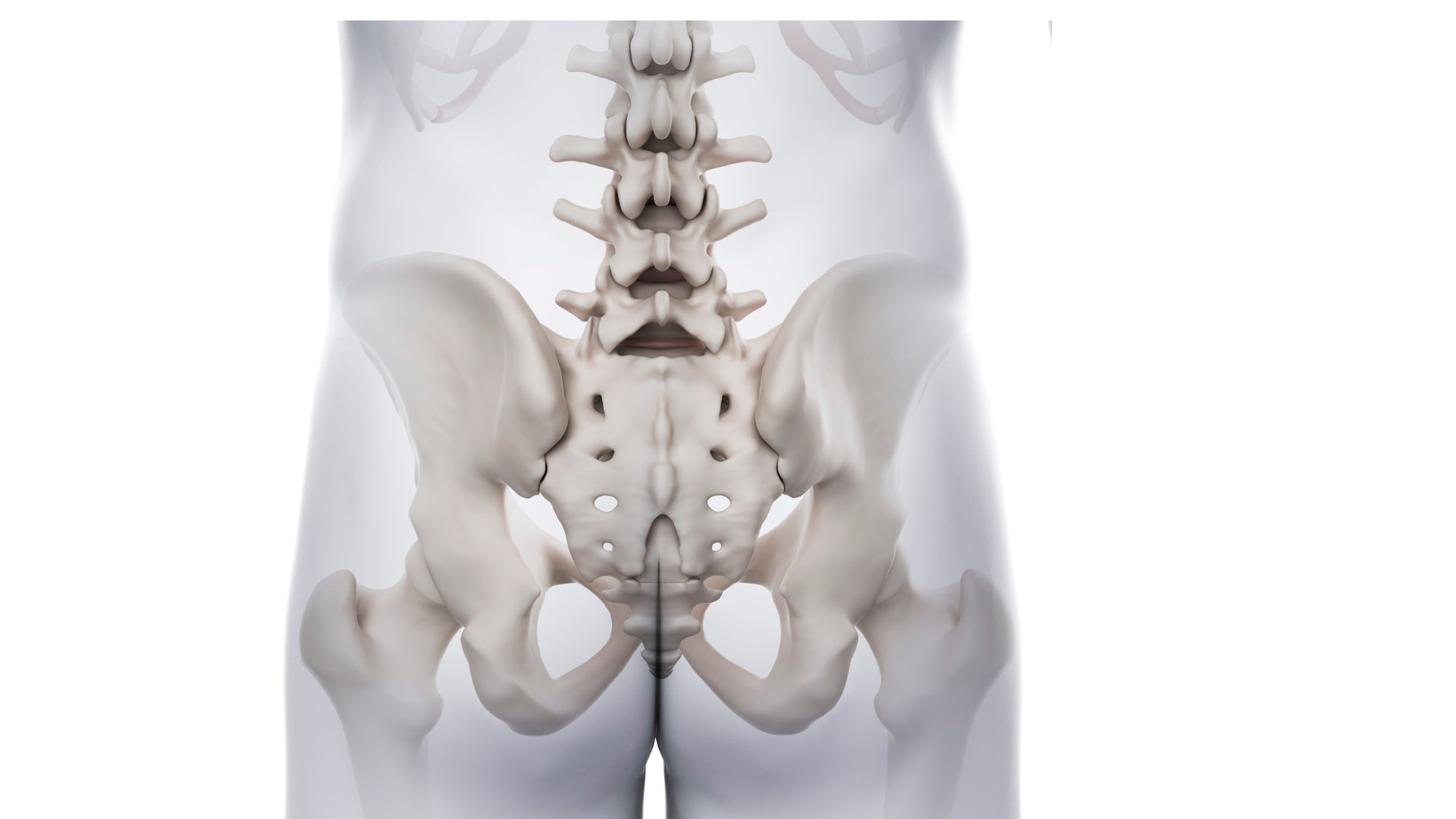
From a physiological perspective, the sacrum serves two critical mechanical functions: rooting the axial skeleton and supporting compressive loads. The spine—frequently styled in yogic lore as the "staff of Meru" or axis mundi—relies entirely on the stability of the sacral platform.
- Load Transmission: The sacrum receives the downward axial forces generated by the trunk, shoulders, and head via the lumbar spine. It then transfers these forces laterally through the sacroiliac joints into the pelvic girdle and lower extremities, ultimately grounding them into the earth.
- Reciprocal Grounding: Concurrently, it processes the upward ground reaction force from the lower limbs, stabilizing the kinetic chain.
When the sacrum is properly aligned, these opposing forces course smoothly through the vertebral column, fostering what classical texts term samatva (evenness or equanimity). Conversely, structural misalignments—such as unmitigated anterior or posterior pelvic tilts—shift mechanical loads onto vulnerable neighboring vertebrae, leading to chronic strain, fatigue, and potential injury.
Practical Exercises for Cultivating Sacral Awareness
To restore functional mobility and alleviate lumbar compression, practitioners utilize specific somatic exercises designed to heighten proprioception in the pelvic basin. These movements focus on three primary directional planes: neutral alignment, forward bending, and spinal rotation.
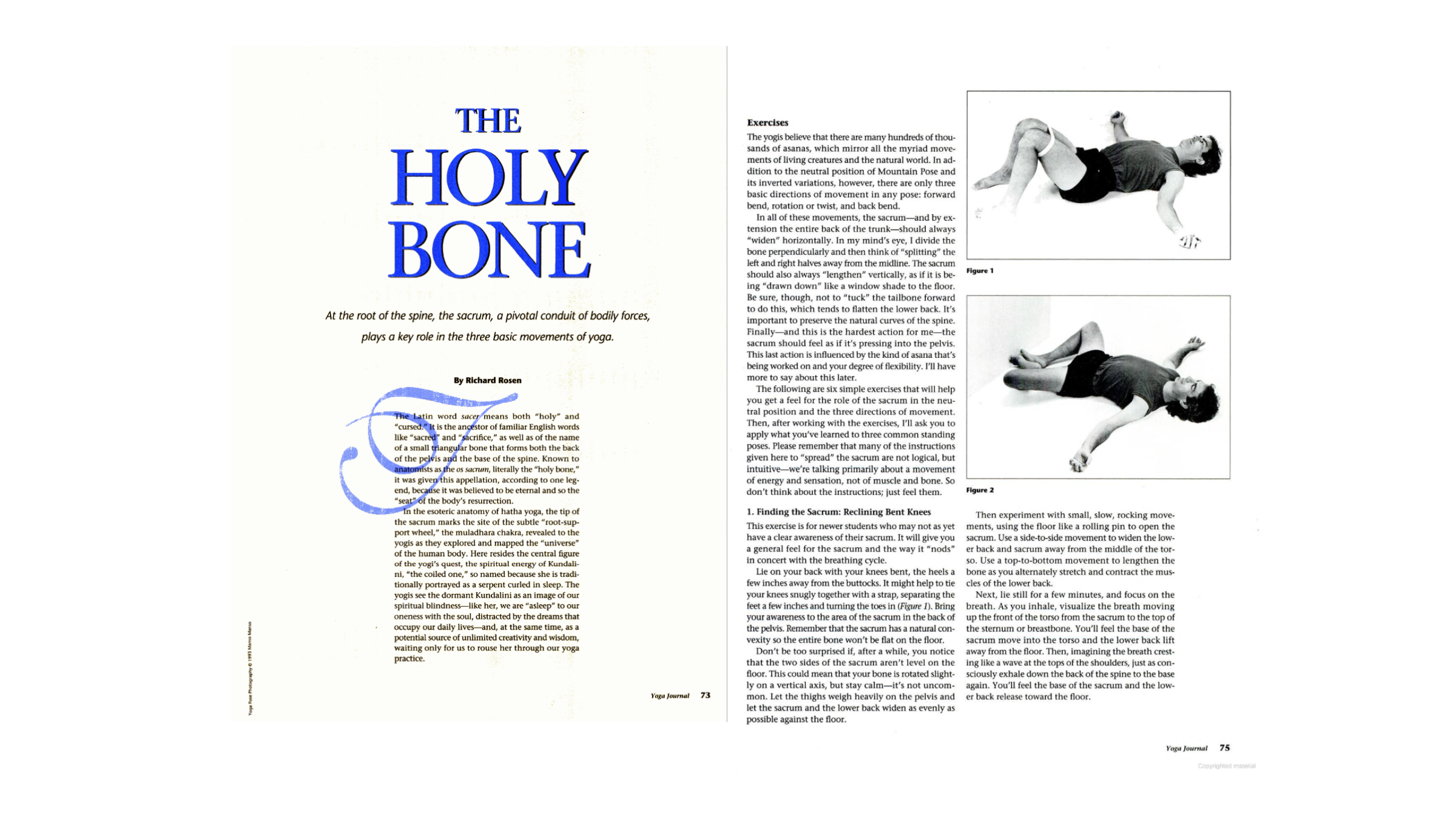
1. Reclining Bent Knees (Neutral Awareness)
- Execution: Lie supine with knees bent and feet positioned a few inches from the buttocks. To stabilize the positioning, a strap may be placed snugly around the thighs with toes turned slightly inward.
- Focus: Bring conscious awareness to the natural convexity of the sacrum against the floor. Perform slow, minute rocking motions—side-to-side to widen the lower back, and top-to-bottom to lengthen the bone. Pair these movements with diaphragmatic breathing to observe the natural nodding action of the sacrum.
2. Reclining Bound Angle (Pelvic Stability)
- Execution: Assume Supta Baddha Konasana near a wall, pressing the soles of the feet together while sliding the pelvis inward. Support the outer thighs with blocks or blankets if groin tension is present.
- Focus: Broaden the sacrum flat against the floor while maintaining a soft, unstrained lower belly. Cultivate the energetic sensation of the inner thighs descending toward the floor while the sacrum lifts internally, establishing strength without muscular tension.
3. Sitting Crossed Legs (Forward Bend Preparation)
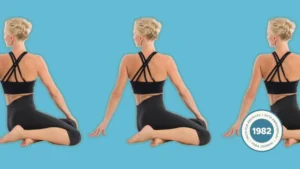
- Execution: Sit in a comfortable cross-legged position or Gomukhasana variation, utilizing a folded blanket under the sitting bones if pelvic elevation is required.
- Focus: Place the palms on the upper buttocks with fingers pointing downward. Gently draw the flesh of the buttocks away from the sacrum to create a horizontal stretch across the back of the pelvis, preserving the natural lumbar curve while avoiding excessive spinal rounding.
4. Reclining Twist (Spinal Rotation)
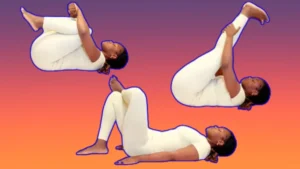
- Execution: Lie supine, draw the knees toward the chest, and roll completely to one side while keeping the knees elevated. Support the legs with adequate height if spinal strain occurs.
- Focus: Trace the line of the lumbar vertebrae down to the sacrum, manually encouraging a smooth concavity in the lower back. Initiate the twist from the root of the spine rather than mid-back forcing, allowing the rotation to spiral upward naturally.
5. Reclining Half Hero (Lunge Preparation)
- Execution: Transition from Dandasana into a modified half-hero position by drawing one leg back, ensuring proper spacing between the heel and hip. Prop the knee or thigh with supportive props as needed.
- Focus: Lengthen the apex of the sacrum toward the heel while widening the base, gently stretching the quadriceps and psoas without compressing the lower spine.
6. Low Lunge (Backbend Integration)
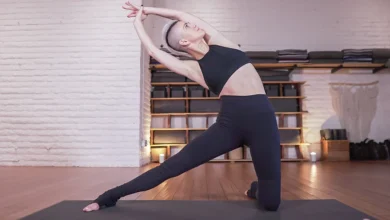
- Execution: Position one foot forward with the knee stacked over the ankle against a wall, dropping the opposing knee to the floor with padding.
- Focus: Slide the rear knee backward incrementally to open the front hip. Emphasize lengthening the sacrum by drawing the apex toward the floor and keeping the front ribs integrated into the body, avoiding excessive hyperextension in the lumbar spine.
Analytical Implications for Modern Movement and Therapy
The enduring relevance of sacral-focused mechanics highlights a significant shift in contemporary wellness culture. By moving away from purely aesthetic alignment toward functional, somatic awareness, practitioners across disciplines—including physical therapy, chiropractic care, and specialized movement coaching—report measurable improvements in patient outcomes regarding chronic low back pain.
Analysis of clinical data indicates that integrating pelvic stability exercises reduces compensatory movement patterns in the lumbar spine. When individuals learn to isolate sacral movement from gross spinal motion, force distribution across the sacroiliac joint improves significantly. This functional literacy ultimately redefines the standard for injury prevention, proving that ancient empirical observations regarding the body’s structural center continue to align with modern physiological science.