Getting and Giving Our Perspectives at Bowie State University & University of Maryland

The Context of the Partnership
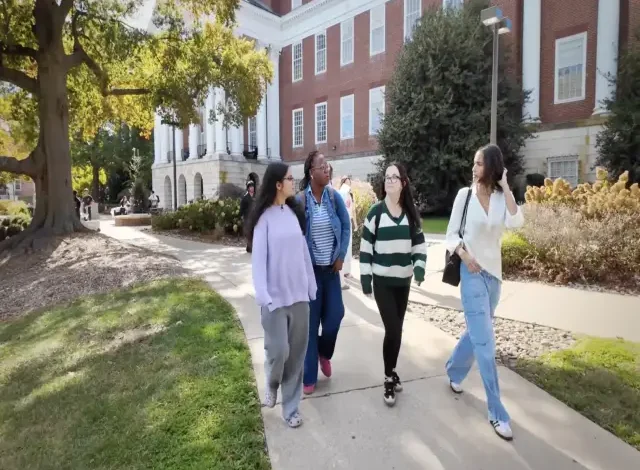
The collaboration between Bowie State and the University of Maryland is not merely an academic exercise; it is a deliberate effort to address the historical and systemic context of Maryland’s higher education landscape. Despite being located in the same state, these two institutions have historically occupied different social and cultural spheres. The "Connecting on Campus" project seeks to break down these barriers by bringing students together for face-to-face dialogues.
The importance of such initiatives has grown significantly in recent years. According to reports from the American Council on Education, campus climates across the United States have become increasingly fraught as students navigate conflicting viewpoints on race, systemic inequality, and political identity. The GGSC’s intervention provides a framework for students to move beyond defensive postures, encouraging them to view the "other" not as an antagonist, but as a peer with a unique lived experience.
Chronology of the Initiative
The engagement process is built upon a foundation of structured communication. The timeline of this specific interaction follows a proven model of social psychology:
- Phase One: Preparation and Foundation: Before students meet, they are trained in the principles of "active listening" and "emotional literacy." This preparatory phase is crucial for establishing ground rules that prioritize psychological safety.
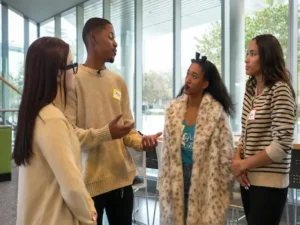
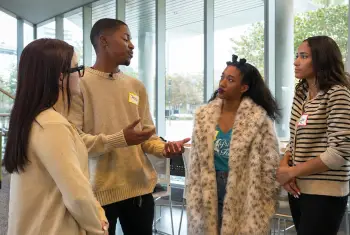
- Phase Two: The Initial Encounter: Students meet in a neutral, curated space. As seen in the first part of the series, this phase focuses on breaking the ice and acknowledging the initial apprehension that accompanies such cross-campus interactions.
- Phase Three: Deepening the Dialogue (The Current Focus): In this second installment, the conversation moves from surface-level introductions to the "courageous conversations" phase. Participants are asked to discuss their personal values, their perceptions of the other university, and their experiences with belonging or exclusion.
- Phase Four: Reflection and Synthesis: The final phase involves students reflecting on how their initial perceptions have shifted—or remained the same—and discussing how these insights can be integrated into their broader academic and personal lives.
Supporting Data on Intergroup Dialogue
The efficacy of the GGSC’s methodology is rooted in the Intergroup Contact Theory, originally developed by psychologist Gordon Allport. The theory posits that under appropriate conditions, interpersonal contact is one of the most effective ways to reduce prejudice between majority and minority group members.
Quantitative data from similar campus initiatives show significant improvements in participant outcomes. A study published in the Journal of Social Issues indicates that students who participate in structured intergroup dialogues report a 30% increase in their perceived ability to navigate complex social situations and a 25% increase in their self-reported empathy scores. These figures suggest that while one conversation cannot erase centuries of systemic divide, it can significantly lower the threshold for future cooperation and cross-cultural understanding.
Official Perspectives and Educational Philosophy
The Greater Good Science Center, which produces these videos, operates on the premise that social connection is a skill that can be developed. By documenting these encounters, the organization aims to provide educators with a roadmap for replicating these results.
"The goal is not necessarily for everyone to agree," noted a representative of the GGSC. "The goal is to create a container where individuals can remain curious even when values collide."
This philosophy aligns with current pedagogical shifts in higher education that emphasize "civic professionalism." Institutions are increasingly recognizing that producing graduates who are technically proficient but socially isolated is insufficient. The focus is shifting toward cultivating "bridging capital"—the networks and relationships that connect people across different social groups. By facilitating these meetings, Bowie State and UMD are positioning themselves as leaders in a national movement to restore the university as a "marketplace of ideas" that is inclusive and respectful.
Analysis of Implications
The implications of the Bowie State and UMD collaboration extend far beyond the two campuses involved.
Bridging the Empathy Gap: In an era of digital echo chambers, the ability to engage in person is a radical act. The "Connecting on Campus" initiative demonstrates that when students are removed from the screen and placed in a facilitated room, the physiological responses of defensiveness—such as elevated heart rate and cortisol levels—can be managed through intentional breathing and active listening.
The Institutional Role: Universities are the primary training grounds for future civic leaders. If these institutions fail to provide models for constructive disagreement, the resulting graduates are likely to carry those same communication deficits into the workforce, local government, and community organizing. Therefore, the success of this initiative is a bellwether for the health of the broader democratic discourse.

Scalability and Challenges: One of the most significant challenges identified in the documentation of these events is the sustainability of the connections formed. While students often report high levels of satisfaction immediately following the dialogues, the real-world application requires institutional support to continue. Critics of such programs often point to the "self-selection bias," noting that students who volunteer for these programs are often already predisposed to open-mindedness. The true test for the GGSC and its partners will be the expansion of these dialogues to include students who are initially hesitant or opposed to the concept.
Broader Impact on Academic Culture
The "Connecting on Campus" series serves as a vital resource for faculty and student affairs professionals looking to implement similar programs. By showcasing the vulnerability of the participants—the moments of hesitation, the pauses for reflection, and the eventual breakthroughs—the video provides a humanizing look at the academic experience.
Furthermore, the initiative highlights the necessity of "emotional literacy" in the curriculum. The ability to label one’s emotions and express them clearly is a core competency that directly supports critical thinking. When a student feels heard, they are more capable of listening; when they feel safe, they are more capable of challenging their own assumptions.

Conclusion: Lessons for the Future
The journey of the students from Bowie State and the University of Maryland serves as a potent reminder that polarization is not an inevitable state of affairs. Through the systematic application of empathy and curiosity, even the most entrenched divisions can be navigated.
As the "Connecting on Campus" series continues to document these exchanges, it provides an essential blueprint for the future of higher education. By fostering spaces where every voice is not only heard but valued, universities can reclaim their role as centers for growth and societal healing. The ongoing work between these two Maryland institutions is a testament to the belief that the most profound academic lessons often happen outside the lecture hall—in the quiet, courageous spaces created when two people decide to truly listen to one another.