Mastering the Art of Mirroring in Yoga Instruction: Challenges, Techniques, and Pedagogical Implications

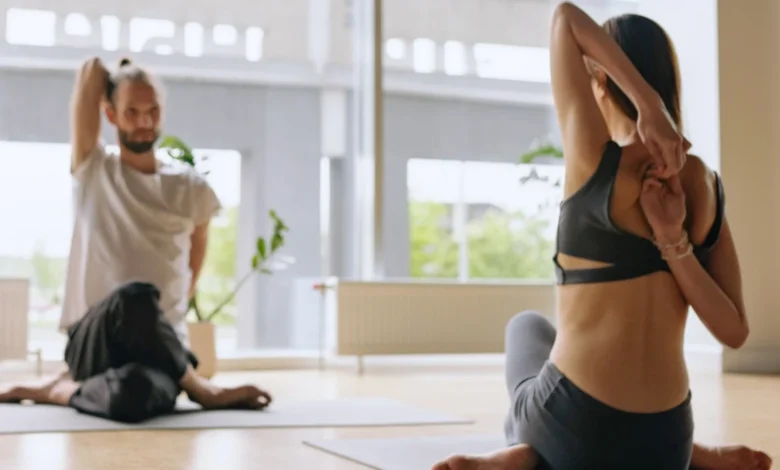
The modern yoga studio is a sanctuary of mindfulness, synchronization, and physical exploration, yet behind the serene atmosphere lies a complex cognitive ballet performed by the instructor. Among the most intricate skills an educator must acquire is mirroring—the practice of instructing movements on the opposite side of the body relative to the students facing them. Long considered a hallmark of advanced pedagogy, mirroring bridges the gap between verbal instruction and physical execution, though it remains a persistent hurdle for both novice and veteran instructors alike.
Authored in September 2026, insights from seasoned practitioners such as Amber Burke, a 16-year teaching veteran trained at YogaWorks and a graduate of the Yale and Johns Hopkins Writing Seminars, highlight that this seemingly intuitive technique is rooted in deep student consideration. When executed properly, mirroring transforms a class from a series of confusing directional translations into a fluid, accessible, and deeply embodied experience. However, the pedagogical debate surrounding whether to mirror, how to master it, and when to abandon it entirely reveals a nuanced landscape within modern fitness and wellness education.
The Cognitive Mechanics and Purpose of Mirroring
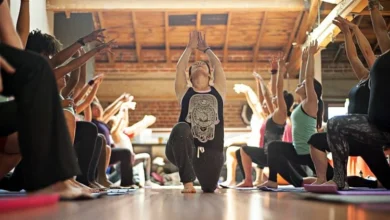
To understand why mirroring is heavily emphasized in teacher training programs, one must examine the cognitive load placed upon a yoga student. When an instructor faces a class and lifts their right arm while verbally cueing the right arm, students standing opposite them are forced to perform a mental inversion. They must translate the visual data of a right arm lifting into a command for their own left arm. This process, often referred to by educators as reverse-engineering left and right, introduces cognitive friction.
Brett Larkin, founder of Uplifted Yoga, notes that while mirroring feels disorienting to the teacher initially, its primary function is an act of empathy and student-centric consideration. Nam Chanterrwyn, a teacher trainer with the American Yoga Council, compares effective mirroring to following a partner in a dance. By lifting the left arm to cue the students’ right, the instructor allows participants to match what they see visually without engaging in mental gymnastics.
The removal of this cognitive barrier carries significant physiological benefits. According to pedagogical analysis in movement education, the fewer mental steps a student must take to find the physical shape of a posture, the more consistently they can maintain breath awareness, somatic connection, and internal focus. This is especially vital in beginner-level classes, where students are already inundated with unfamiliar physical sensations, and in faster-paced vinyasa flows where verbal processing time is severely restricted.
Historical Evolution of Yoga Pedagogy and Instructional Standards
The standardization of mirroring as a core competency in yoga teacher training has evolved over the past several decades. As yoga transitioned from traditional, individualized guru-disciple lineages in South Asia to group fitness formats in Western commercial studios throughout the late 20th and early 21st centuries, the mechanics of mass instruction shifted dramatically.
In traditional settings, practitioners often practiced alongside an instructor facing the same direction, or instruction was primarily verbal. However, the rise of large-scale studio classes necessitated a visual focal point at the front of the room. Certification bodies, including Yoga Alliance-affiliated institutions, gradually incorporated spatial awareness and directional cueing into their curricula.
Despite these training frameworks, historical data from instructor forums, such as prominent discussions on professional yoga teaching boards, consistently rank directional confusion and mirroring errors as the primary source of imposter syndrome among newly certified teachers. The timeline of a yoga instructor’s career typically features a distinct phase—usually spanning their first one to three years of teaching—where directional lapses occur regularly under the pressure of live class environments.
Step-by-Step Methodologies for Mastering Mirroring
For instructors determined to master the technique, veteran educators recommend a structured, isolated approach to skill acquisition. Rather than attempting to incorporate mirroring into complex, fast-flowing sequences immediately, trainers advocate for deliberate practice models.
1. Isolation and Repetition
Chanterrwyn advises beginning outside of a live classroom setting by practicing single, isolated movements. An instructor might physically raise their left arm while verbally stating that they are lifting their right arm, and vice versa. Utilizing a wall mirror during this practice allows the instructor to see exactly what their future students will perceive, building foundational muscle memory and rewiring automatic cognitive responses.
2. Tactile and Spatial Anchors
Many teachers employ physical anchors to eliminate second-guessing during high-stress teaching moments. Simple modifications, such as wearing a distinct piece of jewelry (like a ring or bracelet) on one specific wrist, provide an immediate reference point. If a bracelet is worn on the left wrist, the instructor instantly recognizes that moving that arm correlates to cueing the students’ right side. Similar techniques include drawing subtle directional markers on the front corners of a yoga mat.
3. Strategic Room Positioning
Pedagogical flexibility requires instructors to move beyond a static position at the front of the room. Amy Ippoliti, a renowned yoga teacher trainer and author, emphasizes that the primary objective is student comprehension and safety. Consequently, transitioning to the side of the room during postures like Extended Side Angle—or occasionally dropping mirroring altogether to face the same direction as the class—ensures that students never need to crane their necks or compromise their physical alignment to observe demonstrations.
4. Alternative Cueing Strategies
When directional confusion peaks, many experienced educators bypass the terms "left" and "right" entirely. Studio-specific or anatomy-based cues offer precise alternatives. Instructors frequently substitute directional commands with environmental references (e.g., "reach toward the windows" instead of "reach to the right") or anatomical descriptors (e.g., "top arm and bottom arm" in side postures, or "front leg and back leg" in foundational warrior sequences).
Pedagogical Critiques and Scenarios Where Mirroring Fails
Despite its widespread acceptance, mirroring is far from a universal standard. A growing body of somatic educators and neurodivergent instructors argue that mandatory mirroring can sometimes produce the exact opposite of its intended effect, creating confusion rather than clarity.
Kirstie MacDonald Scott, PhD, a neurodivergent yoga teacher and author of the forthcoming book Somatic Touch: An Integrative Approach to Physical and Psychosomatic Trauma, highlights the potential pitfalls of the technique. Reflecting on her own experiences as a student, Scott notes that poorly executed or rigid mirroring can scramble cognitive processing, leaving participants struggling to determine rotational directions. To accommodate diverse learning styles and neurological profiles, Scott deliberately avoids mirroring, instead guiding students through slower sequences by encouraging them to choose an initial side ("lift one arm") before prompting a transition.
Similarly, Malaika DosRemedios, a veteran yoga instructor, chooses to honor her personal teaching preference by declining to mirror. When students appear disoriented by opposite-side demonstrations, DosRemedios turns her back to the class, transparently communicating her pivot: "I’m turning my back to you for a few moments just so we can get our lefts and rights as clear as possible."
Furthermore, specific physical environments render mirroring counterproductive:
- Reclining and Floor Postures: When a class focuses on supine or prone movements, visual demonstration is inherently obscured, rendering directional cueing dependent entirely on verbal clarity.
- Circular or Grid-Based Room Layouts: In community setups where students arrange their mats in a circle, mirroring loses its logic because participants face multiple directions.
- Studio Mirror Walls: In facilities equipped with large wall-to-wall mirrors at the front of the room, an instructor mirroring the class actually creates visual dissonance, as students watching their own reflection see the opposite of the instructor’s physical movement. In these environments, instructors typically face the mirror alongside their students.
Implications for Modern Teacher Training and Industry Standards
The ongoing discourse surrounding mirroring highlights a broader evolution in the fitness and wellness industry: a shift away from rigid, one-size-fits-all performance standards toward student-responsive, inclusive pedagogy.
As yoga teacher training programs continue to update their core competencies, the emphasis is moving from achieving flawless, mechanical perfection to fostering adaptive communication skills. Whether an instructor chooses to master the complex cognitive discipline of mirroring, relies on environmental and anatomical cueing, or transparently turns their back to the class to ensure physical alignment, the ultimate metric of success remains unchanged. As emphasized by veteran voices across the discipline, the primary goal of any instructional technique is to minimize external friction, protect student safety, and deepen the practitioner’s connection to their own internal somatic experience.