The Skin As An Organ Of Perception: A Historical Examination Of B.K.S. Iyengar’s Teachings And The Anatomy Of Pigeon Pose


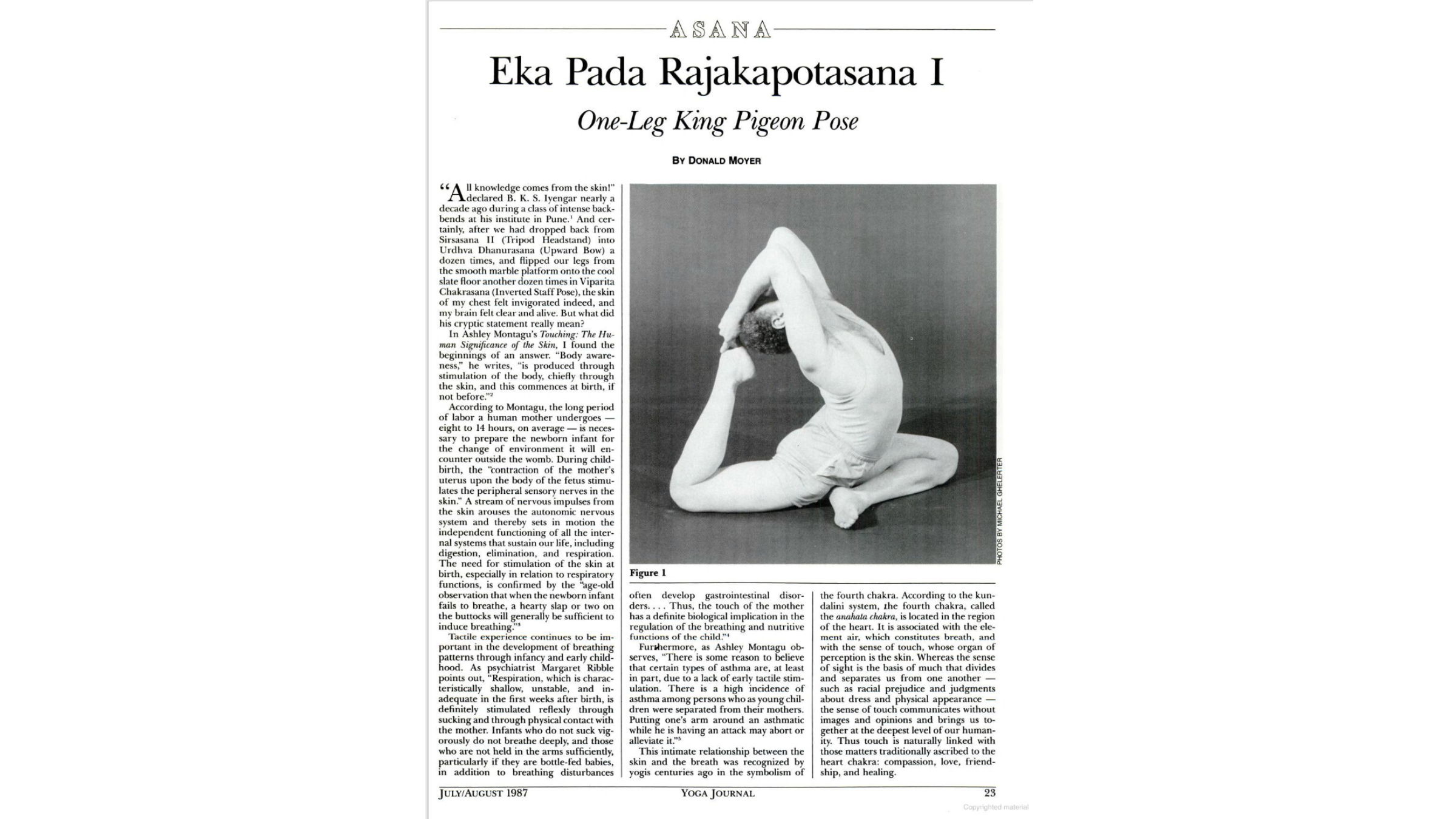
The intersection of tactile awareness, physiological self-regulation, and advanced asana practice has long served as a cornerstone of classical hatha yoga methodology. Originally documented in the July-August 1987 archives of Yoga Journal, a foundational exploration into the philosophy of legendary yoga master B.K.S. Iyengar shed light on a cryptic declaration made during an intensive backbend sequence at his institute in Pune, India: "All knowledge comes from the skin!" Decades after this teaching was first captured in print, modern movement science, somatic psychology, and anatomical research continue to validate the profound connection between cutaneous stimulation, autonomic nervous system response, and respiratory freedom.
Main Facts: The Philosophy of Cutaneous Awareness
At the heart of Iyengar’s methodology is the premise that the skin functions far beyond a passive anatomical envelope; it operates as an active, sophisticated organ of perception. During a rigorous training session involving repetitive transitions between Sirsasana II (Tripod Headstand), Urdhva Dhanurasana (Upward Bow), and Viparita Chakrasana (Inverted Staff Pose), practitioners experienced an immediate invigoration of the chest skin alongside a marked clarity of mind.
This empirical observation aligns closely with developmental anthropology. In his seminal work, Touching: The Human Significance of the Skin, researcher Ashley Montagu established that human body awareness originates through tactile stimulation, commencing in utero and accelerating intensely during parturition. Montagu noted that the standard eight-to-fourteen-hour duration of human labor serves a critical biological purpose: the rhythmic contraction of the maternal uterus upon the fetal body stimulates peripheral sensory nerves within the skin.
This continuous stream of nervous impulses successfully arouses the neonatal autonomic nervous system. Consequently, it jump-starts the independent functioning of vital internal systems, including respiration, digestion, and elimination. The fundamental architecture of human breathing patterns remains tethered to tactile experience from infancy through early childhood.
Centuries prior to modern somatic science, classical yogic philosophy mapped this exact relationship into the subtle body framework. Within the kundalini tradition, the fourth chakra—known as the anahata chakra or heart center—governs the element of air (representing breath) and the sense of touch (whose primary organ is the skin). While visual perception often functions as a divisive mechanism grounded in external judgments, the sense of touch communicates fundamentally without superficial imagery, fostering empathy, compassion, and healing at humanity’s deepest level.
Chronology and Evolution of Iyengar’s Practice
B.K.S. Iyengar’s realization regarding cutaneous perception did not emerge from abstract theory; it was forged through years of rigorous, empirical self-experimentation during his early decades of practice.
- The Early Years: In his youth, Iyengar suffered from various untreated ailments. During early intensive practice sessions, he noted a severe, unpleasant odor accompanying his heavy perspiration.
- The Turning Point: As his practice deepened, Iyengar observed the water quality and his bodily excretions gradually altering. This shifted his analytical focus toward the integumentary system. He began questioning whether the skin merely served as a covering or functioned as a dynamic perceptual organ capable of movement.
- The Breakthrough: By consciously directing movement and awareness into the skin itself, Iyengar observed that the physiological toxicity and strong perspiration odor dissipated. This confirmed ancient assertions regarding the skin as an organ of perception and solidified cutaneous engagement as a central pillar of the Iyengar method.
According to this pedagogical framework, the external condition of the skin directly mirrors the functional health of internal organs. For instance, if the skin across the front rib cage is tight and insensitive, the underlying intercostal muscles inevitably contract, restricting the adjacent lung tissue from fully expanding during inhalation.
Supporting Data and Experimental Application
Practitioners can empirically test this physiological relationship through a targeted two-part somatic experiment.
- Internal Focus (Savasana): Lying quietly in Corpse Pose while focusing exclusively on the lungs yields a characteristically narrow breath pattern. Typically, the abdomen heaves gently, the sternum lifts marginally, and the side rib cages remain nearly motionless.
- Cutaneous Awareness: Shifting attention away from internal organs and resting awareness lightly upon the skin of the rib cage evokes an immediate somatic shift. The front and side rib cages soften, broaden organically like the swell of the sea, and allow the lungs to expand without forced muscular exertion.
This principle dictates precise mechanical adjustments across all categories of asana:
- Standing Poses: Extending the arms outward or overhead requires opening the skin along the lateral rib cage to broaden the upper chest.
- Forward Bends: Releasing the skin of the back rib cage allows the diaphragm to soften and widen, deepening the fold safely.
- Backbends: Softening the skin of the front rib cage creates essential intercostal space, facilitating the safe lift of the sternum and mitigating spinal compression.
Implications for Advanced Asana: Eka Pada Rajakapotasana I
The necessity of releasing the front rib cage becomes paramount in advanced backbends, most notably Eka Pada Rajakapotasana I (One-Legged King Pigeon Pose). Often associated anatomically and symbolically with the heart chakra, the posture demands a puffed-up, elevated chest reminiscent of a pigeon. Historical iconography echoes this form; fifth-century stone reliefs, such as the "Pair of Leogryphs" housed in San Francisco’s Asian Art Museum, depict attendant figures in identical lower-body configurations with courageous, chest-opening arm extensions.
Because Eka Pada Rajakapotasana I places immense pressure on the diaphragm, improper execution routinely results in short, labored breathing. Therefore, traditional sequencing dictates that practitioners must first master foundational and intermediate backbends—such as Salabhasana (Locust), Dhanurasana (Bow), Urdhva Mukha Svanasana (Upward-Facing Dog), and Urdhva Dhanurasana (Upward Bow)—before attempting the full expression of King Pigeon Pose.
Methodological Breakdown and Step-by-Step Execution
Mastering Eka Pada Rajakapotasana requires breaking the posture down into modular components, mapping each segment to fundamental movements learned in basic poses.
Phase 1: Pelvic Alignment and Quadricep Release
Tight quadriceps restrict pelvic elevation in backbends just as tight hamstrings limit pelvic rotation in forward folds.
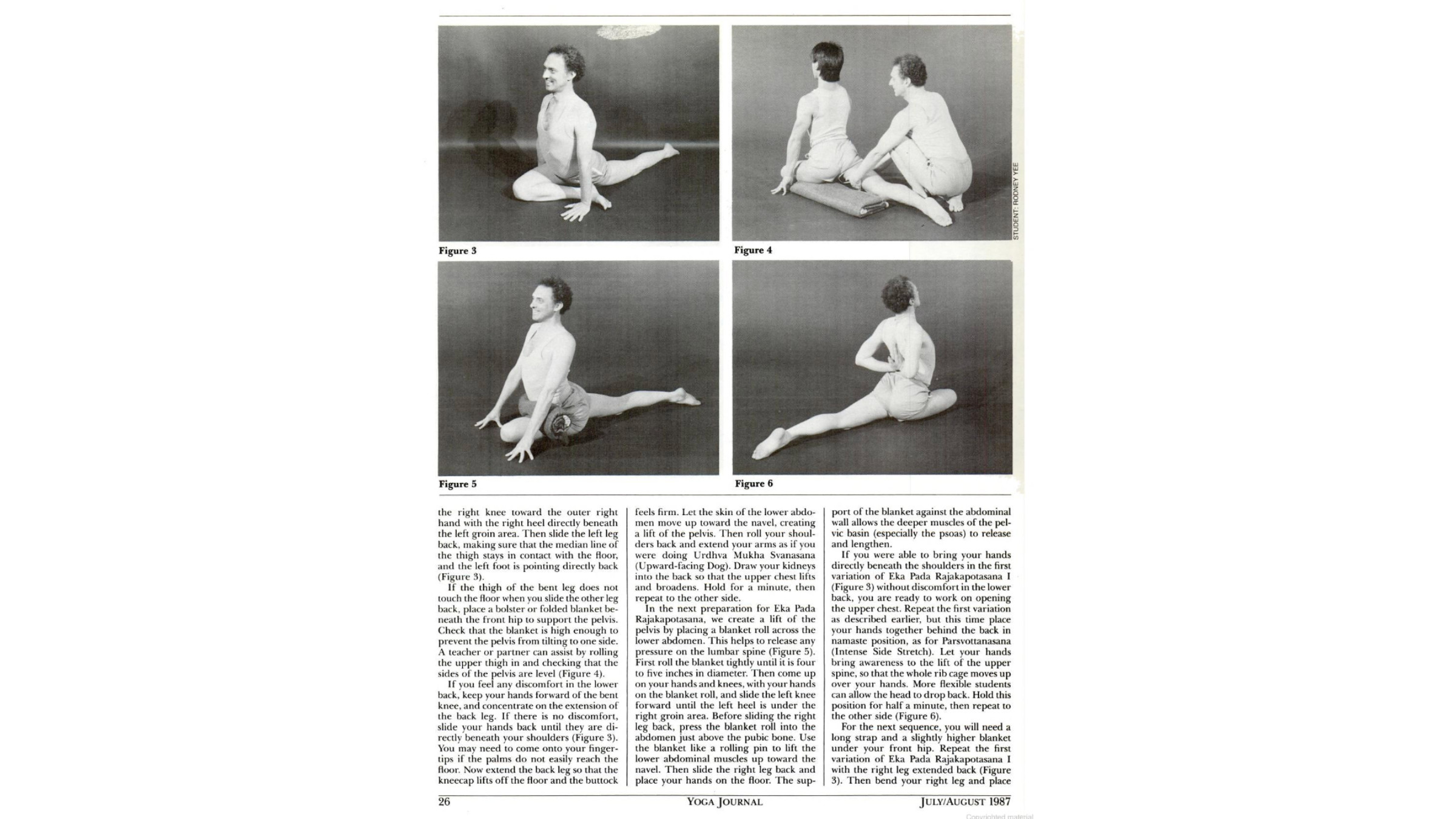
- Begin on hands and knees, sliding the right knee toward the outer right hand with the right heel positioned directly beneath the left groin.
- Extend the left leg straight back, ensuring the median line of the back thigh maintains contact with the floor and the left foot points directly backward.
- Modification: If the front hip hovers, place a secure bolster or folded blanket underneath to level the pelvis and prevent lateral tilting, which protects the lumbar and sacral regions from harmful compression.
Phase 2: Abdominal Lift and Psoas Release
- Place a tightly rolled blanket (4 to 5 inches in diameter) across the lower abdomen just above the pubic bone.
- Use the roll as a leverage tool to draw the lower abdominal muscles upward toward the navel.
- Slide the back leg straight, allowing the support of the blanket to signal deep pelvic muscles, such as the psoas, to release and lengthen.
Phase 3: Spinal Extension and Advanced Variations
- Namaste Variation: With hands positioned directly beneath the shoulders, bring the palms together behind the back in a reverse prayer position (Namaste), lifting the upper spine and rib cage.
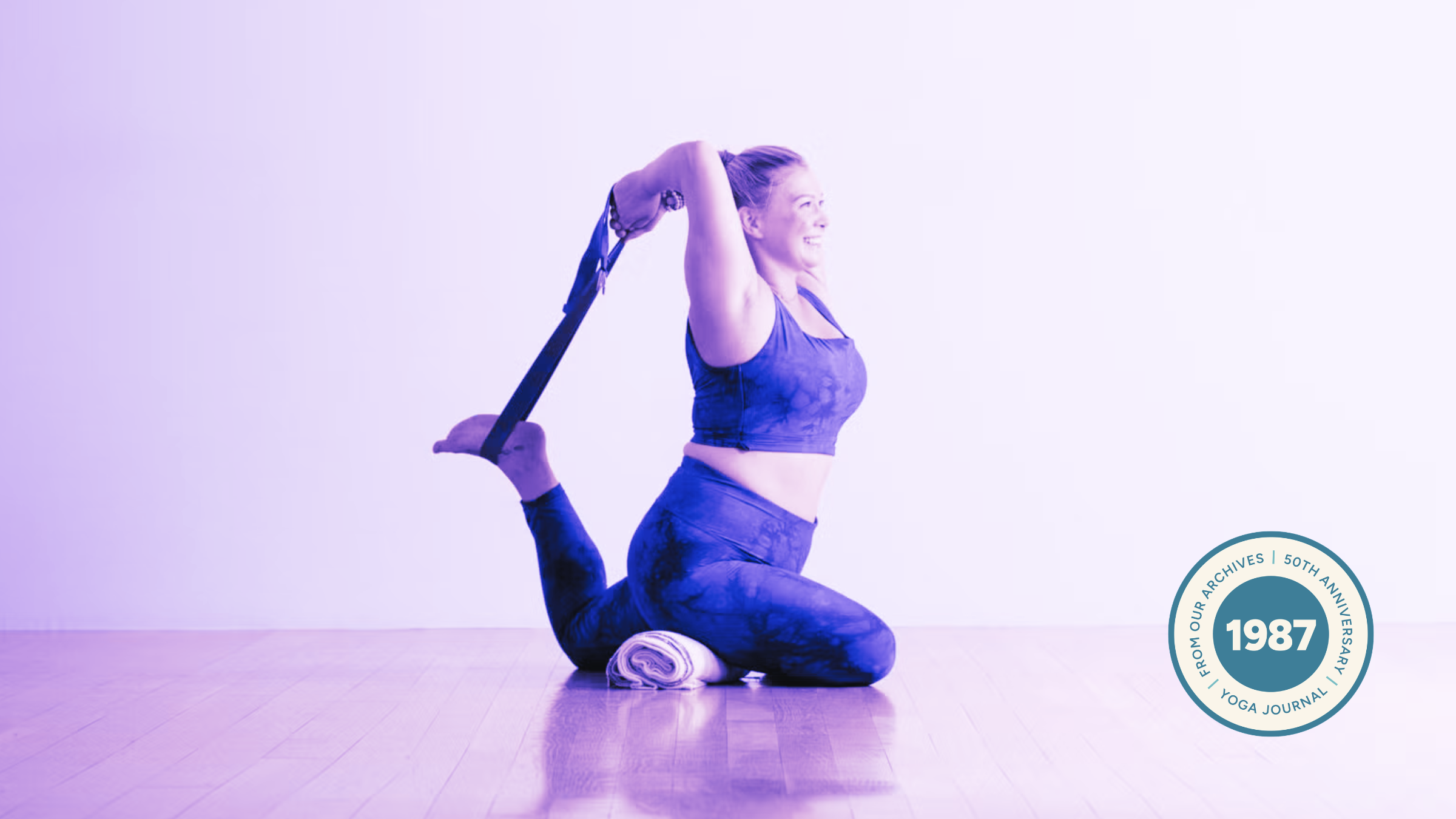
- Strap Assistance: Secure a strap around the back ankle, turning the elbow upward. Reach the opposite arm overhead to grasp the strap, ensuring the back thigh remains grounded to preserve pelvic levelness. Walk the hands along the strap toward the foot to bring the sole closer to the crown of the head.
- Final Expression: Lengthen the outer armpits to create space in the shoulder joints, protecting the lower back from overcompression.
Broader Impact and Analytical Implications
A persistent question among yoga practitioners is why master instructors like B.K.S. Iyengar historically avoided direct, prescriptive manipulation of the breath during asana practice. Analytical observation of his methodology provides a clear rationale: direct, conscious control of the breath frequently imposes an artificial, rigid pattern upon the respiratory system.
Conversely, working indirectly via physical alignment, movement, and cutaneous awareness activates the body’s innate self-regulating mechanisms. Just as a mother’s tactile contact nurtures an infant’s physiological systems toward maturity, mindful somatic awareness acts as the healing touch of the mind. By refining the quality of the skin and softening physical armor, practitioners ultimately improve the quality of their breath—and by extension, their physiological and psychological resilience in daily life.