The Corporate Playbook: How Industry-Funded Studies Undermine Nutrition Science and Public Health

The debate surrounding the validity of nutritional science has intensified over the past decade, driven largely by corporate critiques targeting the credibility of observational studies. Critics, often backed by food and beverage industries, frequently argue that observational research fails to meet the rigorous standards established by randomized controlled trials (RCTs). However, public health experts, epidemiologists, and independent researchers are pushing back, asserting that applying the pharmacological research paradigm to diet is not only methodologically flawed but also potentially dangerous to global health initiatives.
Understanding the limitations of dietary research requires examining why traditional gold-standard methods used in pharmaceutical testing are largely impractical when applied to food. While randomized controlled trials are exceptionally reliable for evaluating discrete medical interventions, such as synthetic drugs or surgical procedures, studying nutrition through the same lens presents massive logistical and ethical hurdles. Chronic dietary-related conditions—including cardiovascular disease, type 2 diabetes, and various forms of malignancy—can take decades to develop. Furthermore, researchers cannot practically isolate human populations on placebo diets for twenty years, nor is it easy to compel strict adherence to mandated dietary regimens over long periods.
Consequently, nutritional epidemiologists rely on observational studies that track large cohorts over extended timelines to identify correlations between dietary patterns and disease incidence. Critics have long seized upon these observational designs, labeling them as inconclusive or "low quality." Yet, comparative analyses looking at data from observational population studies versus randomized trials reveal a surprising consensus. Approximately 90 percent of the treatments examined show little significant difference between the findings of observational studies and randomized trials, with effects running in the same direction and demonstrating the same general magnitude.
Historical discrepancies cited by industry critics, such as the famous debate surrounding hormone replacement therapy where initial observational insights clashed with subsequent clinical trials, ultimately boiled down to variables like timing and participant age profile rather than an inherent failure of observational methodology.
The Risk Asymmetry Between Drugs and Diet
A central argument in defending observational nutrition science involves weighing the relative risks of medical interventions versus dietary adjustments. Prescription pharmaceuticals represent a leading cause of morbidity and mortality in developed nations, trailing closely behind heart disease and cancer. Conservative epidemiological estimates indicate that approximately 100,000 Americans die annually from the adverse side effects of prescription medications, even when administered precisely as directed.
Given these massive, documented risks, regulatory agencies and medical professionals rightly demand rock-solid evidence—specifically, randomized, double-blind, placebo-controlled trials—to ensure that the benefits of a pharmaceutical agent vastly outweigh its dangers. In drug research, playing it safe requires absolute certainty.
However, public health messaging operates under a fundamentally different risk profile. Telling a population to consume more broccoli, reduce sugar-sweetened beverage intake, or cut down on processed snacks carries virtually no risk of fatal pharmacological side effects. Demanding the exact same evidentiary threshold for dietary advice as one would for a high-risk chemotherapy drug or novel heart medication creates an unrealistic standard. It stalls vital public health messaging while preventable chronic illnesses continue to claim millions of lives.
The Misapplication of the GRADE Framework
The tension between industry skepticism and public health recommendations came to a head with the publication of high-profile, industry-funded papers criticizing established dietary guidelines. A prominent example includes research funded by the sugar industry, which concluded that global dietary guidelines advising populations to reduce sugar intake were untrustworthy because they relied on what the authors classified as "low-quality evidence."
This critique stemmed from the application of GRADE (Grading of Recommendations Assessment, Development, and Evaluation), a system originally engineered to evaluate pharmaceutical trials. When the GRADE framework is applied rigidly to nutrition, studies that cannot utilize randomized, double-blind methodologies are systematically downgraded, regardless of their epidemiological strength, consistency, or biological plausibility.
Critics of the GRADE approach in this context argue that it represents an inappropriate use of the drug trial paradigm in nutrition research. To address this methodological mismatch, alternative evaluation tools have been developed. NutriGrade, for instance, is a scoring system specifically designed to assess evidence levels in nutritional research while actively accounting for funding bias, automatically downgrading trials financed by commercial entities with vested financial interests. Similarly, HEALM (Hierarchies of Evidence Applied to Lifestyle Medicine) was established because traditional frameworks like GRADE remain inadequate for addressing lifestyle questions that cannot be fully resolved through clinical trials alone.

Chronology of Corporate Influence: The Playbook Unfolds
The strategic deployment of methodological critiques to weaken public health guidelines is not accidental; it follows a well-documented corporate playbook. This strategy typically unfolds in distinct phases designed to manufacture scientific uncertainty:
- Identification of Threat: When public health committees or governmental agencies issue guidelines recommending the reduction of specific commodities—such as added sugars, trans fats, or red meat—commercial entities face potential losses in market share and revenue.
- Funding Alternative Research: Industry-backed institutes and trade associations commission or financially support systematic reviews and meta-analyses aimed at re-evaluating existing data through restrictive methodological lenses.
- Challenging the Evidence Hierarchy: Researchers utilizing tools like GRADE are deployed to designate the foundational science supporting public health guidelines as "low quality," regardless of decades of converging epidemiological data.
- Amplifying Inconsistency: Industry-sponsored papers then highlight discrepancies or evolutions in historical guidelines—often caused by previous corporate lobbying—to argue that dietary advice is inherently unstable and therefore unworthy of public trust.
This pattern was starkly visible in the rollout of papers concerning red and processed meat consumption. A meat-industry-funded institution engaged researchers who had previously contributed to sugar-industry-backed assessments. Unsurprisingly, these authors utilized the same drug-trial evaluation framework to review guidelines on meat consumption, ultimately producing papers declaring the existing evidence too weak to justify public health warnings against red meat.
The Danger of Ignoring Cumulative Evidence: The Trans Fat Precedent
Abandoning public health consensus due to a lack of pharmaceutical-grade trials can yield catastrophic results. Conversely, acting decisively on the best available cumulative evidence has saved hundreds of thousands of lives.
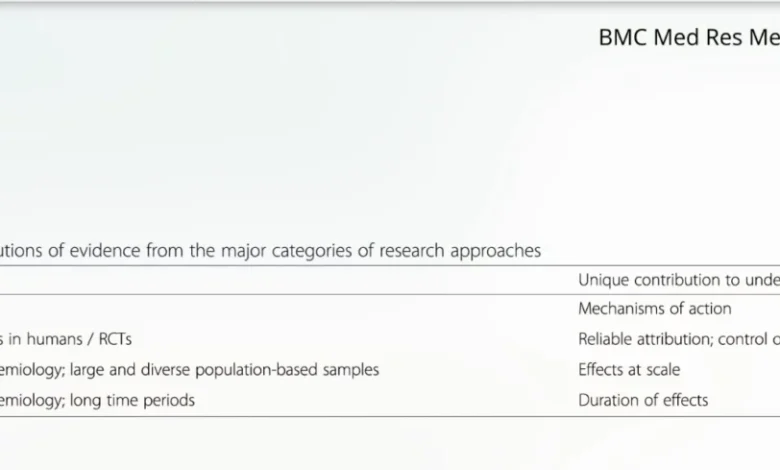
The successful removal of artificial trans fats from the global food supply serves as a prime textbook example. Researchers never conducted randomized controlled trials that assigned human cohorts to consume high quantities of industrial trans fats until they suffered a fatal heart attack or stroke, as such an experiment would be profoundly unethical. Instead, public health officials synthesized data from multiple methodologies: laboratory experiments uncovered the precise biological mechanisms by which trans fats degraded arterial health; clinical trials showed that trans fats worsened established cardiovascular risk factors; and massive population-based cohort studies revealed a direct statistical correlation between trans fat consumption and heart disease incidence.
Recognizing the convergence of these diverse evidence streams, regulatory bodies ultimately phased out artificial trans fats, preventing an estimated 200,000 heart attacks annually in the United States alone. Public health officials must routinely balance imperfect evidence arrays—much in the same way tolerable upper limits for lead exposure or industrial pollutants are established without deliberately exposing human subjects to neurological toxins.
Manufactured Inconsistency and the Evolution of Guidelines
A final irony often found in corporate-backed critiques of nutritional science involves the weaponization of guideline evolution itself. Industry-funded papers have frequently pointed to historical inconsistencies across nutritional recommendations over twenty-year periods to argue that dietary advice is perpetually unreliable.
While scientific guidelines naturally evolve as new data emerges, a closer examination of historical inconsistencies reveals heavy corporate fingerprints. For instance, a notable outlier in past decades was a 2002 Institute of Medicine guideline suggesting that up to 25 percent of daily caloric intake could safely come from added sugars without risking nutritional deficiencies. That specific committee was partially funded by organizations backed by major beverage and confectionery corporations. Today, those same corporate entities point to the historical variance of those very guidelines—variance they helped influence—to argue that all modern nutritional advice is fundamentally untrustworthy.
Broader Implications for Public Health Policy
As the scientific community continues to dissect the influence of corporate funding on dietary literature, the broader implications for public health policy remain profound. Epidemiologists and policy analysts emphasize that dismissing observational nutrition data through inappropriate frameworks like GRADE threatens to paralyze preventative medicine.
Moving forward, the scientific consensus points toward a more integrated approach to evidence appraisal—one that respects the unique contributions of laboratory mechanisms, clinical trials, and large-scale observational cohorts while remaining vigilant against commercial bias. By utilizing nutrition-specific evaluation tools that account for financial conflicts of interest, public health authorities can better protect nutritional guidelines from corporate interference and maintain a primary focus on population wellness over commercial interests.