New study links baby aspirin to 70 lower dementia risk for some But theres a catch

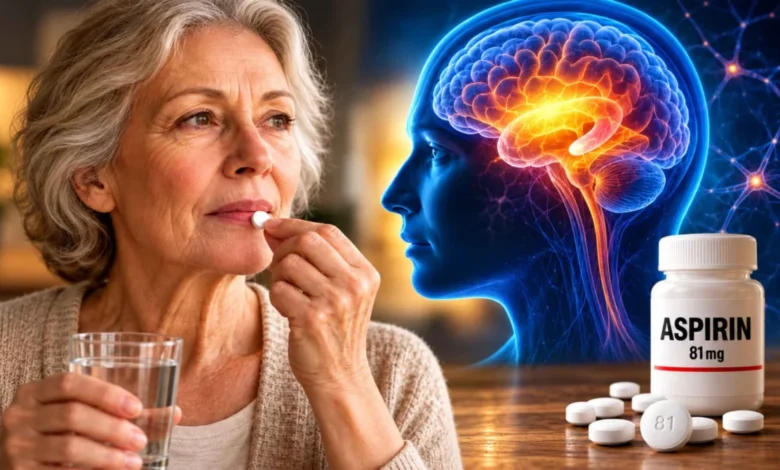
For decades, the medical community has grappled with the role of low-dose aspirin—often referred to as baby aspirin—in the preventative care of aging populations. While its efficacy in secondary prevention of cardiovascular events is well-established, its prophylactic use in healthy older adults has remained a subject of intense clinical scrutiny. A recent secondary analysis of data from the landmark Aspirin in Reducing Events in the Elderly (ASPREE) trial has ignited fresh conversation, suggesting that for a specific subset of individuals characterized by high genetic predisposition for platelet reactivity, daily aspirin may be linked to a 70% reduction in dementia risk. However, leading researchers caution that this correlation is preliminary and does not yet constitute a clinical recommendation.
The Genetic Nexus: Understanding the ASPREE Analysis
The study, conducted by researchers at Monash University in Melbourne, Australia, utilized genetic data sourced from the ASPREE trial—a large-scale, double-blind, placebo-controlled clinical investigation. The original ASPREE trial enrolled more than 13,500 participants across Australia and the United States, all of whom were aged 70 or older and free of overt cardiovascular disease or dementia at the time of enrollment.
In this new analysis, scientists focused on "polygenic scores"—an aggregate measure of an individual’s genetic predisposition to certain biological traits. Specifically, they analyzed the genetic propensity for high platelet counts. Platelets are the blood cells responsible for clotting; when they become overly active or "sticky," they can contribute to the formation of micro-thrombi, which are small blood clots. These clots, even on a microscopic scale, have long been hypothesized to contribute to neurovascular inflammation and cognitive decline. By administering a 100 mg dose of aspirin, which acts as an antiplatelet agent, the researchers sought to determine if inhibiting this activity would correlate with preserved cognitive function.
The results were striking for the top 20% of participants identified with the highest polygenic scores for platelet count. Within this group, daily low-dose aspirin therapy was associated with a significant reduction in the incidence of dementia. Conversely, for the broader cohort that did not possess this specific genetic marker, aspirin therapy showed no statistically significant impact on dementia prevention.
Chronology of the Aspirin Debate
To understand the weight of these findings, it is necessary to examine the history of aspirin as a preventative tool.
- 1970s–1990s: Clinical focus primarily centered on aspirin’s role in preventing secondary heart attacks and strokes. Its efficacy in this space led to its widespread adoption among older adults.
- 2018: The primary results of the ASPREE trial were published in the New England Journal of Medicine. The findings sent shockwaves through the medical community: daily low-dose aspirin (100 mg) did not extend disability-free survival in healthy older adults and, more alarmingly, was linked to a significantly higher risk of major hemorrhage, particularly gastrointestinal and intracranial bleeding.
- 2019–2022: Global health organizations, including the U.S. Preventive Services Task Force (USPSTF), updated their guidelines. The consensus shifted to strongly advising against the routine initiation of low-dose aspirin for the primary prevention of cardiovascular disease in adults aged 60 and older, citing the unfavorable benefit-to-risk ratio.
- 2026 (Current Findings): The new analysis from Monash University re-examines the 2018 data, shifting the focus from general mortality to specific cognitive outcomes categorized by genetic profiles.
Supporting Data and Biological Plausibility
The biological hypothesis rests on the connection between vascular health and cognitive integrity. Dementia, particularly vascular dementia and certain subtypes of Alzheimer’s disease, is increasingly viewed through the lens of cerebrovascular health. If small, silent blockages occur in the brain’s microvasculature due to platelet aggregation, the resulting localized hypoxia or inflammation could theoretically accelerate cognitive decline.
The research team noted that the genetic signature identified in their analysis did not overlap with known risk alleles for Alzheimer’s disease, such as the APOE-ε4 gene. This distinction is vital; it suggests that the protective effect, if confirmed, is likely mediated through a vascular pathway rather than through the direct inhibition of amyloid-beta plaque deposition. This identifies platelet biology as a distinct, actionable area for future dementia research.

Evaluating the Limitations and the "Catch"
Despite the optimism generated by a 70% reduction figure, the scientific community emphasizes the inherent limitations of subgroup analyses. In clinical trials, the primary outcomes are determined by the study’s original design and statistical power. Subgroup analysis—looking at a specific slice of the participant pool after the fact—carries an elevated risk of "false discovery" or statistical noise.
Furthermore, the safety concerns identified in the 2018 ASPREE trial remain constant. The mechanism that makes aspirin effective at thinning blood—thereby potentially protecting the brain from micro-clots—is the exact same mechanism that increases the risk of life-threatening bleeding. For an elderly population, where the risk of falls and undiagnosed comorbidities is higher, the danger of hemorrhagic stroke or internal bleeding often outweighs the benefits of long-term antiplatelet therapy.
"This is an intriguing signal, but it is not a call to action," says one independent expert. "When you stratify data into smaller groups, you lose the protective guardrails of a randomized trial. Until we see a trial specifically designed to enroll individuals based on this genetic profile, we cannot ethically recommend daily aspirin to prevent cognitive decline."
Broader Implications for Precision Medicine
This study serves as a quintessential example of the potential for precision medicine in geriatric care. The "one-size-fits-all" approach to daily aspirin has largely failed, leading to increased bleeding risks without clear neurological benefits for the average person. However, if researchers can identify the specific genetic sub-populations that stand to benefit from a particular therapy, the entire calculus of risk-versus-benefit changes.
The potential for "genotype-guided prevention" is a growing field. If a simple genetic test could identify those at high risk for platelet-related cognitive decline, then aspirin—a cheap, widely available, and well-understood medication—could be repositioned as a targeted intervention. However, the path from a retrospective subgroup analysis to clinical practice is long and arduous. It requires prospective validation in independent cohorts and, ultimately, a dedicated clinical trial that includes both efficacy and safety endpoints.
Recommendations for the Public
For the general public, the current medical guidance remains unchanged by this report. The following points represent the current consensus among leading health organizations:
- Consult Your Physician: Never initiate a daily aspirin regimen without a comprehensive review of your medical history, including your risk for bleeding and your cardiovascular health status.
- Focus on Established Modifiers: While genetic research continues, the most effective evidence-based strategies for reducing dementia risk remain consistent: managing hypertension, controlling blood sugar, maintaining physical activity, and ensuring cognitive engagement.
- Monitor for Side Effects: For those already on an aspirin regimen, discuss the "deprescribing" process with a doctor. Many older adults who began taking aspirin years ago may no longer derive a net benefit, especially given the increased bleeding risk associated with advanced age.
As the scientific community digests these findings, the focus will likely turn toward replicating the data in larger, diverse populations. If the 70% reduction in risk holds up under rigorous, prospective scrutiny, it could mark a significant milestone in neurology. Until then, the aspirin bottle should remain firmly closed for the vast majority of older adults, serving as a reminder that in medicine, the difference between a life-saving treatment and a dangerous intervention often comes down to the individual’s unique biology.