Saudi Oil Halt Is a Self-Inflicted European Catastrophe and a Warning to the West

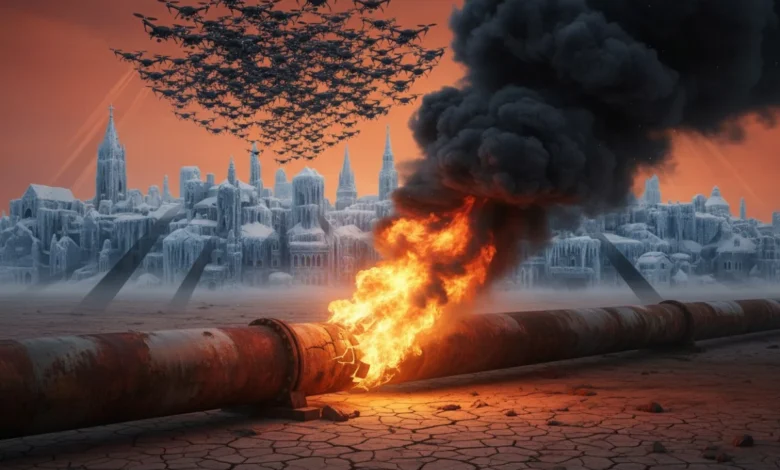
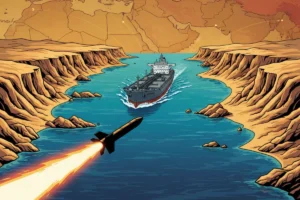
Western Europe is currently navigating its most precarious energy security environment since the conclusion of the Second World War. On Friday, September 11, 2026, the global energy landscape underwent a structural shock when Saudi Arabia confirmed the indefinite suspension of operations along the East-West Pipeline. This critical artery, which spans 745 miles across the Arabian Peninsula, serves as a primary conduit for transporting crude oil from the kingdom’s eastern production fields to the Red Sea port of Yanbu, bypassing the increasingly volatile Strait of Hormuz. The suspension follows a series of high-precision drone and missile strikes that incapacitated key pumping stations, effectively severing a vital link in the European energy supply chain.
A Chronology of the Escalation
The disruption represents the culmination of mounting regional instability that has intensified throughout the third quarter of 2026. On September 8, an attack on the Saudi Aramco refinery at Jazan signaled a shift in targeting strategy, resulting in significant infrastructure damage and civilian casualties. By September 10 and 11, the focus shifted to the interior. Reports indicate that multiple drones, allegedly launched from the Maysan province in southern Iraq, struck pumping stations near Riyadh and Medina.
Satellite imagery provided by Vantor confirmed extensive damage at the al-Mesabaah pumping station, where secondary fires prevented immediate emergency intervention. By September 12, Reuters reported that state-run Saudi Aramco had begun issuing notices for the cancellation of crude cargoes destined for European ports. The closure of the Yanbu terminal, coupled with the ongoing instability near the Bab al-Mandeb Strait—exacerbated by the reported seizure of Perim Island on September 11—has created a logistical bottleneck of unprecedented proportions.
The Vulnerability of Global Energy Infrastructure
The strategic decision to focus on pumping stations rather than the pipeline itself highlights a sophisticated understanding of petroleum engineering. Unlike a simple breach in a pipe, which can often be bypassed or patched, the destruction of pumping stations requires specialized, long-lead-time components and heavy industrial repairs. Industry analysts, including those consulted by BBC Verify, suggest that restoring the throughput capacity—which peaked at approximately 3.6 million barrels per day—could take upwards of 30 days, assuming no further kinetic interference.
The economic implications are immediate. Brent crude futures saw a rapid appreciation, with some market analysts at Bernstein projecting price points reaching $150 per barrel should the closure persist through the end of the month. The loss of this volume is compounded by the fact that global oil storage levels, particularly at Red Sea transit hubs, are currently at near-record lows. If production cannot be offloaded to tankers, wellheads must be shut in. Petroleum experts note that prolonged shutdowns of this nature risk permanent reservoir damage due to paraffin accumulation and water ingress, potentially lowering the output capacity of the affected fields well into 2027.
European Energy Policy and the "Perfect Storm"
The crisis in the Middle East has collided with a pre-existing energy shortfall within the European Union. As of September 2026, the European transition away from Russian natural gas, accelerated by policy mandates, has left the continent heavily reliant on a volatile mix of liquefied natural gas (LNG) imports and refined petroleum products. The current shortage is particularly acute regarding diesel and heating oil.
Data from European energy monitoring agencies suggest that refining margins are under extreme pressure. Retail prices for diesel in major hubs have climbed to between $9 and $11 per gallon, a symptom of a broader refining capacity crisis that has persisted for months. With the concurrent loss of Qatari LNG shipments—a consequence of the earlier disruptions at the Ras Laffan and Mesaieed facilities—Europe has effectively lost its two primary "swing" suppliers of energy in the span of a single quarter. This loss of diversification leaves the continent with little buffer against the impending winter heating season.
Geopolitical Realignments and Security Pacts
The security architecture intended to protect these energy routes has largely failed to deter the recent escalation. The "Mecca Defense Pact," a security framework involving Riyadh, Islamabad, and Ankara, has not yielded a unified military response. Pakistan’s foreign office has signaled that it is not currently considering direct military intervention, and the United States, under the current administration, has opted for a policy of providing intelligence and targeting assistance rather than direct kinetic involvement.
This shift in American foreign policy—focusing on domestic energy preservation and limited tactical support—marks a significant departure from historical interventionism. Observers note that the U.S. remains better insulated from the current crisis due to its robust domestic refining capacity and massive internal oil and gas reserves. While the U.S. economy remains susceptible to global price shocks, it does not face the same existential risk of physical fuel scarcity that now confronts London, Berlin, and Paris.
Socio-Economic Implications and Public Response
The potential for energy rationing is no longer a theoretical exercise for European policymakers. As governments grapple with the reality of limited diesel and heating oil, the prospect of rolling power outages and industrial curtailments has moved to the forefront of the political agenda. Historical precedents suggest that prolonged energy scarcity often leads to significant social unrest.
In Germany, the rising political influence of alternative parties reflects a growing public dissatisfaction with energy policies that are perceived to prioritize environmental goals over industrial viability and household security. Similar trends are emerging in France and the United Kingdom, where the cost of living—driven by energy inflation—is beginning to erode the public mandate for current government policies.
Furthermore, the impact extends beyond direct energy use. The global supply chain for consumer goods is heavily dependent on petrochemical feedstocks. For instance, roughly 70% of packaging materials for major markets in Asia and Europe rely on plastics derived from these specific oil flows. A persistent halt in crude exports from the Middle East threatens to trigger a secondary crisis in food and pharmaceutical packaging, potentially leading to global shortages of consumer staples.
Analysis of Future Projections
As of mid-September 2026, the trajectory for the remainder of the year appears challenging. Moscow has successfully reoriented the majority of its seaborne oil exports toward Asian markets, leaving European states with fewer diplomatic levers to pull. The possibility of re-engaging with Russian infrastructure, such as the damaged Nord Stream pipelines, remains a subject of intense, if quiet, debate within European capitals.
Economic analysts emphasize that the current energy crunch is structural, not merely a temporary market fluctuation. Even if the immediate military conflict in the Middle East were to subside, the damage to energy infrastructure and the depletion of existing reserves mean that supply-side constraints will likely persist through the winter. The transition to alternative energy sources remains insufficient to bridge the gap left by the loss of millions of barrels of crude and billions of cubic meters of natural gas.
Conclusion and Outlook
The current situation serves as a stark reminder of the complexities inherent in global energy interdependency. For the nations of Western Europe, the coming months will be defined by the ability of their respective governments to manage the transition through a period of extreme scarcity. The reliance on long-distance, fragile supply lines has proven to be a strategic liability.
As winter approaches, the focus for both policymakers and private citizens will be on resilience—securing necessary fuel reserves and preparing for potential grid instability. The events of September 2026 demonstrate that energy sovereignty is not merely a policy preference, but a fundamental requirement for the stability of modern industrial societies. The path to long-term resolution will require a fundamental recalibration of energy policy, shifting away from over-reliance on volatile transit corridors and toward a more diversified and localized energy mix. Whether this shift will occur in time to mitigate the immediate crisis remains the central question for the European continent as it prepares for an uncertain winter.