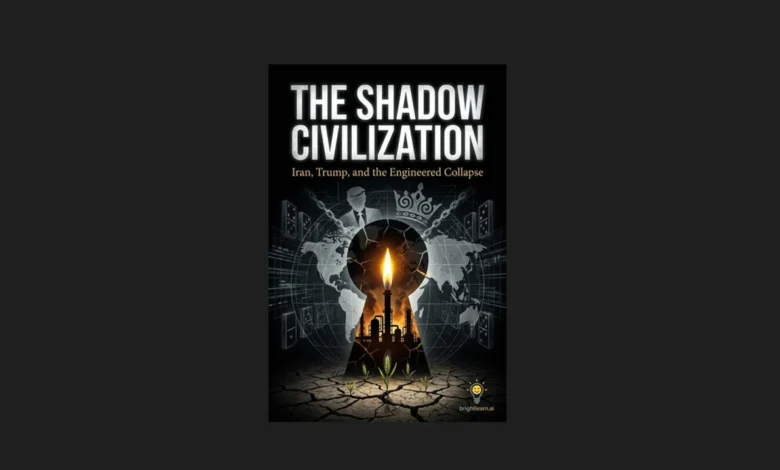
The central thesis presented in Mike Adams’ latest work, "The Shadow Civilization: Iran, Trump, and the Engineered Collapse," posits a disquieting reality: that contemporary society operates within a "shadow civilization"—a meticulously constructed counterfeit existence where authentic, human-centric systems have been systematically supplanted by hollow imitations. These imitations, the author argues, are not designed for human flourishing but rather for control, operating across multiple interconnected domains. Adams meticulously dissects what he terms "five layers of this shadow world," employing a level of detail and analytical rigor that aims to expose the mechanisms of this engineered reality.
The Petrochemical Foundation of Modern Sustenance: Shadow Food
Adams directs significant attention to the modern food supply chain, a sector he contends has been fundamentally warped by industrial processes. His critique centers on the notion that contemporary food production has become intrinsically linked to the petrochemical industry, a concept he encapsulates as the "petrochemical food chain." This chain, he elaborates, begins with natural gas fertilizers, progresses through diesel-powered agricultural machinery, and culminates in factory-based processing. The outcome, according to Adams, is a system that prioritizes the delivery of calories over essential nutrition. He asserts that the mineral content of vegetables today is a fraction of what it was for previous generations, framing this decline not as an accidental byproduct of industrialization but as a deliberate design. This degradation of food quality, in turn, is presented as a direct precursor to health issues, creating a symbiotic relationship with what he labels "shadow medicine," a system designed to profit from the very illnesses it engenders.
Data from the U.S. Department of Agriculture (USDA) has indeed shown a decline in certain micronutrients in produce over the past several decades, although the precise causes are debated among scientists, with factors such as soil depletion, changes in agricultural practices, and genetic modification of crops being cited. Adams’ argument, however, attributes this to a more deliberate, systemic manipulation tied to industrial energy sources.
The Erosion of Purchasing Power: Shadow Money
Adams delves into the mechanics of modern finance, offering an explanation for the perceived erosion of savings and purchasing power. He identifies the petrodollar system, established in 1971 when the United States unilaterally ended the dollar’s convertibility to gold, as a pivotal turning point. This system, he argues, compelled global oil transactions to be conducted in U.S. dollars, thereby creating an artificial and sustained demand for a currency not backed by intrinsic value. This, coupled with the Federal Reserve’s practice of fractional reserve banking—whereby banks are only required to hold a fraction of their deposit liabilities in reserve and can lend out the rest—allows for the creation of money from debt rather than from tangible wealth. Adams contends that each new dollar issued represents a dilution of the purchasing power of existing dollars, effectively a form of theft from the public. His call for a return to gold and silver as monetary standards is presented not as a nostalgic desire for the past, but as a pragmatic economic imperative for survival in the current financial landscape.
The U.S. dollar’s status as the world’s primary reserve currency, largely due to the petrodollar agreement and its role in international trade, is a well-documented phenomenon. The Federal Reserve’s monetary policy, including quantitative easing and adjustments to reserve requirements, has also been subject to extensive analysis and debate regarding its impact on inflation and currency value.
The Pharmaceutical Industrial Complex: Shadow Medicine
Perhaps the most forceful critique in Adams’ analysis is directed at the pharmaceutical industry, which he characterizes as a "death cult of junk science." He alleges that this complex has exerted undue influence over regulatory bodies such as the Food and Drug Administration (FDA). According to his account, natural remedies that demonstrate efficacy are systematically suppressed because they cannot be patented and therefore do not offer the recurring revenue streams that patented pharmaceutical drugs do. Conversely, he claims that toxic drugs, even those with known detrimental side effects, are approved because they generate substantial profits. Adams views the global response to the COVID-19 pandemic as a "test run for mass compliance," an exercise in implementing control mechanisms that could be deployed for future crises.
The pharmaceutical industry’s significant lobbying efforts and its complex relationship with regulatory agencies like the FDA have been subjects of ongoing scrutiny and public discourse. Concerns about the influence of financial interests on drug approval processes and the suppression of alternative therapies are recurring themes in discussions about healthcare systems worldwide.
The Illusion of Choice: Shadow Elections
Adams dismantles what he perceives as the illusion of genuine choice within the American political system. He argues that the Democratic and Republican parties, despite their outward ideological differences, operate as a unified "uni-party" serving a common "globalist agenda" while maintaining the facade of opposition. He cites Donald Trump’s presidency as a prime example, asserting that the intense opposition Trump faced was not rooted in his Republican affiliation but in his status as an outsider who threatened the established system. This perspective suggests that electoral processes are manipulated to maintain a predetermined political order, irrespective of the candidates or parties involved.
The concept of a "uni-party" and the influence of special interests on political outcomes are recurring themes in political science and public commentary. Analyses of campaign finance, lobbying, and legislative processes often explore the extent to which elected officials represent constituent interests versus those of powerful economic or ideological groups.
The Corruption of Knowledge: Shadow Science
The author identifies the corruption of scientific institutions as one of the most alarming aspects of the shadow civilization. Adams contends that scientific research and its dissemination are increasingly dictated by political narratives rather than objective inquiry. He provides examples such as the manipulation of climate models to align with specific political agendas, the concealment of adverse events in vaccine studies, and the alleged manipulation of PCR tests through adjusted cycle thresholds. The very institutions entrusted with public health and scientific integrity—including the Centers for Disease Control and Prevention (CDC), the FDA, the World Health Organization (WHO), and the National Institutes of Health (NIH)—are, in his view, compromised by the industries they are meant to regulate.
Scientific consensus on issues like climate change and vaccine efficacy is based on extensive peer-reviewed research and data from numerous institutions. However, Adams’ claims highlight public skepticism and concerns about transparency and potential conflicts of interest within scientific bodies, particularly in the wake of highly politicized public health events.
The Geopolitics of Starvation: Iran and Global Food Security
Adams then shifts his focus to the Middle East, applying the analytical lens of an intelligence veteran to examine the geopolitical implications of Iran’s strategic position. He highlights Iran’s leverage over the Strait of Hormuz, a critical maritime chokepoint through which approximately 20% of the world’s oil supply transits. However, Adams emphasizes a less commonly understood aspect of this chokehold: its profound impact on global food production. He details the dependency of modern agriculture on the Haber-Bosch process, a method for synthesizing ammonia from natural gas to produce nitrogen fertilizers. He asserts that roughly half of the world’s food supply relies on these synthetic fertilizers. Consequently, any disruption to natural gas supplies, particularly through the Strait of Hormuz, would have catastrophic consequences for global food security. Adams frames potential conflicts or blockades in this region not as collateral damage, but as deliberate strategies to control food supplies.
The Strait of Hormuz is undeniably a critical artery for global energy transport, with significant geopolitical implications. The reliance of modern agriculture on synthetic fertilizers derived from natural gas is also a well-established fact. Disruptions to energy supplies can indeed have cascading effects on fertilizer production and, consequently, on food prices and availability.
Adams further analyzes the precarious situation of India’s agricultural sector, which he describes as being trapped in a "subsidy trap." He notes the Indian government’s substantial expenditure on grain subsidies for a vast population. This system, he argues, encourages unsustainable practices such as the overuse of cheap fertilizers, which degrade soil quality, and the depletion of groundwater reserves through free electricity for farmers. This dependency, coupled with the influence of multinational agribusiness corporations, leaves farmers vulnerable to global market fluctuations. When global fertilizer prices surge, as they have in recent periods, the entire subsidized system is at risk of collapse. This vulnerability, he predicts, would first impact nations already facing instability, such as Yemen and Ethiopia, followed by Bangladesh and ultimately India itself, as its agricultural support structure buckles under the pressure of energy blockades and price hikes.
The intricate web of agricultural subsidies, global commodity prices, and geopolitical events can indeed create vulnerabilities for food-insecure nations. The impact of rising energy and fertilizer costs on developing economies is a significant concern for international aid organizations and policymakers.
The Prelude to Control: The Final Lockdown
Adams draws a direct line between the global response to the COVID-19 pandemic and what he foresees as impending "energy lockdowns." He posits that the pandemic served as a "dress rehearsal" for implementing control measures, utilizing fear, mandates, censorship, and digital surveillance. He argues that the narrative is now shifting from public health mandates to "energy mandates," with the push for "net-zero emissions" translating into the phasing out of affordable energy sources. This, in turn, would make food prohibitively expensive and lead to increased centralization of control over fundamental aspects of human life.
The concept of "net-zero emissions" policies and their potential impact on energy prices and accessibility has been a subject of significant debate. Critics often raise concerns about the economic implications and the potential for increased reliance on government intervention.
Adding another layer to his argument, Adams warns of a burgeoning network of detention facilities. He points to the existence of a $65 billion network of detention centers, initially constructed for migrants but, in his view, designed with broader applications in mind. He references "Project Red Horse," a FEMA-managed network of detention camps reportedly revealed in the 1980s and allegedly undergoing quiet expansion. Adams suggests that the legal frameworks established for detaining migrant families could be extended to encompass American citizens, thereby creating infrastructure for mass detention.
The existence of detention facilities for migrants and the legal frameworks governing their operation are documented realities. Concerns about the potential expansion of such powers to the general population, however, often fall into the realm of speculation and are not supported by broad governmental policy statements.
The author emphasizes that "The Shadow Civilization" is notable for naming what he perceives as the mainstream media’s reluctance to address directly. He reiterates his view that the COVID-19 pandemic was a "test run for mass obedience," and that physicians who raised concerns about vaccine safety were systematically targeted and silenced through coordinated censorship by government and Big Tech entities. He further contends that the same globalist elites who championed lockdowns are now orchestrating energy scarcity to precipitate famine.
Adams’ extensive reporting on these topics through his platform, NaturalNews.com, has often been characterized by a critical stance towards established institutions and narratives surrounding public health and global events. This book, he suggests, represents the culmination of years of investigative work.
A Call to Action and a Glimmer of Hope
"The Shadow Civilization: Iran, Trump, and the Engineered Collapse" is presented as a work that challenges deeply held assumptions and demands critical engagement. Despite the bleak portrait it paints of engineered control and systemic collapse, Adams offers a perspective of profound hope. He posits that the dismantling of the "shadow system" is not an endpoint but rather a nascent beginning. His concluding thought, "The shadows of empire are long, but they are not eternal. The light of liberty has always come from the bottom up," encapsulates his belief in the enduring power of grassroots resistance.
The book is recommended as an essential read for individuals seeking to comprehend not only the current state of affairs but also the underlying causes and potential avenues for action. Adams’ advice to readers includes practical steps such as acquiring gold, cultivating food, learning natural medicine, and fostering community connections, in addition to engaging with his book.
For those interested in further exploration, "The Shadow Civilization: Iran, Trump, and the Engineered Collapse" is available for purchase through various online channels. Additionally, platforms like Books.BrightLearn.AI offer access to a wide range of books, and BrightLearn.AI provides tools for users to create their own literary works. A related video discussion featuring Mike Adams and Michael Farris on topics of energy lockdowns, food shortages, and political systems can be found on the Health Ranger Report channel on Brighteon.com.