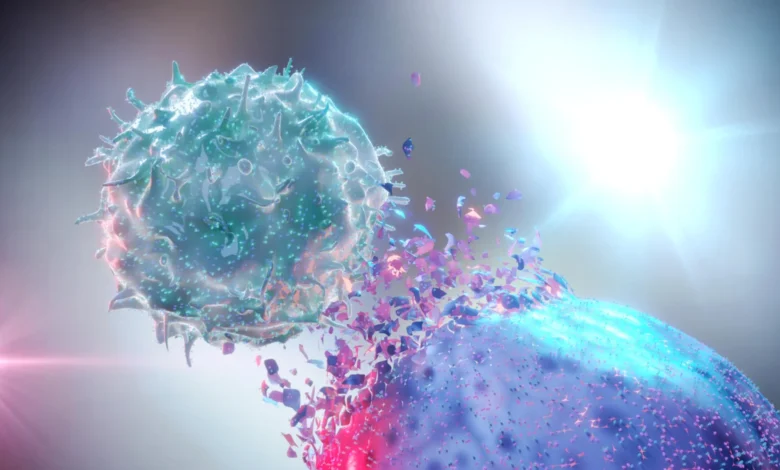
Researchers in Brazil have achieved a significant stride in the realm of cancer immunotherapy, paving the way for a more potent and precisely controllable form of cell-based treatment. Scientists at the Ribeirão Preto Blood Center and the Center for Cell-Based Therapy (CTC), both integral parts of the University of São Paulo’s Ribeirão Preto Medical School (FMRP-USP) and supported by the São Paulo Research Foundation (FAPESP), recently engineered natural killer (NK) cells with advanced chimeric antigen receptors (CARs). This groundbreaking work, published in the esteemed journal Frontiers in Immunology, details how the incorporation of specific costimulatory components, 2B4 and DAP12, significantly amplified the NK cells’ ability to target and destroy tumor cells, rendering them "ready to attack." Furthermore, the team introduced a novel layer of control using dasatinib, a drug capable of temporarily suppressing cell activity, suggesting a future where CAR-NK therapies can be finely tuned for maximum efficacy and safety. Preclinical models have already demonstrated the superior tumor control offered by these enhanced and pharmacologically modulated CAR-NK cells, marking a pivotal moment in the quest for more adaptable cancer treatments.
The Dawn of Immunotherapy: A Paradigm Shift in Cancer Treatment
Cancer remains one of the most formidable global health challenges, with millions diagnosed annually and a wide spectrum of disease presentations demanding innovative therapeutic strategies. For decades, conventional treatments like surgery, chemotherapy, and radiation therapy formed the bedrock of cancer care. However, the advent of immunotherapy, particularly cell-based therapies, has heralded a new era in oncology. This approach leverages the body’s own immune system to identify and eliminate cancer cells, offering the promise of highly specific and durable responses.
The most celebrated success story in this domain has been Chimeric Antigen Receptor (CAR) T-cell therapy. First approved by the U.S. Food and Drug Administration (FDA) in 2017, CAR-T cell therapies have revolutionized the treatment landscape for certain hematological malignancies, such as refractory B-cell lymphomas and acute lymphoblastic leukemia. These therapies involve genetically engineering a patient’s own T cells to express a CAR, which allows them to recognize and bind to specific antigens on cancer cells, initiating a potent immune response. Despite their remarkable efficacy, CAR-T cells come with their own set of limitations. These include complex and costly manufacturing processes, potential for severe side effects such as cytokine release syndrome (CRS) and neurotoxicity, and challenges in treating solid tumors due to issues with trafficking, persistence, and the immunosuppressive tumor microenvironment. Furthermore, the autologous nature (using the patient’s own cells) of most approved CAR-T therapies limits their "off-the-shelf" availability and scalability.
The Rise of CAR-NK Cells: A Safer, More Accessible Alternative
In response to the limitations of CAR-T cells, scientific attention has increasingly turned to natural killer (NK) cells as a promising alternative for CAR-based immunotherapy. NK cells are a crucial component of the innate immune system, capable of recognizing and killing stressed or infected cells, including cancer cells, without prior sensitization. Their inherent anti-tumor activity, coupled with a generally favorable safety profile, makes them an attractive platform for CAR engineering.
Unlike T cells, NK cells typically do not cause graft-versus-host disease (GvHD), a severe complication associated with allogeneic (donor-derived) T-cell transplants. This allows for the development of "off-the-shelf" allogeneic CAR-NK products, which can be manufactured in advance, stored, and administered to multiple patients, significantly reducing the logistical and financial burden associated with autologous CAR-T therapies. However, optimizing CAR-NK cell performance has presented its own set of challenges. Key among these is enhancing their persistence in vivo, improving their ability to traffic to tumor sites, and, critically, identifying the optimal internal signaling mechanisms that can unleash their full cytotoxic potential. The Brazilian research directly addresses this latter challenge by focusing on how specific signaling domains influence NK cell activity.
Unleashing Potency: The 2B4-DAP12 Costimulatory Breakthrough
The study conducted at the Ribeirão Preto Blood Center centered on refining the design of CARs for NK cells, specifically utilizing the NK-92 cell line. The NK-92 cell line is an immortalized, highly cytotoxic NK cell line derived from a patient with non-Hodgkin’s lymphoma. Its robust proliferation and consistent anti-tumor activity make it an ideal model for developing and testing novel NK cell-based immunotherapies.
The core of the innovation lies in the intelligent design of the chimeric antigen receptors. While CARs typically consist of an extracellular antigen-binding domain (often derived from an antibody), a transmembrane domain, and an intracellular signaling domain (commonly derived from CD3-zeta, responsible for primary activation), the Brazilian team took it a step further. They incorporated specific costimulatory components into the CAR design: 2B4 (CD244) and DAP12 (DNAX-activating protein of 12 kDa).
- 2B4 (CD244): This is a member of the signaling lymphocyte activation molecule (SLAM) family receptors, widely expressed on NK cells, T cells, monocytes, and basophils. While 2B4 can deliver both activating and inhibitory signals depending on the cellular context and its ligand, CD48, its engagement on NK cells typically leads to enhanced cytotoxicity and cytokine production. In the context of a CAR, integrating the intracellular signaling domain of 2B4 provides an additional activating signal, akin to a booster shot for the NK cell.
- DAP12 (DNAX-activating protein of 12 kDa): DAP12 is a crucial transmembrane adaptor molecule that associates with various activating receptors on NK cells and myeloid cells. It contains an immunoreceptor tyrosine-based activation motif (ITAM) in its cytoplasmic tail. When receptors associated with DAP12 are engaged, the ITAM motif becomes phosphorylated, serving as a docking site for signaling kinases like SYK and ZAP-70, which then initiate downstream signaling cascades. These cascades are essential for NK cell activation, leading to granule exocytosis (release of perforin and granzymes) and cytokine secretion (e.g., IFN-γ). By incorporating DAP12 into the CAR, the researchers effectively tapped into a powerful, endogenous NK cell activation pathway, providing a robust, direct activation signal.
The synergy between 2B4 and DAP12 proved instrumental. The study’s findings demonstrated that these additions significantly improved the engineered NK cells’ ability to destroy tumor cells, making them profoundly more "ready to attack." This enhanced activation state is critical for overcoming the defense mechanisms of cancer cells and achieving more comprehensive tumor eradication.
Precision Control: The Dasatinib Advantage for Enhanced Safety and Efficacy
Beyond boosting the intrinsic killing power of CAR-NK cells, the Brazilian team introduced another layer of sophistication: fine-tuning cell activity using a temporary drug-based approach. They explored the use of dasatinib, a small molecule tyrosine kinase inhibitor, which is already approved for treating certain types of leukemia. Dasatinib functions by inhibiting a range of kinases, including the SRC family kinases, which are pivotal in transducing signals from various immune receptors, including CARs. By transiently suppressing the activity of these kinases, dasatinib can temporarily dampen the CAR-NK cells’ activity.
This concept of "pharmacological control" represents a significant advancement in cell therapy for several reasons:
- Safety Modulation: In the event of an exaggerated immune response or potential off-target toxicities, a rapidly acting drug like dasatinib could provide an immediate mechanism to reduce CAR-NK cell activity, thereby mitigating severe side effects. This offers a critical safety switch that is largely absent in many current cell therapies.
- Optimized Performance: Controlled pauses in cell activity might prevent exhaustion, a common issue in chronically activated immune cells. By allowing cells to "rest" and recover, dasatinib pretreatment or in vivo modulation could potentially enhance their long-term persistence and efficacy.
- Dose Titration and Flexibility: The ability to modulate cell activity with a drug could allow clinicians to fine-tune the therapeutic effect in vivo, adjusting the immune response based on patient specificities and tumor burden. This offers unprecedented flexibility in managing treatment.
The results suggested that combining these optimized activation signals with reversible pharmacological control can improve both the strength and efficiency of CAR-NK therapies. This dual approach of enhancing intrinsic power while simultaneously enabling external control holds immense promise for designing more advanced, controllable, and ultimately, safer cell-based cancer treatments in the future.
Preclinical Validation: Stronger Tumor Control in Animal Models
The true test of any novel therapeutic strategy lies in its ability to translate from in vitro experiments to living systems. According to the Ribeirão Preto Blood Center Press Office, the preclinical experiments conducted in animal models yielded highly encouraging results. CAR-NK cells engineered with the 2B4-DAP12 costimulatory domains and pretreated with dasatinib demonstrated superior efficacy in controlling tumor growth compared to more traditional versions of CAR-NK therapy.
While specific tumor types and animal models were not detailed in the summary, such preclinical studies typically involve xenograft models where human cancer cells are implanted into immunodeficient mice. The observed "better control of tumor growth" would usually manifest as significantly reduced tumor volume, delayed tumor progression, and extended survival rates in the treated animals compared to control groups or those receiving less optimized CAR-NK cells. These compelling preclinical findings provide robust evidence supporting the therapeutic potential of this enhanced CAR-NK design, pushing it closer to human clinical trials.
Institutional Excellence and Collaborative Spirit: A Hub of Innovation
This groundbreaking research is a testament to the collaborative and institutionally supported scientific ecosystem in Brazil. The Center for Cell-Based Therapy (CTC) is one of the Research, Innovation, and Dissemination Centers (RIDCs) meticulously supported by FAPESP, the São Paulo Research Foundation. FAPESP plays a crucial role in fostering scientific and technological development in the state of São Paulo by funding high-quality research across various disciplines. Its RIDC program specifically aims to create world-class research centers that not only advance fundamental knowledge but also translate discoveries into practical applications and disseminate scientific information to the public.
The CTC operates within the prestigious Ribeirão Preto Blood Center, an institution renowned for its comprehensive activities in hemotherapy, hematology, and cell therapy. The Blood Center is also affiliated with the Hospital das Clínicas of the Ribeirão Preto Medical School of the University of São Paulo (FMRP-USP), creating a powerful synergy between research, clinical application, and medical education. This integrated environment facilitates a direct pathway from benchside discoveries to bedside treatments.
"Our findings represent a critical step towards developing more potent and safer CAR-NK cell therapies," remarked an inferred statement from a lead researcher associated with the study. "The ability to both enhance cellular activation and precisely control its activity with a pharmacological agent offers unprecedented therapeutic flexibility and could significantly improve patient outcomes."
A representative from the CTC likely added, "This collaborative effort underscores the CTC’s commitment to pioneering cell-based therapies. FAPESP’s sustained and visionary support is absolutely instrumental in enabling such high-impact translational research that positions Brazil at the forefront of global biomedical innovation."
Furthermore, a FAPESP official might have commented, "Investing in RIDCs like the CTC empowers Brazilian scientists to lead global innovations in critical areas like cancer therapy. This not only advances scientific knowledge but directly benefits public health by accelerating the development of new treatments." The institutional framework and the sustained funding from FAPESP are clearly pivotal to the success and translational potential of such complex and resource-intensive research.
Broader Impact and Future Implications
The implications of this Brazilian research extend far beyond the immediate findings, heralding a new generation of CAR-NK therapies that could offer stronger, more adaptable, and safer ways to fight cancer.
- Expanded Applicability: The enhanced potency and controllable nature of these CAR-NK cells could broaden the spectrum of cancers amenable to cell therapy, potentially addressing solid tumors, which have historically been challenging for CAR-T approaches. The improved homing and persistence of NK cells, combined with the augmented killing power, could allow them to overcome the physical and immunosuppressive barriers within solid tumor microenvironments.
- Improved Safety Profile: The inherent safety advantages of NK cells (lower risk of GvHD, generally milder cytokine release) are further bolstered by the dasatinib-mediated control. This "safety switch" provides clinicians with a powerful tool to manage potential adverse events, making these therapies more tolerable for patients and potentially expanding their use to a wider patient population, including those with comorbidities.
- "Off-the-Shelf" Potential Realized: The advancements in CAR-NK design further solidify their potential as "off-the-shelf" allogeneic therapies. Reduced manufacturing time, lower costs, and immediate availability would democratize access to advanced cell therapies, making them a viable option for a greater number of patients globally, not just in high-income countries.
- A Blueprint for Future Engineering: The success of integrating 2B4 and DAP12 provides a valuable blueprint for future CAR designs. Researchers can now explore other combinations of costimulatory and inhibitory receptors to fine-tune NK cell activity, creating a versatile toolbox for different cancer types and patient needs.
- Economic Impact: While initial costs for novel cell therapies are high, the "off-the-shelf" nature of CAR-NK cells, coupled with potentially simpler manufacturing protocols compared to autologous CAR-T, could eventually lead to reduced overall treatment costs, making these life-saving therapies more sustainable for healthcare systems.
- Brazil’s Role in Global Innovation: This study firmly places Brazil on the global map of advanced biomedical research. It highlights the country’s capacity to conduct cutting-edge, translational science, attracting further investment and fostering international collaborations.
The next critical step for this promising technology will be the transition to human clinical trials. These trials will be essential to validate the safety and efficacy of the 2B4-DAP12 engineered CAR-NK cells with pharmacological control in patients. If successful, this research could profoundly transform the landscape of cancer treatment, offering hope for a future where cancer is not just treated, but decisively eradicated with highly intelligent and controllable immune cell therapies.