Bridging the Gap Between Consumer Gadgets and Clinical Medicine: The Evolution and Challenge of Wearable Health Trackers

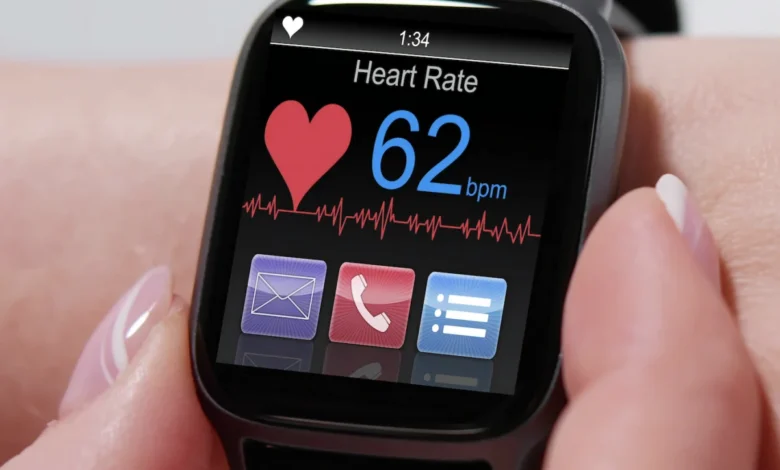
The modern era of digital health stands at a critical crossroads where consumer-grade wellness technology and rigorous clinical diagnostics increasingly intersect. Decades ago, the landscape of ambulatory monitoring was defined strictly by bulky hospital equipment. Today, millions of people walk around with sophisticated biometric sensors embedded in smartwatches, rings, and continuous glucose monitors. While these devices have successfully democratized health tracking and empowered individuals to take charge of their daily well-being, they have also forced a profound reckoning within the medical community. As consumer-generated metrics begin to mirror clinical biomarkers, physicians, regulators, and technology developers must grapple with unprecedented questions regarding validation, data privacy, and the integration of artificial intelligence into routine medical workflows.
The historical trajectory of ambulatory monitoring began in the 1960s when biophysicist Norman J. “Jeff” Holter commercialized the portable electrocardiogram, a breakthrough now universally known as the Holter monitor. Before this invention, physicians relied entirely on snapshots of cardiac activity captured during brief, in-clinic visits—a practice fundamentally flawed by sampling bias. A short electrocardiogram could easily miss sporadic, cryptic heart arrhythmias or transient symptoms of syncope, leaving patients vulnerable to sudden, severe cardiac events. Holter’s innovation shifted the paradigm of medicine, proving that continuous monitoring outside hospital walls could quietly surface hidden physiological dangers before they culminated in tragic outcomes.
For many decades following Holter’s breakthrough, medical monitoring remained strictly within the realm of institutional healthcare. However, the 21st century gave rise to a bifurcated path in health tracking. On one side stood medical-grade devices strictly regulated for clinical deployment, and on the other emerged consumer wellness gadgets manufactured by major tech companies like Fitbit, Samsung, Garmin, and Oura. Initially, these consumer products occupied a distinct, low-stakes category focused primarily on step counts, casual sleep tracking, and basic fitness metrics. Over time, rapid advancements in sensor technology and microprocessors began to blur the boundary separating wellness products from medical instruments.

A pivotal turning point in this convergence arrived when the U.S. Food and Drug Administration cleared Dexcom’s Stelo, marking the first over-the-counter continuous glucose monitor available directly to consumers without a traditional prescription. Simultaneously, platforms like Apple’s HealthKit began aggregating complex health records, laboratory results, and third-party wearable data into a single interface. Companies such as WHOOP started forging direct partnerships with clinical laboratory networks like Quest Diagnostics to couple everyday biometric metrics with advanced blood testing. These developments transformed consumer tech from simple pedometers into sophisticated data-gathering engines, compelling the medical establishment to establish clear standards for determining when digital signals are accurate and interpretable enough to guide clinical decisions.
Regulatory bodies have recognized the urgency of adapting oversight frameworks to match the breakneck speed of technological innovation. In January, during the Consumer Technology Association’s CES show, federal health officials announced updates to agency guidance governing wearable technologies and artificial intelligence-enabled medical devices, designed to accelerate their pathway to market. Furthermore, federal agencies have rolled out targeted pilot initiatives, such as the ACCESS and TEMPO programs managed by the Centers for Medicare and Medicaid Services, aimed at facilitating insurance reimbursement for wearable devices tailored to manage chronic conditions like hypertension, diabetes, and depression.
Under the TEMPO pilot, select digital health devices can achieve distribution while manufacturers collect real-world performance data, bypassing parts of the traditional, lengthy regulatory pathway typically demanded of legacy medical hardware. In parallel, the Advanced Research Projects Agency for Health launched Delphi, a federal research initiative dedicated to fostering low-cost wearable and ingestible biosensors capable of continuously tracking complex biological signals, including circulating hormones, immune markers, and therapeutic drug concentrations.
These federal initiatives reflect a growing consensus that wearables can serve as a vital lifeline by exposing invisible physiological shifts during everyday life. Countless individuals have credited smartwatch notifications with prompting them to seek timely medical intervention for previously undetected arrhythmias. Similarly, continuous glucose monitors have driven a profound shift in how people conceptualize metabolic health, enabling everyday users to link dietary habits, sleep quality, physical exertion, and stress levels directly to real-time glucose fluctuations. Broader public health studies have consistently linked the adoption of wearable trackers to measurable increases in overall physical activity levels.

Despite these encouraging benefits, the transition of wearable data into the realm of diagnostic information highlights a striking regulatory discrepancy. Historically, traditional diagnostic medicine has been governed by rigorous validation frameworks. Hospital-based laboratories operate under the stringent oversight of the federal Clinical Laboratory Improvement Amendments, commonly known as CLIA, and maintain accreditations from organizations like the College of American Pathologists. Before a novel laboratory test can be deployed in patient care, it must undergo exhaustive in-house validation to prove its analytical validity and clinical utility.
Applying these rigorous validation standards to consumer wearables presents a distinct challenge because many devices rely heavily on proprietary algorithms and produce composite wellness scores rather than raw concentrations of conventional clinical biomarkers. Metrics such as sleep scores or readiness indices often synthesize physiological inputs like heart-rate variability, resting skin temperature, and sleep duration. However, individual manufacturers may weight these underlying signals differently, frequently without tying them to independent, standardized predictors of specific pathological conditions.
Validation studies have demonstrated varying degrees of reliability across consumer hardware. While many modern sleep trackers prove reasonably accurate in identifying overall sleep duration and morning wake times, they remain significantly less reliable when attempting to isolate precise stages of sleep, such as deep sleep or rapid eye movement phases. Furthermore, measurements like heart-rate variability can fluctuate wildly between different brands of trackers, and because the metric lacks a universal baseline correlation to specific diagnostic categories, clinicians frequently find it difficult to interpret for clinical decision-making.
The complexity of interpreting wearable data is further magnified by large-scale population studies. In a landmark clinical trial supported by Apple, researchers enrolled nearly 419,300 adult participants utilizing a smartwatch application designed to detect irregular heartbeats. Over the course of the study, more than 2,000 participants received alerts indicating an irregular pulse. However, subsequent clinical evaluation confirmed atrial fibrillation in only about one-third of those who sought follow-up care. This disparity underscores a central operational hurdle: while wearables possess the power to flag potential cardiovascular anomalies at an unprecedented scale, the high volume of false positives can strain clinical capacity and overwhelm outpatient cardiology departments.

Artificial intelligence has rapidly emerged as both a potential solution and an added layer of complexity in managing this data flood. Patients increasingly turn to consumer-facing AI chatbots for health-related inquiries, while physicians widely adopt generative AI systems for clinical documentation, preliminary diagnostic assistance, and decision support. In theory, large language models could serve as powerful interpreters, synthesizing streams of wearable data into coherent insights for both patients and doctors. In practice, however, unverified AI tools run the risk of confidently misinterpreting poorly standardized physiological signals, amplifying false-positive alarms, and driving unnecessary patient anxiety and healthcare utilization.
Experts argue that if artificial intelligence is to successfully bridge the gap between raw biometric data and clinical action, it must function transparently as a reliable assistant. Rather than generating alarmist notifications, an effective AI-driven ecosystem should proactively identify when an individual’s long-term health metrics are trending in an unfavorable direction, while ensuring that patients do not fall through the cracks of a busy healthcare system.
Beyond clinical validity and algorithmic interpretation, the rapid proliferation of consumer health trackers raises urgent questions regarding data privacy and security. Unlike data collected inside a hospital or traditional clinic, biometric information gathered by commercial wearables is largely excluded from the strict privacy protections mandated by the Health Insurance Portability and Accountability Act, commonly known as HIPAA. This regulatory gap leaves consumer health data vulnerable to commercial exploitation. Biometric sensor data sold on the open data broker market can potentially be acquired by employers, commercial insurers, or even third-party entities to infer highly sensitive personal details, including psychological stress levels, mood patterns, and intimate behavioral habits such as sleep and wake schedules.
Policymakers have slowly begun recognizing these vulnerabilities. Legislative proposals such as the SMARTWATCH Data Act, which sought to restrict the unauthorized sale and sharing of consumer health metrics, alongside more recent measures like the Health Information Privacy Reform Act—designed to extend HIPAA-like privacy safeguards to health data harvested outside traditional medical environments—signal a legislative shift toward closing these legal loopholes.

Despite these valid concerns regarding privacy, data standardization, and clinical oversight, healthcare professionals emphasize that the medical community should embrace rather than retreat from the wearable revolution. When properly regulated and validated, consumer health technologies afford patients a valuable degree of agency, offering a continuous window into their own internal physiology and opening up unprecedented opportunities for preventative intervention long before chronic diseases manifest symptomatically in a doctor’s office.
Ultimately, if the future of medicine is to be decentralized and distributed across the human body, it must be constructed with the same unwavering commitment to scientific rigor, transparency, and accountability that has long governed traditional diagnostic laboratories. Doing so would honor the foundational legacy of innovators like Jeff Holter, who recognized decades ago that assessing a patient’s complex physiology from a single, isolated snapshot is as flawed as attempting to judge an entire mountain of ore by testing a single rock.