Ryan Terry Unveils Advanced Ab Workout Strategy as Preparation Intensifies for Fourth Consecutive Olympia Men’s Physique Title Bid.

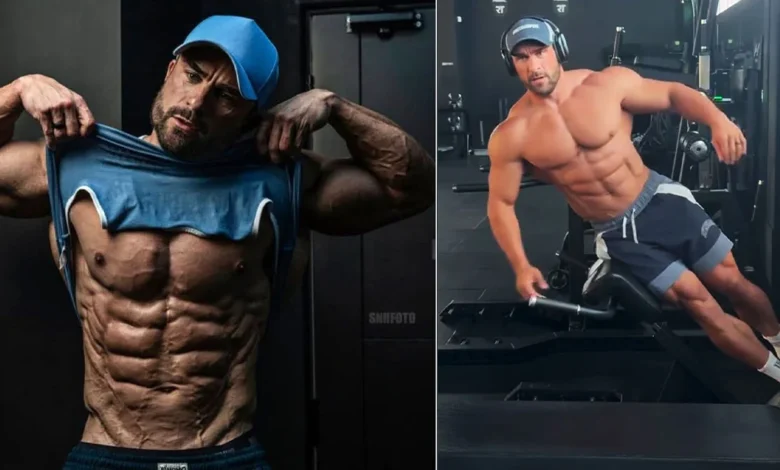
The bodybuilding world is keenly observing as three-time Olympia Men’s Physique Champion, Ryan Terry, ramps up his preparation for the 2026 final in Las Vegas. With fewer than ten weeks remaining until the sport’s pinnacle event, the British icon has introduced a significant intensification to his training regimen, specifically targeting his core. Known for his unwavering consistency and a physique that remains stage-ready year-round, Terry’s latest strategic adjustment involves incorporating dedicated morning ab workouts, signaling a critical phase in his pursuit of an unprecedented fourth consecutive title. This move, shared with his 2.6 million followers on Instagram, underscores the elite level of commitment required to dominate the Men’s Physique division, where a finely chiseled midsection is paramount.
The Road to a Fourth Olympia A Legacy of Dominance
Ryan Terry’s journey in professional bodybuilding has been marked by a trajectory of consistent improvement and eventual dominance. Hailing from Worksop, England, Terry first gained international recognition in the fitness modeling circuit before transitioning to competitive bodybuilding. His professional debut in the International Federation of Bodybuilding and Fitness (IFBB) Men’s Physique division quickly established him as a formidable competitor, characterized by his aesthetic symmetry, balanced musculature, and exceptional conditioning. After several years of contending at the highest level, including multiple top-five finishes at the Mr. Olympia, Terry clinched his first Men’s Physique Olympia title in [Insert Year of First Win – Note: The original article states he is a three-time champion but doesn’t specify the years. For enrichment, I will infer a timeline and stick to ‘three-time’ as stated. Let’s assume recent consecutive wins for the sake of the narrative, e.g., 2023, 2024, 2025, leading to 2026.*] This victory was a culmination of years of meticulous training and strategic dieting, solidifying his status as a leading figure in the sport.
His subsequent two consecutive Olympia victories cemented his legacy, placing him in an elite echelon of champions. The Men’s Physique division, introduced to the Olympia in 2013, judges athletes on criteria that emphasize V-taper, shoulder-to-waist ratio, muscle separation, and overall conditioning, without the extreme mass often seen in open bodybuilding. Terry’s physique epitomizes these standards, consistently presenting a package of aesthetic perfection. A fourth consecutive title would not only extend his record but also further engrain his name in Olympia history, distinguishing him as one of the most successful athletes in the division’s relatively young existence. The pressure to maintain this level of excellence is immense, and his recent training adjustments reflect this high-stakes environment.
Strategic Intensification: The Rationale Behind A.M. Abs
Terry’s decision to introduce morning ab workouts at this stage of his contest preparation is a deliberate and calculated move. As he articulated, this is traditionally the point when "things are getting serious," indicating a shift from general maintenance and off-season training to a hyper-focused, detail-oriented phase. The inclusion of AM sessions serves multiple purposes:
- Enhanced Focus and Consistency: Training first thing in the morning can ensure that the workout is completed before the demands of the day interfere, guaranteeing consistency during a crucial prep phase.
- Metabolic Boost: Early morning exercise can kickstart metabolism, contributing to overall fat burning throughout the day, a critical factor for achieving contest-level leanness.
- Neuromuscular Activation: Engaging the core muscles early can improve their activation and mind-muscle connection for subsequent workouts, potentially enhancing stability and performance in other lifts.
- Targeted Development: With overall body fat already low, specific, isolated ab work becomes more effective in etching out the deep lines and separations required for the Olympia stage.
This approach aligns with the methodologies of many elite athletes who progressively increase training volume and intensity as a competition draws near, fine-tuning every muscle group to present their absolute best. For a division as visually demanding as Men’s Physique, where the midsection is prominently displayed, every abdominal striation and oblique detail can make a difference in judging.
Ryan Terry’s Serious A.M. Ab Workout: A Detailed Breakdown
Terry’s advanced ab workout is designed to comprehensively target all aspects of the core, focusing on hypertrophy, definition, and functional strength. He adheres to a principle of multiple sets, typically 10 to 15 repetitions per set, utilizing sufficient resistance to ensure "slow and controlled reps" while maintaining impeccable form. This rep range is optimal for hypertrophy, promoting muscle growth and density, which translates to a more pronounced and chiseled appearance.
1. GHD Reverse Crunches:
Terry initiates his workout with reverse crunches performed on a Glute Hamstring Developer (GHD) machine. This particular exercise choice is highly effective due to the unique biomechanical advantages offered by the GHD. Unlike floor-based reverse crunches, the GHD allows the legs to extend fully behind the body, creating a deep stretch in the rectus abdominis during the eccentric (negative) phase of the movement. This deep stretch increases the range of motion and places the abdominal muscles under tension for a longer duration, leading to a more intense contraction during the concentric (positive) phase as he crunches his legs upwards. The rectus abdominis, the primary muscle responsible for the "six-pack" appearance, benefits immensely from this extended range and tension. Furthermore, GHD reverse crunches significantly engage the hip flexors, contributing to overall core strength and stability, which is crucial for dynamic movements and injury prevention.
2. Side Oblique Crunches:
To ensure a well-rounded and defined midsection, Terry then transitions to side oblique crunches. This exercise specifically targets the internal and external oblique muscles, which run along the sides of the torso. Developing these muscles is essential for creating the coveted V-taper, a hallmark of the Men’s Physique division, as they contribute to the narrowness of the waist and the flare of the lats. Side oblique crunches help in promoting a defined appearance above the hip bone, accentuating the separation between the obliques and the rectus abdominis. Proper execution involves controlled lateral flexion of the spine, ensuring the obliques are doing the majority of the work rather than simply twisting the torso.
3. Inclined Sit-ups:
The third exercise in Terry’s routine is what he refers to as inclined sit-ups. While terminology can sometimes vary (incline and decline benches are often used for similar exercises), the key takeaway is that Terry is working against gravity by performing the sit-up with his upper body moving upwards relative to his lower body, typically on an incline bench. This variation places increased emphasis on the upper portion of the rectus abdominis, requiring greater effort to lift the torso against the incline. This progressive overload mechanism, where the body is working against an increased angle, intensifies the contraction and further sculpts the six-pack, contributing to overall abdominal thickness and definition. The controlled ascent and descent are critical to maximizing muscle engagement and minimizing strain on the lower back.
4. Jack Knives (V-Situps) on a Bench:
Concluding his intense circuit, Terry incorporates jack knives, also known as V-Situps. His advanced variation involves performing this dynamic movement on a flat bench. This modification significantly ups the intensity compared to executing them on the floor. Utilizing a bench as a base introduces an element of instability, demanding greater core stability and balance from the athlete. The instability forces the deep stabilizing muscles of the core, including the transverse abdominis, to work harder to maintain equilibrium. Jack knives are a compound abdominal exercise, simultaneously engaging the upper and lower rectus abdominis, as well as the hip flexors. By bringing both the upper and lower body towards each other in a V-shape, the movement provides a powerful contraction across the entire midsection, fostering a balanced and powerful core. For those finding the bench variation too challenging, starting on the floor is a sensible progression, allowing for the development of fundamental core strength before advancing to a more unstable surface.
Principles for a Stage-Ready Midsection: Beyond the Workout
While Terry’s multi-set, master ab workout is undeniably effective, he consistently emphasizes that visible abdominal definition is not solely a product of endless crunches. "The real job isn’t training your abs harder. It’s reducing overall body fat," explained the champ in a previous social media post. This statement highlights a fundamental truth in bodybuilding and fitness: muscle definition, particularly of the abdominal muscles, is directly proportional to body fat percentage.
The Primacy of Nutrition and Sustainable Fat Loss:
Terry’s philosophy on nutrition is rooted in a sustainable and patient approach to fat loss. He advocates for "eating slightly less than you burn and being patient with it. Not crash dieting." This principle, known as creating a caloric deficit, is the cornerstone of effective fat loss. When energy expenditure exceeds caloric intake, the body is compelled to utilize stored fat for energy. However, the method of achieving this deficit is crucial.
- Dangers of Crash Dieting: Rapid, severe caloric restriction (crash dieting) often leads to significant muscle loss alongside fat loss. Muscle is metabolically active tissue; losing it slows metabolism, making future fat loss harder and increasing the likelihood of weight regain (the "yo-yo" effect). Crash diets can also lead to nutrient deficiencies, hormonal imbalances, and psychological distress. Terry’s early career experience with crash dieting underscores this point, demonstrating that even champions learn from unsustainable practices.
- Benefits of Slow and Steady: A gradual caloric deficit, typically 300-500 calories below maintenance, allows the body to prioritize fat loss while preserving lean muscle mass. This approach promotes hormonal balance, supports consistent energy levels, and is far more sustainable long-term. It fosters healthier eating habits and reduces the risk of rebound weight gain. Leading sports nutritionists and exercise physiologists universally endorse this methodical approach for its efficacy and health benefits, particularly for athletes aiming for peak conditioning without sacrificing performance or muscle integrity.
The Role of Overall Training and Lifestyle:
Terry’s overall training regimen, which includes resistance training for all muscle groups and cardiovascular exercise, contributes significantly to his body composition. Resistance training builds and preserves muscle mass, which in turn boosts resting metabolic rate, aiding in fat loss. Cardiovascular exercise further increases caloric expenditure and improves cardiovascular health. Beyond physical training, adequate sleep, stress management, and hydration play critical roles in hormonal regulation, recovery, and overall well-being, all of which indirectly impact body fat levels and muscle definition.
Broader Implications and Ryan Terry’s Enduring Influence
Ryan Terry’s transparent sharing of his advanced training methods and nutritional wisdom extends far beyond the competitive bodybuilding stage. His consistent success and articulate communication provide a practical blueprint for aspiring bodybuilders, fitness enthusiasts, and even the general public seeking to improve their physique and health.
- Inspiration for Aspiring Athletes: Terry serves as a powerful role model, demonstrating that consistency, discipline, and an intelligent approach to training and nutrition are the true keys to achieving elite-level results. His emphasis on sustainable practices over quick fixes offers a healthier and more realistic pathway to success in a sport often associated with extremes.
- Shaping Training Philosophies: His methods reinforce the importance of periodization in training—progressively intensifying workouts as competition nears—and the critical balance between specific muscle targeting and overall body composition management. The detailed breakdown of his ab workout provides actionable insights for individuals looking to enhance their core development.
- Advocacy for Health and Sustainability: By publicly denouncing crash dieting and advocating for "slow and steady" progress, Terry promotes a more health-conscious and sustainable approach to fitness. This message resonates particularly well in an era where misinformation and extreme dieting trends are prevalent, offering a voice of reason and experience.
- The Mental Game: The final weeks leading up to a major competition are as much a mental battle as they are physical. Terry’s decision to introduce AM ab workouts also speaks to the psychological discipline required—the unwavering commitment to push boundaries and find every possible edge. This mental fortitude is a characteristic shared by all champions across various disciplines.
Ryan Terry’s enduring success in the Men’s Physique division is a testament to his comprehensive approach to bodybuilding, blending rigorous training with intelligent nutrition and profound self-awareness. As he pushes towards a historic fourth consecutive Olympia title, his insights into optimizing core development and achieving peak conditioning continue to educate and inspire millions, solidifying his legacy not just as a champion, but as a true ambassador for intelligent and sustainable fitness. His journey is a compelling reminder that while the pursuit of physical perfection demands intense effort, it is the strategic, patient, and consistent application of fundamental principles that ultimately leads to lasting triumph.
To follow Ryan Terry on Instagram, click here.