Innovations in Sleep Medicine Technology Honored with 2026 Red Dot Awards for Excellence in Product Design and Patient Usability

The landscape of sleep medicine is undergoing a transformative shift as the industry moves away from clinical, tethered environments toward patient-centric, home-based solutions. This evolution was prominently highlighted at the 2026 Red Dot Award for Product Design, where several groundbreaking technologies in home sleep testing, Continuous Positive Airway Pressure (CPAP) therapy, and electroencephalogram (EEG) monitoring were recognized for their exceptional design and usability. The Red Dot Award, a globally recognized seal of quality, serves as a benchmark for products that successfully bridge the gap between sophisticated medical functionality and the aesthetic and ergonomic demands of daily life. This year’s recipients, including Onera Health, ResMed, and Somnee, represent the vanguard of a movement dedicated to improving patient compliance and diagnostic accuracy through thoughtful engineering.
Redefining Diagnostics: Onera Health’s Patch-Based Polysomnography
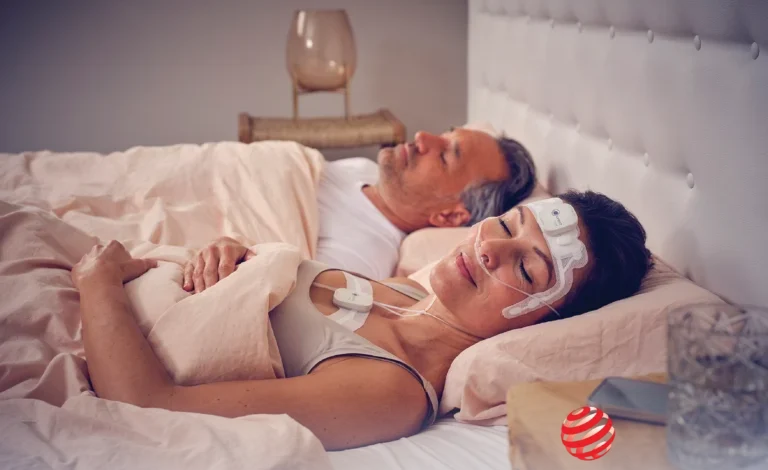
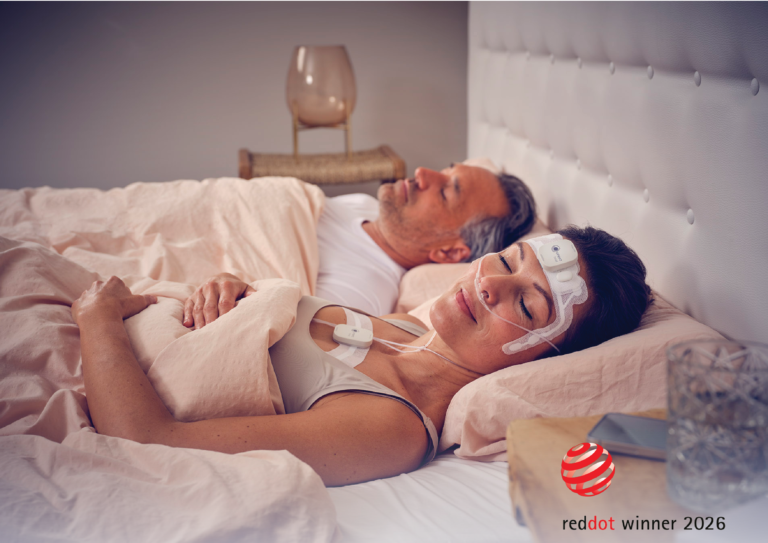
A primary highlight of the 2026 awards was the recognition of Onera Health for its Onera hPSG sensors. Traditionally, the "gold standard" for diagnosing sleep disorders has been polysomnography (PSG), a process that typically requires a patient to spend a night in a specialized sleep laboratory. These labs involve a complex array of wired sensors attached to the scalp, face, chest, and limbs, often leading to a "first-night effect" where the discomfort of the environment prevents the patient from achieving natural sleep patterns.
Onera Health has addressed this barrier by developing a wireless, patch-based sleep diagnostic system. The Onera hPSG solution is designed to move the full diagnostic capabilities of a clinical lab into a decentralized, home-based application. The system utilizes integrated electronics within compact sensor patches that capture a full suite of PSG data, including brain activity, eye movements, muscle tension, heart rate, and respiratory effort. By eliminating the need for the bulky headboxes and long cables associated with traditional PSG, the device allows patients to sleep in their own beds, thereby providing clinicians with data that more accurately reflects the patient’s typical sleep architecture.
Ruben de Francisco, founder and CEO of Onera Health, emphasized that this third Red Dot win for the company underscores a sustained commitment to pushing the boundaries of medical design. According to de Francisco, the goal is to provide clinical-grade data without the clinical-grade burden on the patient. The jury noted that the Onera hPSG sensors stood out for their ability to condense complex medical hardware into a form factor that is intuitive for a layperson to apply at home, effectively democratizing access to high-tier diagnostics.
Improving CPAP Adherence through Human-Centric Design: The ResMed AirTouch F30i
While diagnostics are the first step in the patient journey, the efficacy of sleep medicine depends heavily on long-term treatment adherence. Obstructive Sleep Apnea (OSA), a condition affecting hundreds of millions of people worldwide, is primarily treated with CPAP therapy. However, historical data suggests that nearly 30% to 50% of patients struggle with compliance due to the discomfort of the interface—the mask.
ResMed, a global leader in digital health and sleep apnea treatment, was recognized in the Innovative Design category for its AirTouch F30i CPAP full-face mask. The AirTouch F30i represents a departure from traditional plastic and silicone interfaces, utilizing a fabric-wrapped frame to provide a softer, more natural feel against the skin. This design choice addresses a common patient complaint: the clinical, "medicalized" appearance and feel of respiratory equipment.
The Red Dot jury praised ResMed for its "thoughtful selection of materials," noting that the mask’s design supports a more restful night’s sleep by reducing pressure points and skin irritation. Justin Leong, ResMed’s Chief Product Officer, stated that the design process for the AirTouch F30i began with the patient experience rather than the mechanical requirements of the device. By prioritizing the "real-world needs" of users, ResMed aims to transform a necessary medical intervention into a habit that patients can embrace. The integration of a top-of-the-head tube connection further enhances usability, allowing for freedom of movement during sleep, which is a critical factor for active sleepers.
The Intersection of AI and Neurostimulation: The Somnee Smart Sleep Headband
Beyond diagnostic patches and respiratory masks, the 2026 Red Dot Awards also highlighted the growing field of neurotechnology. The Somnee Smart Sleep Headband was honored for its integration of clinical-grade EEG technology into a consumer-friendly wearable. Unlike passive sleep trackers that merely monitor movement, the Somnee headband utilizes hydrogel electrodes to record brain activity in real-time.
The device’s innovation lies in its closed-loop system: an artificial intelligence (AI) engine analyzes the user’s unique brainwave patterns and delivers personalized neurostimulation. This targeted support is designed to help users fall asleep faster and maintain deeper sleep cycles. The Red Dot jury commended the device for its ability to translate complex neuroscientific findings into a lightweight, comfortable form factor suitable for overnight wear.
The success of the Somnee headband reflects a broader trend in the industry where "sleep tech" is moving toward active intervention. By providing personalized stimulation based on live data, Somnee represents a shift toward precision medicine in the home environment. The challenge of maintaining signal quality through a soft headband was a key design hurdle, and the jury’s recognition suggests that the product has successfully balanced high-fidelity data collection with user comfort.
Global Contributions to Sleep Technology
The 2026 awards also recognized significant contributions from international manufacturers, reflecting the global nature of the sleep health crisis. Hefei Synaire Medical Technology Co. received an award for the SynAura CPAP, a device noted for its streamlined interface and quiet operation. Similarly, Resvent Medical Technology Co. Ltd. was honored for its RXiBreeze+ APAP and PAP systems, which incorporate advanced pressure-regulation algorithms into a compact, modern chassis.
These awards highlight a competitive landscape where manufacturers are no longer competing solely on clinical specs, but on how well those specs are packaged for the end-user. The inclusion of multiple Asian manufacturers in the winners’ circle underscores the rapid innovation occurring in the Eastern medical device sector, particularly in the realm of respiratory therapy.
The Red Dot Evaluation: A Rigorous Standard for Excellence
The Red Dot Design Award, established in 1955 and headquartered in Essen, Germany, remains one of the most prestigious design competitions in the world. For the 2026 cycle, the competition evaluated entries from over 60 countries. The evaluation process is conducted by a jury of 40 independent experts, including designers, academics, and specialized journalists.
Submissions are assessed based on four key principles of good design:
- Quality of Function: Does the product solve the problem it was intended to address?
- Quality of Seduction: Is the product aesthetically pleasing and does it create an emotional connection with the user?
- Quality of Use: Is the product intuitive, ergonomic, and easy to maintain?
- Quality of Responsibility: Is the product sustainable and does it contribute positively to society?
In the medical category, the "Quality of Use" is particularly scrutinized. A product that is technically superior but difficult for a patient to operate is considered a design failure. The 2026 winners were lauded specifically for making complex medical procedures—like EEG recording or CPAP titration—feel accessible and non-intimidating.
Market Context and the Economic Impact of Sleep Health
The recognition of these technologies comes at a critical time for global healthcare systems. According to the American Academy of Sleep Medicine (AASM), nearly 30 million adults in the United States suffer from obstructive sleep apnea, yet it is estimated that 80% remain undiagnosed. Undiagnosed sleep disorders are linked to a host of chronic conditions, including hypertension, Type 2 diabetes, and cardiovascular disease. Furthermore, the economic cost of sleep-related fatigue, including lost productivity and workplace accidents, is estimated to be in the hundreds of billions of dollars annually.
The shift toward home-based diagnostics, led by companies like Onera Health, is seen as a vital solution to this public health crisis. By lowering the barriers to testing, more patients can be funneled into the treatment pipeline. Similarly, the design innovations from ResMed and Somnee are crucial for ensuring that once a patient is diagnosed, they remain engaged with their therapy.
Chronology of Innovation in Sleep Design
The path to the 2026 awards has been marked by several years of incremental breakthroughs:
- 2020-2022: The COVID-19 pandemic accelerated the adoption of telehealth and home sleep apnea testing (HSAT), as sleep labs were forced to close or limit capacity. This period saw a surge in investment for remote monitoring technologies.
- 2023-2024: Companies began integrating AI into sleep devices to provide predictive analytics, moving from descriptive data (how you slept) to prescriptive data (how to sleep better).
- 2025: A major focus was placed on material science, leading to the development of skin-safe hydrogels and medical-grade fabrics that replaced traditional plastics.
- 2026: The Red Dot Awards reflect the culmination of these trends, where wireless connectivity, AI, and ergonomic materials have converged into "invisible" medical technology.
Broader Implications for the Future of Healthcare
The 2026 Red Dot Awards for sleep medicine technology signal a broader trend in the healthcare industry: the "consumerization" of medical devices. As patients become more active participants in their own care, they demand products that fit their lifestyles rather than forcing their lifestyles to fit the product.
The success of these designs suggests that the future of sleep medicine will be characterized by "ambient" healthcare—diagnostics and treatments that happen in the background of a patient’s life. When a sleep test is as simple as applying a patch, and a CPAP mask feels like a piece of clothing, the stigma associated with sleep disorders begins to evaporate. This shift is expected to improve long-term health outcomes, reduce the burden on clinical infrastructure, and ultimately lead to a more rested and productive global population.
As the 40 independent experts of the Red Dot jury concluded, the excellence displayed by these products lies in their ability to make the "gold standard" of care a standard part of the home. For the millions of individuals suffering from sleep-disordered breathing and insomnia, these design-led innovations represent more than just award-winning products; they represent a clearer path to a healthier life.