While our ancestors relied on their senses to assess how they were doing, increasingly, we rely on gadgets.

In an era marked by unprecedented technological advancement, the landscape of personal health management has undergone a profound transformation. Where once individuals navigated their well-being through instinct, observation, and the communal wisdom passed down through generations, modern society has shifted towards a reliance on sophisticated digital tools. Today, a multitude of sleek, wearable devices can meticulously track a user’s heart rate, step count, exercise intensity, and even the intricate patterns of sleep quality, often consolidating these metrics into a single, accessible platform.
This evolution represents a significant paradigm shift, moving from a subjective interpretation of bodily signals to an objective, data-driven understanding. At its best, this technology serves as a vital bridge, connecting what an individual intuitively feels with what can be precisely measured. This fusion of internal sensation and external data offers a powerful pathway to enhanced self-awareness and improved health decisions, a concept that continues to redefine personal wellness.
The Rise of the Quantified Self: A Historical Context
For millennia, human beings have assessed their physical state through direct sensory input: the feeling of hunger, the onset of fatigue, the ache of muscles after exertion, or the flush of fever. These internal cues, combined with external observations of physical appearance and performance, formed the basis of self-assessment. While effective for survival and basic well-being, this subjective approach inherently lacked precision and was susceptible to individual biases and external influences.
The late 20th and early 21st centuries ushered in the "quantified self" movement, a cultural phenomenon driven by technological innovation. Early pedometers offered a rudimentary count of steps, a simple metric that nonetheless sparked interest in activity tracking. The advent of digital heart rate monitors, initially bulky chest straps, provided athletes with real-time physiological feedback. However, it was the miniaturization of sensors, advancements in battery life, and the proliferation of smartphones that truly democratized personal health tracking. Today, smartwatches, fitness bands, ring trackers, and even sophisticated smartphone applications integrate accelerometers, gyroscopes, optical heart rate sensors, and GPS capabilities to capture a vast array of physiological and behavioral data points. The global wearable technology market, valued at approximately $150 billion in 2023, is projected to exceed $300 billion by 2030, underscoring the widespread adoption and growing societal reliance on these devices.
The Inherent Imprecision of Subjective Assessment
Despite the perceived intimacy of our own bodies, human subjective assessments are remarkably prone to error. Cognitive biases, selective memory, and the inherent difficulty in quantifying complex behaviors often lead to significant discrepancies between perception and reality. For instance, an individual might genuinely believe they are adhering to a specific dietary caloric intake, only to discover, through meticulous tracking, that hidden calories in condiments or snacks contribute an additional 500 Calories daily. This common scenario highlights the fallibility of intuition when it comes to precise measurement.
While most individuals struggle with such exactitude, historical anecdotes reveal rare outliers. Canadian sprinter Ben Johnson was reportedly capable of predicting his 100-meter sprint times within a tenth of a second of the official stopwatch reading. Such extraordinary self-calibration, however, remains an exceptional phenomenon, underscoring the general human tendency towards imprecision in self-assessment. This fundamental human limitation is precisely where technology offers a compelling advantage, providing an objective lens through which to view our behaviors and physiological states.
Accuracy and Limitations of Tracking Devices
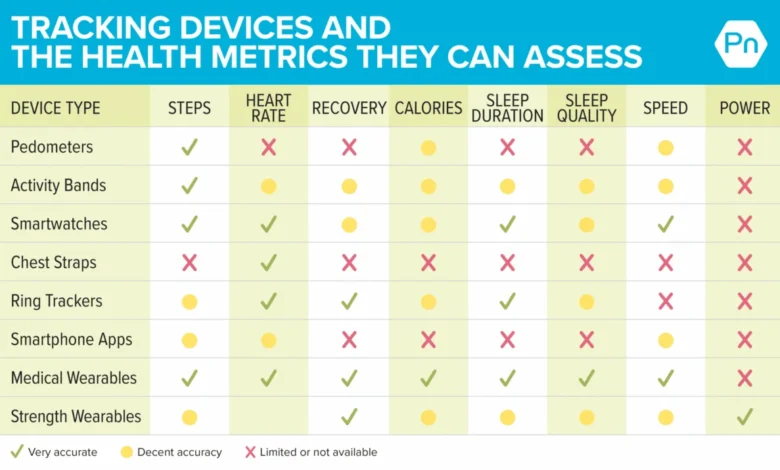
It is crucial to acknowledge that not all data generated by these devices is equally reliable. The accuracy of fitness trackers varies significantly based on several factors: the brand and quality of the hardware, the sophistication of the embedded software and algorithms, and the specific metric being measured. For example, heart rate and step count data are generally considered highly reliable, often correlating well with clinical-grade measurements. This is due to the relative simplicity of capturing these metrics via optical sensors (photoplethysmography for heart rate) and accelerometers (for steps).

However, other metrics, such as calories burned during exercise, sleep quality scores, or movement velocity, often come with substantial margins for error. Calorie expenditure estimations, in particular, rely on generalized algorithms that may not accurately account for individual metabolic rates, body composition, or the precise mechanics of a given activity. Similarly, while sleep duration is often accurately tracked, the nuanced assessment of sleep stages (REM, deep, light) can be less precise, as these often require more advanced physiological monitoring typically found in clinical sleep labs. Consumers must therefore approach device data with a critical eye, understanding that while trends can be informative, individual data points may not always reflect absolute truth.
The Information Paradox: Striking the Balance
The proliferation of data, while offering immense potential, also presents a unique challenge: the paradox of information. As computer scientist Samantha Kleinberg notes, "even a tiny amount of surplus information has a big negative effect on our decision-making." This concept is often visualized as an inverted U-curve, where an optimal amount of relevant information enhances decision-making, but both too little and too much information lead to diminished capacity.
Too little information leaves us uninformed and unable to make strategic choices. Conversely, an overwhelming flood of data can lead to "analysis paralysis," a state of cognitive overload where the sheer volume of metrics makes it impossible to discern meaningful patterns or formulate actionable plans. Consider the modern consumer overwhelmed by hundreds of product reviews, struggling to make a simple purchase decision. In the context of health and fitness, this translates into individuals becoming bogged down by an endless stream of numbers, graphs, and scores, losing sight of their primary health objectives amidst the complexity.
The psychological impact of this data deluge can be profound. For some, it fosters empowerment and motivation, providing clear feedback loops that reinforce positive behaviors. For others, however, constant monitoring can induce stress, anxiety, and even obsessive tendencies, particularly when metrics are perceived as negative or uncontrollable. Health professionals increasingly advise individuals to assess whether tracking genuinely contributes to their well-being and performance or if it merely amplifies stress without providing tangible benefits.
Strategic Applications: When Tracking Empowers
Despite the potential pitfalls, when wielded judiciously, fitness trackers can be powerful allies in health management. Their utility is most pronounced in three key areas:
-
Validating Methods and Building Confidence:
Objective data can serve as a powerful validator, bridging the gap between perceived effort and actual physiological response. For example, an individual like Zak, skeptical that "easy" Zone 2 cardio could be effective, might initially distrust his own feelings. However, observing a consistent decrease in resting heart rate and improved recovery times on his heart rate monitor provides irrefutable evidence. This data-driven reassurance reduces anxiety, builds confidence in the chosen methodology, and allows for greater relaxation into the process, potentially further enhancing physiological benefits. Similarly, some individuals use continuous glucose monitors (CGMs) not for diabetes management, but to "optimize" their metabolic responses to certain foods. While this can validate dietary choices, it also carries the risk of over-optimization and unnecessary anxiety for those without clinical need. For coaches, data can be instrumental in demonstrating client progress, highlighting existing performance, and reinforcing belief in their capabilities. -
Enhancing Motivation and Driving Behavior Change:
Behavioral science posits that three elements are necessary for a behavior to occur: motivation, ability, and a prompt. Fitness trackers excel at providing these prompts and reinforcing motivation. Consider Margaret, who believed her nightly glass of wine aided sleep. Her sleep tracker, however, objectively revealed poorer sleep quality on nights she consumed alcohol. This clear, undeniable feedback served as a potent prompt, leading her to adjust her behavior. The visibility of crucial data can illuminate consequences that were previously obscured by subjective perception, making the "right" choices unequivocally clearer. This principle extends to significant health transformations; Timothy Jones, CEO of a prominent nutrition company, famously leveraged feedback from various lifestyle trackers to halve his genetically high cholesterol levels without medication, illustrating how objective data can empower profound behavioral shifts. -
Deepening Self-Understanding and Optimizing Performance:
A common misconception, particularly among highly driven individuals, is that "the harder you work, the better your results." This can lead to overtraining, inhibiting performance and recovery. Conversely, many chronically underestimate their capacity. Objective data provides a clearer picture of individual potential and physiological limits. In high-intensity interval training (HIIT), for example, rest periods are often standardized. However, heart rate data can personalize recovery, indicating when an individual is truly ready for the next interval, rather than adhering to a generic, potentially suboptimal, fixed duration. This helps individuals avoid "junk volume"—exercise that accumulates fatigue without improving performance—and instead optimize training for efficiency and effectiveness. By analyzing real-time metrics of output, fatigue, and recovery, individuals and their coaches can gain a nuanced understanding of personal physiology, fostering more intelligent training and recovery strategies.
Bad Omens: When Data Becomes Detrimental

While beneficial, tracking is not a panacea and can, in certain circumstances, become counterproductive:
- Increased Stress from Uncontrollable Metrics: Receiving consistently poor scores for aspects beyond one’s immediate control, such as sleep quality for a new parent, can induce significant, unhelpful stress. In such scenarios, where priorities lie elsewhere or circumstances are immutable, pausing tracking can be a healthier choice.
- Decreased Motivation and Burnout: When the pursuit of numbers overtakes the enjoyment or inherent purpose of an activity, motivation can wane. An avid cyclist, Jan, might initially be motivated by smashing Strava records, but a relentless focus on speed can lead to under-recovery, burnout, and a loss of the intrinsic joy of riding.
- Over-Reliance and Loss of Sensory Connection: Becoming overly dependent on external data risks disconnecting from one’s own internal signals. The "My Fitness Pal Blackout" of 2019, which left millions unable to track their calories, exposed how reliant many had become on the app to dictate their eating, rather than tuning into hunger and fullness cues. This over-reliance, sometimes termed "nomophobia" (fear of being without one’s mobile phone), highlights the danger of outsourcing one’s internal barometer to technology.
Cultivating Sensory Intelligence in a Data-Driven World
The ultimate goal should be to leverage technology to enhance, not replace, our innate sensory intelligence. To achieve this "data wisdom," individuals can adopt three key practices:
-
Prioritize Internal Check-ins Before Consulting Data: Before looking at a device, pause and engage in a mindful self-assessment. Ask: "How do I feel? How far do I think I ran? What was my heart rate during that interval?" This simple act trains the brain to generate predictions and interpretations based on internal cues. Subsequently comparing this subjective assessment with the objective data from the tracker allows for calibration, gradually narrowing the gap between felt experience and measured reality. Regular app updates, which refine algorithms, further contribute to this iterative process of self-correction.
-
Develop Mental Shortcuts for Objective Measures: While sophisticated tools exist, developing mental shortcuts can provide quick, actionable insights. For example, assessing "rate of perceived exertion" (RPE)—how hard one feels they are working—is a scientifically validated sensory-driven approach. By occasionally cross-referencing RPE with objective metrics like heart rate or power output, individuals can refine their ability to accurately gauge effort without constant reliance on a device. A coach might ask, "For a million dollars a rep, how many more reps could you do?" This imaginative prompt leverages perceived value to help clients understand their maximal effort, serving as a powerful mental shortcut.
-
Continuously Hone Innate Sensory Abilities: Humans possess an incredibly rich network of sensory information, far beyond what any gadget can capture. This includes:
- Proprioception: The sense of the relative position of body parts and strength of effort.
- Interoception: The sense of the physiological state of the body (e.g., hunger, thirst, pain, heart rate, respiration).
- Kinesthesia: The sense of movement.
- Vestibular sense: The sense of balance and spatial orientation.
- Tactile sense: Touch, pressure, temperature.
This complex network feeds into our nervous system’s powerful pattern-recognition machinery. Regularly checking in with these internal feelings—how energetic one feels, what sensations arise during a workout, how hungry or full one is—is paramount. By consciously attending to these internal signals, individuals maintain a vital connection to their embodied experience.
The Road Ahead: A Holistic View of Health
The integration of wearable technology into daily life is an irreversible trend. As devices become more sophisticated, offering predictive analytics and deeper insights, the challenge will be to harness this power responsibly. The future of health tracking lies not merely in collecting more data, but in synthesizing it intelligently, guided by human wisdom.
Health professionals and coaches play a critical role in educating individuals on how to interpret and act upon this data, fostering a balanced approach that avoids both ignorance and obsession. Ethical considerations surrounding data privacy, security, and potential algorithmic biases will also continue to shape the landscape. Ultimately, the most effective use of technology in health will be one that augments our innate capabilities, allowing us to leverage objective insights to cultivate a more profound, resilient, and enjoyable connection with our own bodies and overall well-being.