The global rise of antimicrobial resistance (AMR) represents one of the most profound public health crises of the 21st century. While medical professionals have long scrutinized hospital environments and patient non-compliance as major drivers of drug-resistant pathogens, a parallel battleground is quietly unfolding in our digestive tracts. Recent scientific investigations have increasingly pointed toward the human diet—specifically the consumption of animal products—as a primary vehicle for introducing antibiotic-resistance genes (ARGs) into the human gut microbiome. New findings suggest that individuals adhering to plant-based diets harbor a significantly lower load of these resistance genes compared to omnivores and vegetarians, shedding new light on how agricultural practices directly impact human internal ecology.
The Intersection of Agriculture and Modern Medicine
To understand how dietary choices influence the human microbiome, one must examine the widespread practices of modern industrial animal agriculture, often referred to as "Big Ag." For decades, antibiotics have been administered to livestock not merely to treat active infections, but routinely for growth promotion and disease prevention in crowded, unhygienic feedlot environments. This widespread, low-dose exposure creates an evolutionary pressure cooker, culling susceptible bacteria and allowing resilient strains to flourish.
Pathogens such as Salmonella and Campylobacter—which account for nearly one million infections annually in children aged ten and under in the United States alone—have grown increasingly resistant to standard medical treatments. In severe cases, these foodborne illnesses can lead to meningitis, systemic complications, and mortality, requiring aggressive intervention with broad-spectrum antibiotics. When these life-saving drugs fail due to acquired resistance, physicians are left with dwindling therapeutic options.
The Mechanistic Threat: Plasmids and Horizontal Gene Transfer
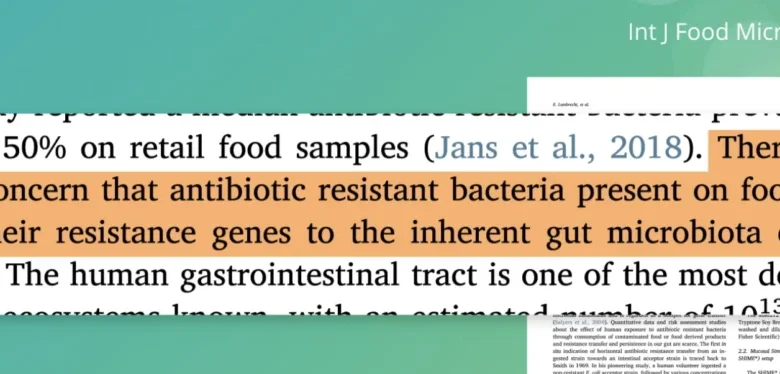
The risk posed by factory-farmed livestock extends far beyond direct foodborne infections. Most antibiotic-resistant bacteria harbor mobile genetic elements known as plasmids—small, circular DNA molecules that carry resistance genes. These plasmids act as biological flash drives, capable of horizontal gene transfer. This means resistant bacteria can readily transmit their resistance traits to other bacterial species, including the commensal microorganisms that naturally inhabit the human gut.
Scientific simulations modeling the human intestinal tract have demonstrated the alarming speed of this process. In laboratory environments mimicking the mucosal layer of the human intestine, researchers observed that commensal E. coli strains originating from retail poultry transferred antibiotic-resistance plasmids to native human gut microbiota in as little as two hours. This rapid transmission mechanism illustrates why the human intestinal tract functions as a dynamic reservoir for resistance genes ingested via the food supply.
Comparative Microbiome Analysis: Vegans, Vegetarians, and Omnivores
To evaluate the real-world implications of these mechanisms, researchers have conducted comparative analyses examining the gut microbiota profiles of vegans, vegetarians, and omnivores. While it is well-established that intensive agricultural antibiotic usage contributes heavily to resistant strains in meat, eggs, and dairy, secondary pathways also exist. For instance, agricultural runoff and the application of treated animal manure to crop fields can introduce resistant bacteria to fruits and vegetables.
Despite these environmental variables, human studies have revealed a distinct hierarchy in gut resistance profiles. In landmark comparative studies assessing resistance genes against major antibiotic classes—including tetracyclines, penicillins, cephalosporins, streptomycin, and sulfonamides like Bactrim—omnivores and vegetarians consistently demonstrated significantly higher loads of antibiotic-resistance genes in their stool samples than vegans.
Interestingly, while omnivores and vegetarians frequently showed comparable levels of overall resistance, vegan participants exhibited a statistically significant reduction in their total resistance gene load. Further breakdown of the data revealed specific dietary correlations: tetracycline-resistance genes frequently correlated with the consumption of eggs, milk, and cheese, while vancomycin-resistance genes—concerning given that vancomycin serves as a last-resort treatment for life-threatening staph and strep infections like MRSA—showed higher incidence rates among individuals consuming eggs, poultry, fish, and seafood. Even when individuals merely eliminated meat while retaining dairy and eggs, comparative stool analyses indicated that meat-eaters harbored resistance to a broader spectrum of drugs.
A Historical Chronology of Regulatory Friction
The scientific consensus regarding the risks of agricultural antibiotic overuse is not new, yet regulatory action has faced decades of legislative and economic roadblocks.
- 1969 (The Swann Report): In the United Kingdom, the Joint Committee on the use of Antibiotics in Animal Husbandry and Veterinary Medicine issued the Swann Report, warning that agricultural antibiotic use could compromise human therapeutics. The report recommended restricting drugs critical to human medicine from agricultural applications.
- 1977 (FDA Proposes Restrictions): The United States Food and Drug Administration (FDA) attempted to withdraw approvals for the subtherapeutic use of penicillin and tetracyclines in animal feed, citing human health concerns. However, sustained lobbying from agricultural interests and congressional pushback stalled the initiative.
- 2006 (European Union Ban): The European Union took a decisive step by implementing a total ban on the use of antibiotics for animal growth promotion, forcing agricultural producers to improve hygiene and husbandry standards rather than relying on prophylactic drug regimens.
- 2017 (FDA Guidance for Industry #213): The FDA enacted voluntary guidelines phasing out medically important antimicrobials for growth promotion and bringing remaining uses under veterinary oversight. However, public health advocates and medical organizations argued the measures were too lenient, permitting continuous disease prevention use under loose diagnostic criteria.
Public Health Implications and Industry Responses
Major medical organizations, including the World Health Organization (WHO), the American Medical Association (AMA), and the Infectious Diseases Society of America (IDSA), have repeatedly urged governments to restrict the agricultural use of medically important antimicrobials. Public health experts argue that preserving the efficacy of current pharmacopeia must take precedence over the economic efficiencies of industrial livestock production.
Conversely, representatives from the agricultural and pharmaceutical sectors have historically maintained that strict restrictions could jeopardize animal welfare, reduce agricultural productivity, and raise consumer food prices. Industry trade groups often emphasize biosecurity measures and selective breeding as alternative paths forward, though critics counter that these efforts are insufficient without curtailing systemic chemical prophylactic use.
Broader Economic and Sociological Impacts
The accumulation of antibiotic-resistance genes in the human gut carries profound long-term economic and societal costs. As resistant infections become more prevalent, healthcare systems face extended hospital stays, more intensive diagnostic procedures, and the necessity of developing novel, expensive antimicrobial compounds—a pharmaceutical pipeline that has slowed considerably in recent decades.
From a sociological perspective, these findings elevate dietary choices from matters of personal health and environmental sustainability to elements of individual and collective biosecurity. As researchers continue to map the complex ecology of the human microbiome, the realization that daily nutritional selections directly influence our internal defense systems against drug-resistant pathogens adds a compelling dimension to the global dialogue surrounding food systems reform.