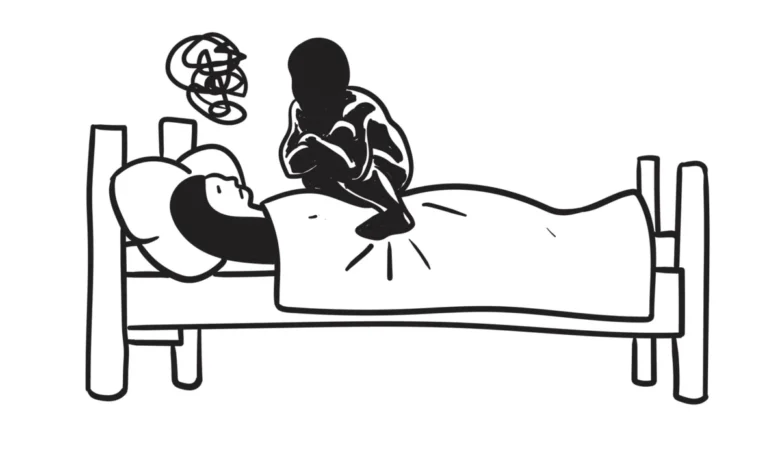
The experience of sleep paralysis—a phenomenon characterized by the sudden loss of muscle control during the transition into or out of sleep, often coupled with vivid sensory hallucinations—is one of the most frightening experiences a patient can describe. When an individual wakes to find themselves immobile, trapped in a state of conscious paralysis, it is natural to seek immediate medical explanation. In an era where online health information is ubiquitous, many patients arrive at their primary care clinics convinced that these terrifying episodes are a definitive symptom of narcolepsy. While sleep paralysis can indeed be a clinical feature of narcolepsy, it is frequently misunderstood, and its presence alone does not establish a diagnosis of the chronic neurological disorder.
For clinicians, the primary challenge lies in distinguishing transient, benign episodes of sleep paralysis from the complex clinical presentation of narcolepsy. This process requires a nuanced understanding of sleep physiology, a careful review of the patient’s medical history, and an ability to contextualize isolated symptoms within the broader framework of a patient’s overall health.
The Prevalence and Physiology of Sleep Paralysis
To understand why sleep paralysis is so often misdiagnosed as a indicator of narcolepsy, one must first look at its prevalence. Sleep paralysis is not a rare condition; it is a relatively common occurrence that affects a significant portion of the general population. Systematic reviews have indicated that approximately 7.6% of the general population will experience at least one episode of sleep paralysis in their lifetime. This number increases dramatically in specific demographics, with up to 28.3% of university students and 31.9% of individuals diagnosed with psychiatric conditions reporting such episodes.
In contrast, narcolepsy is a rare, life-altering neurological condition. Current estimates suggest that it affects approximately 37.7 out of every 100,000 individuals, or roughly 0.0377% of the population. Given these disparate figures, it is mathematically and clinically improbable that a patient experiencing isolated sleep paralysis is suffering from narcolepsy.
The physiological mechanism behind sleep paralysis is rooted in the architecture of Rapid Eye Movement (REM) sleep. During normal REM sleep, the brain actively inhibits voluntary muscle movement—a process known as REM atonia—to prevent individuals from physically acting out their dreams. Sleep paralysis occurs when the brain’s state of wakefulness and the body’s state of REM atonia become unsynchronized. A person may regain consciousness while the "switch" that suppresses muscle tone has not yet been deactivated. This leaves the individual in a state of suspended animation, which typically resolves within a few seconds to a few minutes as the brain transitions fully into wakefulness or returns to sleep.
The Critical Diagnostic Marker: Excessive Daytime Sleepiness
If sleep paralysis is not the smoking gun for narcolepsy, what is? Medical professionals emphasize that the cornerstone of a narcolepsy diagnosis is excessive daytime sleepiness (EDS). This is not merely feeling tired or needing more coffee; it is a profound, uncontrollable need for sleep that occurs despite an adequate quantity of nighttime rest. Patients with narcolepsy often report "sleep attacks," where they find it impossible to stay awake during daily activities, such as working, driving, or engaging in conversation.
For a clinician, the absence of EDS should immediately lower the suspicion of narcolepsy. Dr. Michael Todd, a sleep neurologist at Florida Medical Clinic Orlando Health, notes that sleep paralysis serves as a potential feature of the disorder but lacks the specificity required for a diagnosis. Without the underlying pathology of EDS, the patient is far more likely to be experiencing sleep paralysis due to other factors, such as acute stress, erratic sleep schedules, sleep deprivation, or secondary sleep disorders like obstructive sleep apnea.
The Chronology and Risk Factors
When evaluating a patient, clinicians must consider the timing of symptom onset. Narcolepsy typically manifests during adolescence or early adulthood, generally between the ages of 15 and 30. If a patient begins experiencing regular episodes of sleep paralysis during this developmental window, and those episodes are accompanied by worsening daytime fatigue, the clinical suspicion warrants further investigation.
Dr. Taruj Ali, medical director of sleep at Mary Washington Health System, highlights that the "company" the symptom keeps is the most critical factor. A single, isolated episode of sleep paralysis after a long week of work or during a period of high anxiety is rarely cause for alarm. However, if the patient reports recurring episodes that align with a decline in daytime alertness, it is essential to screen for the "classic" narcolepsy symptoms, specifically cataplexy.
Cataplexy is a sudden, transient loss of muscle tone triggered by strong emotions, such as laughter, surprise, or anger. Because cataplexy is highly specific to narcolepsy, it is one of the most reliable diagnostic markers. However, patients often fail to report it because it can be subtle, manifesting as a slight buckling of the knees or a drooping of the eyelids. Clinicians must specifically inquire about these emotional triggers to capture the full diagnostic picture.
The Clinical Diagnostic Pathway
When a patient presents with concerns about sleep paralysis, the primary care physician should follow a structured diagnostic pathway. This begins with a thorough history taking, focusing on:
- Sleep Hygiene and Schedule: Assessing whether the patient is getting consistent, quality sleep.
- Screening for Comorbidities: Investigating conditions such as obstructive sleep apnea, anxiety, or post-traumatic stress disorder (PTSD), all of which are known to cause or exacerbate sleep paralysis.
- Daytime Alertness: Using validated tools like the Epworth Sleepiness Scale to quantify the severity of daytime impairment.
- Chronology: Determining when the symptoms began and how frequently they occur.
If the assessment suggests a potential sleep disorder, the patient should be referred to a sleep specialist. The gold standard for diagnosing narcolepsy involves an overnight polysomnography (PSG) to rule out other sleep-related breathing disorders, followed by a Multiple Sleep Latency Test (MSLT). The MSLT is a series of scheduled naps during the day, designed to measure how quickly a patient falls asleep and whether they enter REM sleep prematurely.
Broader Implications and Public Health
The misdiagnosis of sleep paralysis as narcolepsy has broader implications for both the healthcare system and the patient. Misattributing benign sleep disturbances to a chronic neurological condition can lead to unnecessary, costly, and time-consuming diagnostic testing. Conversely, failing to recognize the early signs of true narcolepsy can leave patients struggling with dangerous daytime sleepiness for years before receiving appropriate treatment.
Furthermore, the stigma associated with narcolepsy and the lack of public awareness often contribute to patient anxiety. By providing education and reassurance—explaining that sleep paralysis is a common physiological "glitch" rather than a sign of a degenerative brain disease—clinicians can significantly reduce patient distress.
In summary, while sleep paralysis can be a haunting experience, it is, in the vast majority of cases, a benign byproduct of modern life and sleep cycle disruptions. Clinicians who maintain a rigorous, evidence-based approach—prioritizing the presence of excessive daytime sleepiness and cataplexy over isolated sensory hallucinations—are best equipped to navigate this differential diagnosis. By focusing on the wider clinical picture and the specific patterns of symptom onset, practitioners can provide accurate guidance, effectively triage those who require specialized intervention, and reassure those who simply need to improve their sleep hygiene.
As the field of sleep medicine continues to evolve, the emphasis remains on the "whole patient" approach. Sleep paralysis should serve as a prompt for a deeper conversation about sleep quality, mental health, and lifestyle, rather than a singular diagnostic label. Through careful screening and professional vigilance, clinicians can ensure that patients receive the appropriate level of care, whether that involves lifestyle modifications or a referral for comprehensive sleep testing.