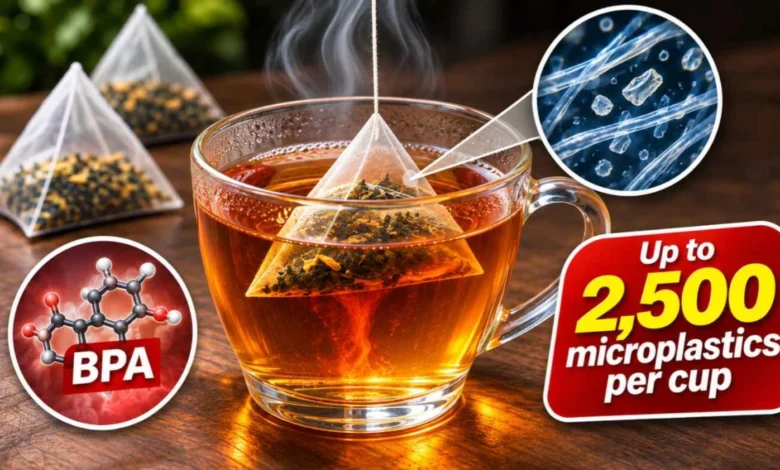
The ritual of brewing a morning cup of tea is often viewed as a health-conscious choice, a moment of calm, and a source of antioxidants. However, recent scientific scrutiny has cast a shadow over this daily habit, specifically concerning the modern, premium-looking tea bag. A new study conducted by researchers at Recep Tayyip Erdoğan University in Türkiye has revealed that the "silky" or pyramid-shaped tea bags, often marketed as high-end or artisanal, are frequently constructed from synthetic polymers. When subjected to the high temperatures of boiling water, these bags shed an alarming quantity of microplastics and chemical additives directly into the beverage.
The study, which examined 28 different tea products available in the Turkish market—including four brands utilizing plastic mesh technology and 14 varieties of loose-leaf tea—found that a single cup can contain upwards of 2,500 microplastic particles. This finding adds a significant layer of complexity to the global conversation regarding human exposure to synthetic materials. As consumers increasingly seek to reduce their plastic footprint, the revelation that their very beverage delivery system may be a source of contamination highlights a pervasive issue in modern food packaging.
Chronology of Microplastic Awareness in Food Systems
The concern regarding microplastics in tea is not entirely unprecedented, but the body of evidence has been growing steadily over the last decade. In 2019, a landmark study from McGill University in Canada ignited public concern when researchers discovered that a single plastic tea bag steeped at 95°C (203°F) released approximately 11.6 billion microplastics and 3.1 billion nanoplastics into the water.
Before these findings, the conversation surrounding microplastics was largely confined to environmental circles, focusing on ocean pollution and the ingestion of synthetic fibers by marine life. The 2019 McGill study served as a pivot point, shifting the narrative toward human ingestion through common food products. Since then, researchers have sought to quantify exactly how much of this plastic ends up in the human body through various pathways, including bottled water, sea salt, and now, infused beverages. The 2026 study from Recep Tayyip Erdoğan University builds upon this foundation, utilizing more localized sampling to confirm that the phenomenon is not limited to specific regions or manufacturing processes, but is a systemic issue within the tea industry.
Analyzing the Methodology and Findings
The methodology employed by the Turkish research team was designed to mimic standard household habits. Researchers steeped the selected plastic mesh bags in water at 95°C for three minutes. Following the infusion, the liquid was analyzed using advanced microscopy to count the particles. It is critical to note that the study focused on particles larger than 100 micrometers—roughly the diameter of a human hair.
While 2,500 particles per cup is a staggering figure, scientists emphasize that this number likely represents a conservative estimate. By excluding smaller particles that were either too minute for the equipment to capture or were filtered out by the chosen methodology, the researchers suggest the actual biological burden could be exponentially higher. The study also identified the presence of Bisphenol A (BPA) and other plasticizers—chemicals added to plastics to increase flexibility and durability—which leached into the tea at measurable levels.
The Toxicological Profile of BPA
The presence of Bisphenol A (BPA) in tea infusions is particularly concerning to public health experts. BPA is a well-documented endocrine-disrupting chemical (EDC). Its structure allows it to mimic estrogen, the primary female sex hormone, effectively interfering with the body’s hormonal signaling.
In 2023, the European Food Safety Authority (EFSA) implemented a massive reduction in the tolerable daily intake (TDI) for BPA, slashing it by a factor of 20,000 compared to previous guidelines. This regulatory shift was based on evidence suggesting that even trace amounts of the chemical, when consumed consistently over time, can impact immune function, metabolic processes, and reproductive health.

While regulatory bodies like the U.S. Food and Drug Administration (FDA) maintain that current exposure levels through food packaging are safe, the scientific community is increasingly calling for a "precautionary principle" approach. Because individuals are exposed to BPA from a multitude of sources—including thermal paper receipts, canned food linings, and various plastic food storage containers—the cumulative effect of these exposures is a growing area of concern. The addition of a "voluntary" exposure through a daily cup of tea represents a significant, yet avoidable, source of total body burden.
Broader Implications for Industry and Public Health
The implications of these findings extend beyond the individual consumer. For the tea industry, the shift toward plastic pyramid bags was driven by the desire to showcase the quality of the tea leaves, allowing them to expand and release more flavor. However, this marketing advantage may now become a liability.
There is currently no international mandate requiring tea manufacturers to disclose the material composition of their tea bags on the primary packaging. This lack of transparency makes it difficult for consumers to distinguish between biodegradable paper-based bags and synthetic mesh.
Furthermore, the broader health implications of microplastics remain the subject of intensive research. Microplastics have been identified in human blood, lung tissue, the placenta, and even the arteries. While the medical community has yet to definitively conclude the exact threshold at which these particles induce systemic inflammation or cellular damage, the presence of these materials in human biology is a cause for caution. Epidemiological studies are currently attempting to map the long-term health outcomes of chronic microplastic ingestion, but such research is inherently slow, often taking decades to reach consensus.
Recommendations for Consumers
In light of the study’s findings, health advocates and researchers suggest several practical steps to minimize exposure to synthetic particles:
- Prioritize Loose-Leaf Tea: The most effective way to avoid plastic infusion is to switch to loose-leaf tea. This eliminates the packaging material entirely and, in many cases, provides a higher-quality product by avoiding the "dust" often used in mass-market tea bags.
- Verify Bag Composition: If using tea bags is necessary for convenience, look for brands that explicitly state their bags are made from plant-based materials like corn starch (PLA) or unbleached paper. However, even some "plant-based" plastics require specific industrial conditions to break down and may still release particles when subjected to boiling water.
- Use Infusers: For those who prefer the convenience of a bag, reusable stainless steel or glass tea infusers are the safest alternative. They are inert, heat-resistant, and do not degrade under normal brewing conditions.
- Temperature Control: While the study used 95°C water, lowering the temperature slightly for certain delicate teas (like green or white tea) can reduce the rate at which plastics leach, though it does not eliminate the risk entirely.
- Advocacy and Labeling: Consumers are encouraged to contact tea companies directly to ask about the material of their tea bags. Increased consumer pressure often forces manufacturers to adopt more transparent labeling and move toward safer packaging alternatives.
A Path Toward Sustainable Brewing
The shift toward plastic-free tea consumption is part of a larger trend in consumer awareness regarding "hidden" plastics. As we learn more about the chemical architecture of our food systems, the transition away from single-use plastics becomes a matter of both personal health and environmental stewardship.
While the researchers at Recep Tayyip Erdoğan University caution that their study was limited to a specific market and sample size, the results provide a compelling case for further, more widespread investigation. As the scientific community continues to peel back the layers of microplastic contamination, the simple, ancient tradition of brewing tea remains a vital part of daily life—one that, with a few adjustments, can be returned to its most natural and healthful state.
For the average tea drinker, the message is clear: the convenience of a silky, pyramid-shaped bag comes at a cost that may be more than just the price of the product. By returning to loose-leaf methods, consumers can effectively remove a significant, unnecessary source of plastic from their diet, contributing to a broader movement toward safer, cleaner, and more intentional consumption. While this does not replace professional medical advice, particularly for vulnerable populations such as pregnant women or individuals with endocrine sensitivities, it represents a proactive and scientifically grounded approach to modern wellness.
Related posts: