Bird Flu Has Been Spreading On A Utah Mink Farm For Over Two Months: Why Flu Experts Are Worried

Chronology of the Utah Outbreak
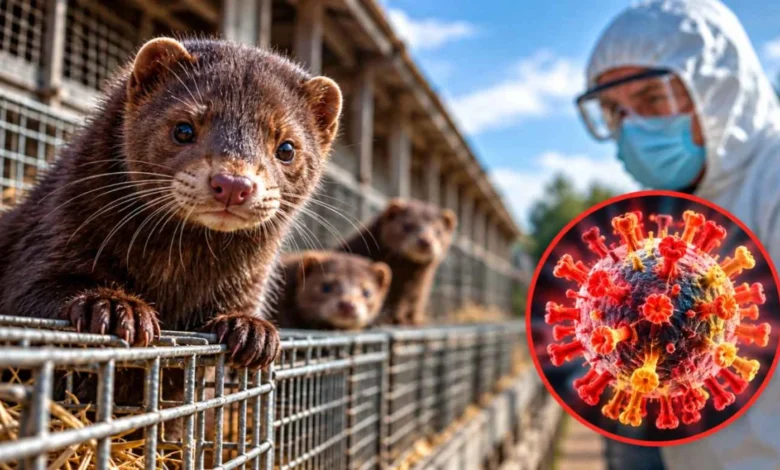
The situation at C&T Fenn Farms, located near Payson, Utah, began to unfold in mid-August 2026 when farm management reported an unusual spike in mink mortality. State agricultural authorities were notified, leading to diagnostic testing conducted by the United States Department of Agriculture (USDA). By late August, the agency confirmed that six captive mink had tested positive for H5N1. A seventh case was later added to the federal tally, confirming that the virus was actively circulating through the population.
Genetic sequencing performed by federal laboratories has revealed that the strain found at the Utah farm is closely related to the H5N1 variant that has been sweeping through U.S. dairy cattle operations since 2024. This link is critical, as it confirms that the virus is not only persistent but capable of crossing the species barrier into mammals with alarming frequency. Despite the confirmation of an active outbreak, the facility has not been subjected to a formal, state-mandated quarantine. Instead, the response has relied upon a voluntary, verbal agreement between the farm owner and the state veterinarian, requiring the containment of animals and waste on the property.
The Biological Hazard: Why Mink Are Unique
Virologists have long identified members of the Mustelidae family—which includes mink, ferrets, and weasels—as "mixing vessels" for influenza viruses. The biological concern is rooted in the structure of the mink respiratory tract. Mink airways contain both alpha-2,3 and alpha-2,6 sialic acid receptors. Human-adapted influenza viruses typically bind to the latter, while avian influenza viruses bind to the former. Because mink possess both, they can be simultaneously infected by multiple strains of influenza, allowing for "reassortment."
Reassortment occurs when two different viruses infect the same cell and swap genetic segments. In a worst-case scenario, an avian virus could acquire genes from a seasonal human flu virus, potentially resulting in a hybrid strain that retains the lethality of H5N1 while gaining the ability to transmit efficiently between humans. The proximity of hundreds or thousands of mink in confined, high-density housing further exacerbates this risk, providing the virus with an ideal environment for rapid transmission and subsequent evolution.
Regulatory and Policy Gaps
The limited response to the Utah outbreak has exposed a significant "blind spot" in the U.S. biosecurity architecture. According to statements from the USDA, the agency currently lacks the specific legal authority, dedicated funding, and species-targeted programs required to implement a culling operation or a vaccination campaign for mink. Under current federal regulations, the responsibility for managing such outbreaks is largely delegated to state entities, which often lack the financial resources and technical expertise to handle large-scale zoonotic events.
When Utah officials requested assistance in procuring emergency vaccines for the mink, the request was not approved. A spokesperson for the Utah Department of Agriculture and Food noted that there is no established precedent for responding to avian influenza in the mink industry, stating that, based on current surveillance, the transmission of the virus from mink to humans has not yet been identified as a high-risk event. This reliance on the status quo stands in stark contrast to international responses; for instance, during previous mink-related outbreaks in Europe, countries like Denmark and the Netherlands ordered the mass culling of millions of animals to prevent the potential for human-to-human transmission.

Worker Health and Surveillance Concerns
One of the most pressing issues raised by epidemiologists is the lack of systematic, rigorous health monitoring for farm workers. Because the virus is known to be zoonotic, those in direct contact with infected animals are at the highest risk of contracting H5N1. Reports indicate that at least one worker at the Utah facility displayed symptoms consistent with ocular infections—specifically "pink eye" (conjunctivitis)—which has been the most common clinical sign in human cases linked to the ongoing dairy cow outbreaks.
Despite this, no diagnostic testing was performed on the worker. The local health department attributed the symptom to environmental dust, a move that critics argue underscores a dangerous lack of caution. Proactive monitoring, including regular PCR testing and the provision of adequate personal protective equipment (PPE), is standard practice in many other nations when dealing with H5N1 outbreaks. The current approach in Utah relies heavily on symptomatic reporting, which may fail to detect subclinical or mild infections that could nonetheless lead to viral shedding.
Broader Implications and Public Health Risk
The scientific consensus is that while the current risk to the general population is low, the potential for an evolutionary "jump" is non-zero. H5N1 has shown remarkable adaptability, moving from wild birds to poultry, then to dairy cattle, and now to farmed mink. Each step in this trajectory provides the virus with more opportunities to optimize its replication in mammalian hosts.
Implications for public health include:
- Mutation Surveillance: Ongoing viral evolution must be tracked in real-time to identify any markers of increased transmissibility in humans.
- Economic and Biosecurity Impacts: The failure to contain the virus could lead to broader agricultural losses and further entrenchment of the virus in domestic animal populations.
- Preparedness: The lack of a federal mandate to intervene in mink-specific outbreaks highlights a need for legislative action to grant agencies like the USDA the authority to act before a localized outbreak becomes a national health emergency.
Guidance for the Public
For the average citizen, the risk of contracting H5N1 remains minimal. The virus is primarily an occupational hazard for those working in agriculture, particularly in sectors that have experienced documented outbreaks. However, standard food safety protocols remain the best line of defense. Consumers are advised to avoid raw milk and raw dairy products, as these have been identified as potential vectors for the virus. Furthermore, individuals should avoid contact with wildlife, particularly sick or dead birds and mammals, and report such sightings to local wildlife management agencies.
As the situation in Utah continues to develop, the scientific community is calling for increased transparency, more robust surveillance of farm workers, and a reevaluation of the regulatory framework surrounding captive animals. The Utah outbreak serves as a clear warning sign—a reminder that in an interconnected ecosystem, the health of humans is inextricably linked to the health of the animals we manage and raise. Whether this incident prompts a shift in policy or remains a missed opportunity for proactive disease prevention will likely be a subject of intense debate in the coming months. Future research must prioritize understanding the molecular changes occurring within the Utah mink population to ensure that if a more dangerous variant emerges, the public health infrastructure is prepared to respond with speed and efficacy.