Revisiting the Fluid Architecture of Yoga: A Journalistic Examination of Utthita Hasta Padangusthasana and the Philosophy of Movement

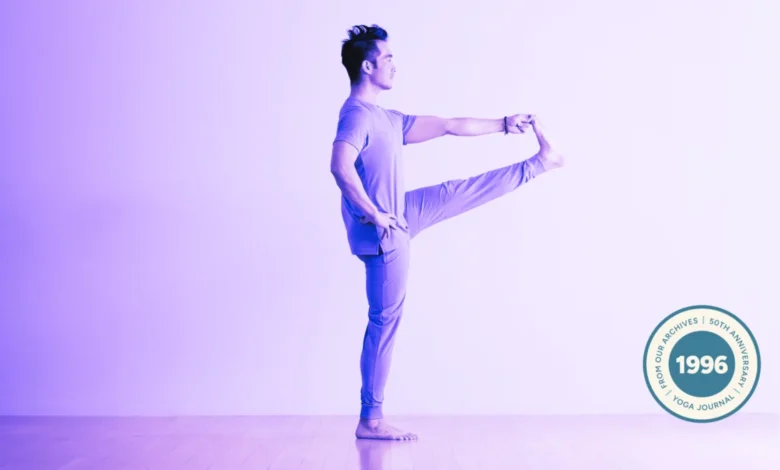
In the contemporary wellness landscape, yoga is frequently conceptualized through the lens of static geometry—a succession of fixed shapes resembling photographs rather than a continuous narrative. However, looking back at historical instructional literature preserved from the March-April 1996 issue of Yoga Journal, movement theorists and classical practitioners have long argued that this perspective fundamentally misinterprets the kinetic reality of asana practice. By examining foundational postures through a lens of continuous transitions, modern movement science and traditional pedagogy converge to redefine how practitioners approach complex balancing postures such as Utthita Hasta Padangusthasana, commonly known as Extended Hand-to-Big-Toe Pose.
The Paradigm of the Acture and the Stream of Movement
The perceptual trap of viewing postures as stationary monuments is reinforced by the nomenclature itself, which implies a fixed posture or static stance. To counter this, movement pioneer Moshe Feldenkrais introduced the term “acture” to describe physical positions not as isolated endpoints, but as fluid streams of coordinated sequential movements containing a distinct beginning, middle, and end.
According to Feldenkrais’s framework, an authentic acture is characterized by four distinct physiological and psychological qualities: an absence of unnecessary effort regardless of energy expenditure; an absence of internal resistance, preventing the body from working against itself; the presence of complete reversibility, allowing the movement to be paused, altered, or reversed at any millisecond without preliminary friction; and the maintenance of ease in the breath.
In the lineage of standing asanas, this fluid stream invariably originates and terminates in Tadasana, or the Mountain Pose. Serving as the home base of structural alignment, Tadasana aligns the major skeletal segments—the skull, rib cage, pelvis, and spine—along the central line of gravity. It is within this baseline of steady and comfortable uprightness that practitioners mentally and physically map the chain of movements to come, ensuring that the transition into more demanding shapes remains conscious, alert, and receptive rather than rushed.
Anatomical Foundations: Grounding Through the Foot and Ankle
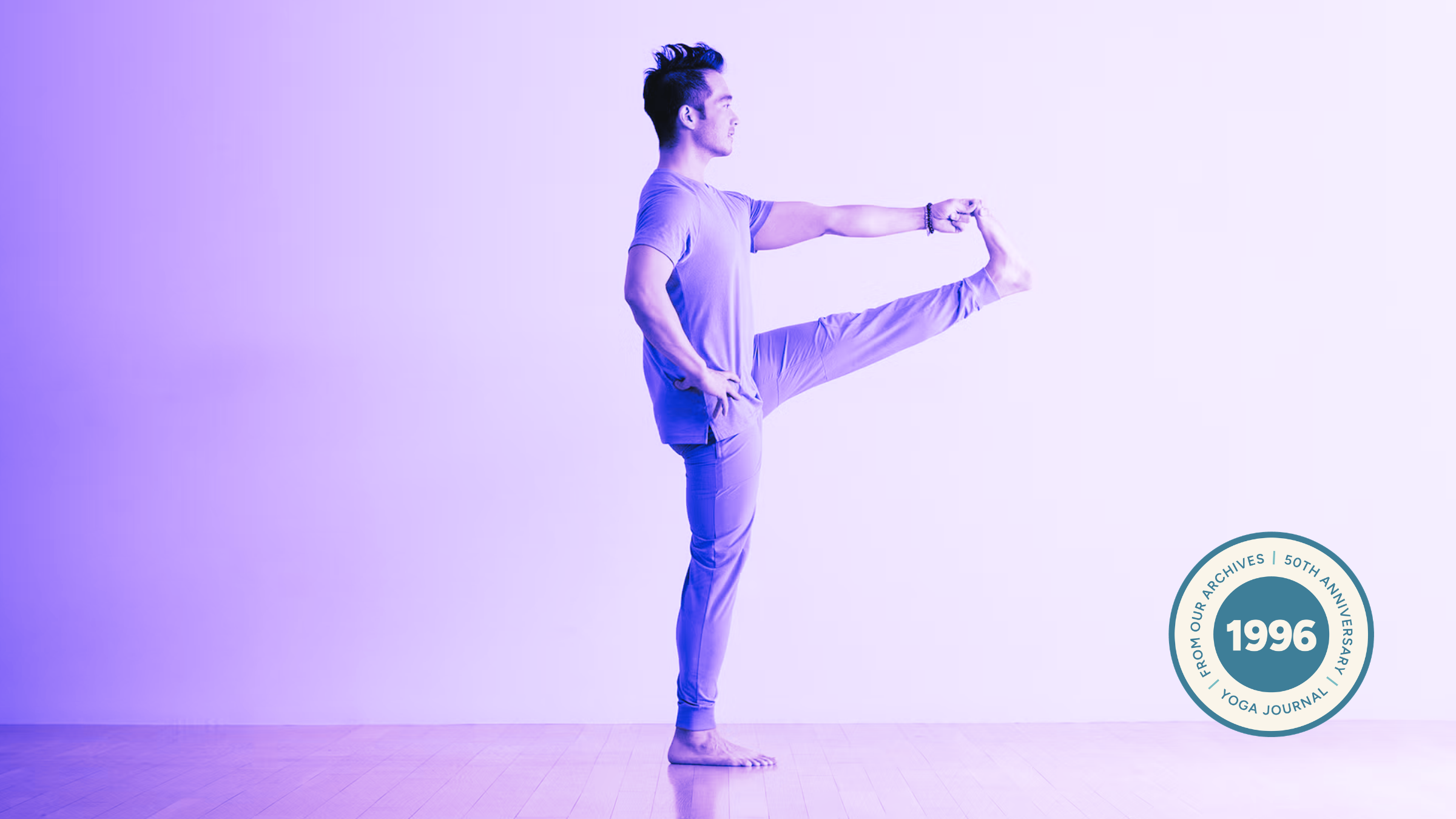
The execution of Utthita Hasta Padangusthasana—a challenging balance requiring one leg to be elevated parallel to the floor while grasped by the corresponding hand—demands rigorous attention to the body’s lowest kinematic link: the foot and ankle. Historically, yoga anatomists have emphasized that the functional unit of the sole acts as an intelligent shock-absorbing vault when walking, running, or maintaining single-leg balance.
This structural vault contacts the floor at three primary points: the base of the big toe, the base of the little toe, and the center of the heel. Anatomical analyses underscore that maintaining stability in Utthita Hasta Padangusthasana requires widening the ball of the foot and visualizing the heel as a rotating wheel. This specific micro-movement prevents pronation, or the inward collapse of the foot arch, which otherwise destabilizes the entire kinetic chain up to the knee and hip joints.
Furthermore, classical instruction clarifies the common misconception surrounding the anatomical ankle. The prominent knobs on either side of the leg are not the ankle bones themselves, but rather the lower extremities of the tibia (shinbone) and fibula. The true apex of the foot vault is the talus bone, wedged securely between them. Misalignment at this junction compromises the body’s ability to safely transmit weight and maintain equilibrium during advanced balancing sequences.
Chronological Progression: Preparing for Utthita Hasta Padangusthasana
To safely achieve the full expression of Utthita Hasta Padangusthasana without risking joint strain or hyper-extension in the knees, master instructors advocate a structured, chronological progression utilizing props such as sandbags, blocks, straps, and walls.
Phase One: Reclining Preparation (Supta Padangusthasana)
The developmental timeline begins on the floor with Supta Padangusthasana, the supine equivalent of the standing pose. By practicing the shape while lying flat on the back with the opposite heel pressed firmly against a wall, practitioners can isolate pelvic stabilization, hamstring flexibility, and spinal elongation without the destabilizing factor of gravity affecting balance. Using a doubled strap around the ball and heel of the foot allows the hip and thigh muscles to gradually surrender without forcing the range of motion.
Phase Two: Chair-Supported Standing Alignment
The second developmental phase transitions the body to a vertical orientation using a padded chair. Facing the chair, the practitioner shifts weight onto the standing leg, aligning the pelvis, and rests the raised ankle on the chair back while extending the heel toward a supporting wall. This intermediate step ensures that pelvic neutrality is maintained, preventing common compensatory patterns such as a hiked hip, rounded back, or wobbly standing knee.
Phase Three: Wall-Supported Intermediate Practice
Before stepping entirely out into open space, practitioners often utilize a wall-supported stance. By leaning back against a vertical surface with heels positioned slightly forward, the practitioner draws the knee to the abdomen, loops a strap around the foot, and extends the leg outward while maintaining contact with the wall for proprioceptive feedback.
Broader Implications and Pedagogical Evolution
The archival insights from the 1996 Yoga Journal publication carry enduring implications for contemporary movement education, physical therapy, and somatic disciplines. By shifting the focus away from the visual aesthetics of the final pose and redirecting it toward the quality of awareness—the "acture"—teachers and students alike cultivate a deeper, injury-resilient practice.
As physical culture continues to integrate somatic education with traditional asana practice, the emphasis on reversibility, breath ease, and structural integrity remains paramount. Whether a practitioner can successfully hold their big toe in Utthita Hasta Padangusthasana is ultimately secondary to the internal composure, self-acceptance, and mindfulness sustained from the initial step in Tadasana through the entire arc of the movement stream.