The 2026 Olympia Weekend in Las Vegas marks a significant milestone in the evolution of professional physique sports with the official introduction of the Fit Model division into the Olympia qualification system. As the event takes place from September 24 to 27, the inclusion of this category signals a deliberate pivot by the IFBB Pro League to broaden the appeal of competitive fitness while addressing the natural tendency of athletic divisions to escalate in terms of muscularity and conditioning over time. This latest addition brings the total number of divisions at the Olympia to 12, solidifying the event’s status as the most expansive stage in the industry.
The Chronology of an Expanding Stage
The history of the Olympia is one of continuous growth and diversification. Since the inaugural contest in 1965, which featured only a men’s open bodybuilding category, the federation has responded to changing aesthetic trends and the growing participation of female athletes. The progression began with the formalization of women’s bodybuilding and eventually expanded to include Fitness, Figure, and Bikini.
The Fit Model category, however, serves a different strategic purpose. Introduced at the amateur level by the National Physique Committee (NPC) in 2025, the division was rapidly integrated into the IFBB Pro League professional circuit in 2026. Its rapid ascent to the Olympia stage suggests a desire by the league to capture a specific demographic: athletes who prioritize a "mainstream fitness" aesthetic—characterized by health and vitality—over the hyper-muscularity and extreme conditioning currently required to succeed in the Bikini or Figure categories.
Defining the Aesthetic: A Departure from Hardship
The judging criteria for Fit Model are intentionally restrictive, serving as a safeguard against the "muscle creep" that has historically transformed other divisions. According to the official IFBB Pro League guidelines, competitors are evaluated on symmetry, balance, and a level of conditioning that suggests a high level of physical fitness without the extreme fat loss required for other categories.
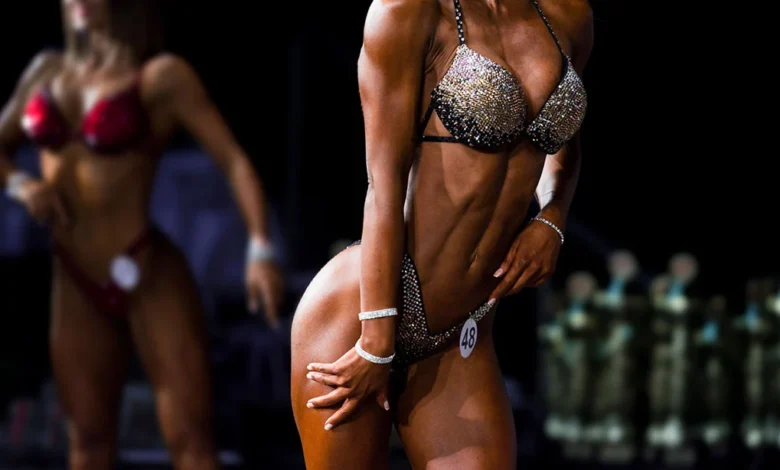
Specifically, the rules dictate that athletes should possess enough muscle to shape the physique, but with noticeably less development in the legs, glutes, arms, and deltoids than is standard for the Bikini division. The criteria are explicit: no visible glute-ham tie-ins, no extreme hamstring separation, and no "capped" deltoids. The midsection must appear fit but should lack the high level of abdominal detail seen in more advanced bodybuilding classes. In many ways, the federation is looking back to the standards of the mid-2010s to define the look of the future. The use of three-time Bikini Olympia champion Ashley Kaltwasser’s 2015 physique as the visual benchmark for the division serves as a tacit admission that the Bikini division itself has evolved into a category of much higher muscularity than its founders originally intended.
The Structural Evolution of Physique Sports
The trajectory of almost every competitive physique division follows a predictable pattern: what begins as an aesthetic ideal eventually shifts toward larger muscle mass and deeper conditioning as athletes compete to stand out. This "evolutionary pressure" has been observed across the board. The Open Men’s division set the standard, but as it became more extreme, the industry introduced the 212 division and later the Classic Physique category to provide a platform for different proportions.
Similarly, in women’s divisions, Figure was once the alternative to the intense muscularity of Women’s Bodybuilding, only for Figure competitors to eventually increase their own muscle density. By introducing Fit Model, the IFBB Pro League is attempting to create a "reset" button. By mandating a more natural, athletic look and limiting the use of the extravagant, Swarovski-encrusted suits common in other categories—favoring simpler, plain-colored attire—the league is signaling a move toward a more commercial, accessible aesthetic that mirrors the images often seen in high-end fitness publications.
Official Responses and Industry Implications
While some proponents of traditional bodybuilding have voiced skepticism regarding the addition of a 12th division, citing a potential dilution of the sport’s core focus, others see it as a necessary evolution. Industry analysts suggest that the Fit Model division is not meant to replace existing categories but to provide a pathway for a new cohort of athletes.
"The objective is to reach a broader audience of women who lead active, healthy lifestyles but do not wish to subject themselves to the extreme dieting protocols required to reach the stage in the current Bikini division," says one industry observer familiar with the league’s strategic planning. By offering a platform that rewards a different look, the IFBB is essentially diversifying its product, ensuring that the Olympia remains relevant to a wider spectrum of fitness enthusiasts.
The Challenge of Standard Maintenance
The long-term viability of the Fit Model division rests entirely on the consistency of the judging panel. The primary challenge, as noted by critics and industry experts, is preventing the "creeping" of the standard. If the 2026 inaugural winner exhibits a level of conditioning that is slightly too hard or muscles that are slightly too developed, future competitors will likely mimic that look, leading to an iterative increase in mass.
To maintain the integrity of the division, the judges must adhere strictly to the written rules, even if that means penalizing athletes who arrive with superior, yet "incorrectly" muscular, physiques. If the division follows the historical path of its predecessors, it may eventually require the creation of yet another, even less muscular, category in the future. However, for now, the debut at the 2026 Olympia serves as a defining moment. It is a laboratory of sorts, where the federation will test whether it is possible to freeze an aesthetic standard in place, or whether the competitive spirit of the athletes will inevitably push the boundaries of what is considered "fit."
A Broader Impact on the Fitness Economy
The inclusion of Fit Model also has economic and marketing implications. By standardizing a look that aligns with mainstream media and commercial modeling, the IFBB Pro League is positioning these athletes to serve as brand ambassadors for a wider array of sponsors. Fitness brands, clothing companies, and wellness platforms often seek a look that is athletic yet relatable; a category that emphasizes this look may provide a more direct bridge between the stage and the mainstream fitness industry.
As the curtains rise on this new division, the focus will not only be on the athletes themselves but on the message sent by the panel of judges. Every point awarded to a specific physique is a blueprint for the next generation of competitors. If the judges reward a look that truly reflects the "less is more" philosophy, the Fit Model division could successfully carve out a permanent niche in the sport. If, however, the division begins to trend toward the existing standards of the Bikini category, it may find itself redundant before the decade is out. The 2026 Olympia will provide the first data points in what is sure to be a fascinating experiment in the regulation of human aesthetics.