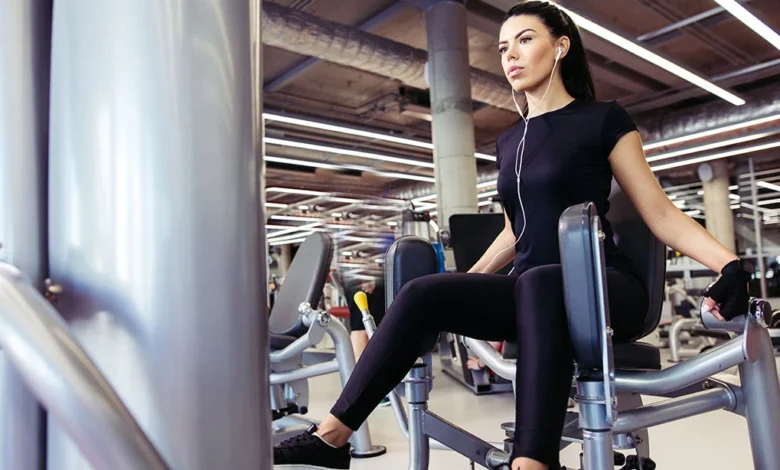
The hip adduction machine, colloquially known in fitness circles as the yes/no machine, has long suffered from a persistent reputation problem within the strength and conditioning community. Often relegated to the periphery of weight rooms, it is frequently dismissed as a niche, non-functional tool primarily used for aesthetic inner-thigh toning. However, as contemporary sports science continues to evolve, the discourse surrounding this machine is shifting from dismissive skepticism to a more nuanced appreciation of its role in structural integrity, hypertrophy, and injury prevention.
To understand why this machine remains a polarizing fixture in modern gyms, one must look at its historical context. Emerging in the late 1970s during the height of the bodybuilding boom, the machine was designed to provide isolated stimulation to the adductor group—the muscles responsible for bringing the legs toward the midline of the body. While it served its purpose for physique athletes seeking to sculpt specific muscle groups, the rise of the functional training movement in the early 2000s cast doubt on its utility. Critics argued that since humans do not move in fixed, seated planes in daily life or athletic competition, the machine offered little in the way of transferable strength.
The three primary criticisms levied against the machine—its status as a fixed-path device, its perceived redundancy compared to compound movements, and its lack of athletic movement patterns—have created a barrier to its adoption in many elite training programs. Yet, recent research and the testimony of physical therapists suggest that dismissing the machine entirely may be a tactical error for those seeking a comprehensive approach to lower-body development.
The Anatomical and Functional Significance of the Adductors
The adductor complex is not merely a collection of aesthetic muscles; it is a critical group of five muscles—the adductor longus, brevis, and magnus, along with the gracilis and pectineus—that play a vital role in pelvic stability and movement. Among these, the adductor magnus is particularly significant due to its size and its functional role as a hip extensor.
Recent physiological data highlights the underappreciated strength potential of this group. A 2025 study examining the torque-producing capacity of the adductor complex found that its potential for hip extension is more than twice that of its capacity for adduction. This data suggests that the adductors are heavily involved in the very movements lifters prize most, such as the back squat, the deadlift, and the lunge. By labeling these muscles solely as inner-thigh stabilizers, the fitness industry has historically undersold their capacity to contribute to total lower-body power.
Physical therapist Dan Swinscoe notes that because the adductor group represents a significant portion of the total muscle mass in the lower body, direct stimulation is a logical strategy for those looking to maximize performance. While it is true that compound movements recruit these muscles, the principle of specificity suggests that isolating a muscle group can lead to hypertrophy gains that compound movements alone may not achieve.
Chronology of the Adductor Debate
The perception of the hip adduction machine has undergone three distinct phases over the last four decades:
- The Bodybuilding Era (1975–1995): The machine was a staple of bodybuilding gyms, prized for its ability to isolate the inner thigh and contribute to a balanced lower-body physique.
- The Functional Training Pivot (1996–2015): The emergence of CrossFit and functional fitness prioritized movements involving free weights, balance, and multi-planar stability. During this time, the adduction machine was widely labeled as non-functional and even potentially detrimental to natural movement patterns.
- The Evidence-Based Integration Era (2016–Present): Current trends favor a balanced approach. Practitioners now recognize that while compound movements are the foundation, targeted isolation work—including the use of the adduction machine—serves as a necessary adjunct for correcting imbalances and enhancing muscle-specific growth.
Injury Prevention and Clinical Perspectives
The debate surrounding the machine is not limited to aesthetics or muscle size; it carries significant implications for injury prevention. Groin injuries are notoriously common in high-impact sports such as soccer, hockey, and basketball. Research has consistently demonstrated that strengthening the adductors can significantly mitigate these risks.
A landmark study published in the American Journal of Sports Medicine followed male soccer players over the course of a competitive season. Those who incorporated a targeted adductor-strengthening protocol—utilizing movements like the Copenhagen side plank—experienced a 41% reduction in reported groin-related issues. While this research does not explicitly validate the seated adduction machine as a substitute for functional planks, it confirms that increasing the raw strength of the adductor group is a critical component of orthopedic health.
Strength coach Gareth Sapstead argues that for the average gym-goer, the machine provides a safe, low-technical-barrier way to achieve this necessary strength. "It is hard to sell the average gym-goer on the value of hip adduction strength," Sapstead explains. "For those individuals, the machine is highly effective because it minimizes the risk of injury associated with complex free-weight movements while still providing a reliable, progressive stimulus."
Evaluating the Risk-Reward Profile
When determining whether to integrate the hip adduction machine into a training regimen, practitioners often evaluate it based on its risk-to-reward ratio.
The risks are generally considered low to moderate. Because the machine is seated and stabilized, the mechanical stress on the spine is minimal compared to a heavy barbell squat. However, improper use—specifically, loading the weight stack beyond one’s capacity or forcing the legs into an aggressive range of motion—can lead to strain in the groin area. The risk is primarily user-driven, related to volume and intensity rather than the inherent design of the equipment.
The rewards, however, are multifaceted:
- Hypertrophy: It provides a direct stimulus to the adductor magnus and gracilis, which can be difficult to fatigue fully through compound lifts without causing systemic exhaustion.
- Recovery Management: Because the exercise is localized, it allows for high-volume work without significantly taxing the central nervous system or the lower back, preserving recovery capacity for heavy compound sessions.
- Progressive Overload: The machine allows for precise, incremental weight increases, making it an ideal tool for tracking strength gains in a specific muscle group.
Strategic Programming for Optimal Results
For those looking to incorporate the machine into their current routine, it is best utilized as an accessory exercise rather than a primary lift. The following programming guidelines are suggested by contemporary strength and conditioning practices:
Placement: The machine should be placed toward the end of a training session, after the primary compound lifts (squats, deadlifts, lunges) have been completed. This ensures that the athlete has already performed their heavy, multi-joint movements and can now safely focus on localized muscle fatigue.
Volume and Intensity: A structure of 2 to 4 sets, ranging from 12 to 25 repetitions, is recommended. Higher repetition ranges are generally preferred to minimize the risk of over-loading the hip joint while maximizing time under tension.
Frequency: Integrating the exercise 1 to 2 times per week is sufficient to achieve adaptations without interfering with the recovery of the larger muscle groups involved in primary lifts.
Progression: Progression should be steady and linear. Lifters should aim to achieve the upper threshold of the prescribed repetition range with good form before increasing the resistance. This ensures the focus remains on muscle engagement rather than ego-lifting.
Conclusion: A Tool, Not a Panacea
The hip adduction machine remains a subject of debate, yet the evidence suggests it is an underutilized asset in the modern fitness repertoire. While it is not a replacement for functional, multi-joint movements that demand balance and core stabilization, it serves as a highly effective tool for muscle isolation, hypertrophy, and prophylactic injury management.
By stripping away the stigma of the "inner-thigh machine" and treating it as a legitimate piece of strength equipment, athletes can address specific weaknesses in their lower-body kinetic chain. The machine does not require the lifter to choose between functionality and isolation; rather, it allows for a hybrid approach where high-utility movements and targeted accessory work coexist to produce a more balanced, resilient, and powerful physique. Ultimately, the utility of the machine lies in its simplicity. When managed with proper form and appropriate volume, it provides a straightforward path to developing a muscle group that is essential for both performance and long-term musculoskeletal health.