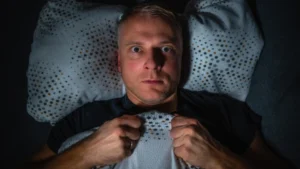
New Study Challenges Longstanding Assumptions Linking Obstructive Sleep Apnea to Parasomnias


A comprehensive research study conducted by the University of Bergen in Norway has fundamentally challenged the prevailing medical belief that obstructive sleep apnea (OSA) acts as a primary catalyst for parasomnias, a category of sleep disorders characterized by abnormal and often disruptive behaviors. By analyzing a cohort of over 4,000 patients, researchers have uncovered evidence suggesting that the correlation between these two conditions is far less significant than previously hypothesized in clinical literature.
Obstructive sleep apnea is a pervasive global health concern characterized by the repeated collapse of the upper airway during sleep. This structural obstruction causes breathing to stop and start intermittently, leading to fragmented sleep architecture, hypoxemia—or low blood oxygen levels—and significant daytime fatigue. Conversely, parasomnias encompass a diverse range of nocturnal events including sleepwalking, sleep terrors, nightmares, enuresis (bedwetting), and REM sleep behavior disorder. Because both conditions occur during the nocturnal cycle, clinicians have long assumed a direct causal pathway: that the physiological stress caused by apnea-induced oxygen deprivation triggers abnormal brain activity, manifesting as parasomnic behavior.
The Scope and Methodology of the Norwegian Study
The investigation was launched to provide empirical clarity on what has historically been an anecdotal association in sleep medicine. To ensure a robust dataset, the research team recruited 4,372 participants, all of whom had been referred to a specialized sleep clinic at a Norwegian hospital due to suspected sleep apnea. The demographics of the study population were representative of typical sleep clinic referrals: approximately 70% of the participants were male, with a mean age of 49 years.
The methodology relied on a dual-pronged assessment approach. Each participant was issued a portable sleep monitor—a standard diagnostic tool used to measure respiratory events, oxygen saturation levels, and heart rate variability throughout the night. Simultaneously, the researchers utilized validated questionnaires to catalog the frequency and nature of unusual sleep behaviors experienced by the subjects over the preceding three months. By cross-referencing objective diagnostic data from the sleep monitors with the subjective reports of parasomnias, the team aimed to determine if the severity of apnea correlated with the incidence of abnormal sleep behaviors.
Defining the Landscape of Parasomnias
Parasomnias are generally classified into two primary categories: NREM-related and REM-related. NREM parasomnias, which include sleepwalking and sleep terrors, typically occur during deep, slow-wave sleep. REM parasomnias, such as nightmare disorder or REM sleep behavior disorder (RBD), occur during the stage of sleep associated with vivid dreaming.
The clinical significance of these disorders varies wildly. While a bout of sleepwalking might be harmless for one individual, REM sleep behavior disorder is often considered a precursor to neurodegenerative conditions such as Parkinson’s disease. Given this clinical gravity, understanding the potential triggers—such as sleep apnea—is vital for early intervention and diagnostic accuracy. The Bergen study sought to provide a definitive answer as to whether the cessation of breath associated with apnea could be considered a sufficient trigger for these complex neurological expressions.
Key Findings and Statistical Outcomes
The data yielded results that were, in many respects, contrary to clinical expectation. Among the cohort of 4,372 patients, the researchers found that parasomnias were indeed present, but they did not demonstrate a clear, statistically significant uptick in frequency among those with severe obstructive sleep apnea compared to those with mild or no apnea.
The researchers analyzed the frequency of behaviors such as:
- Sleepwalking: Often triggered by sleep deprivation or external stimuli, but showing no direct link to apnea severity in this dataset.
- Nightmares: While often reported, the frequency did not increase proportionally with the number of respiratory disturbances measured by the portable monitors.
- Sleep Terrors: These events, which are often distressing for patients, appeared to be largely independent of the oxygen desaturation events characteristic of OSA.
The most profound takeaway from the study was the decoupling of these conditions. While a patient may suffer from both apnea and parasomnias, the research suggests that the presence of one does not necessarily drive the presence of the other. The study implies that for the majority of patients, the two conditions may be comorbidities—existing side-by-side—rather than one causing the other.
Challenging the Medical Paradigm
For decades, the standard diagnostic pathway for a patient presenting with sleep disturbances was to treat the apnea first, under the assumption that restoring breathing would eliminate the parasomnias. If a patient snored heavily and experienced night terrors, the clinician would often prescribe Continuous Positive Airway Pressure (CPAP) therapy. If the parasomnias persisted, it was often labeled as "treatment-resistant."
This new research indicates that such an approach may be overly simplistic. It suggests that medical professionals should evaluate parasomnias as distinct diagnostic entities rather than secondary symptoms of sleep-disordered breathing. This shift in perspective is critical for patient outcomes. If a patient is treated for apnea but the underlying parasomnia—perhaps a neurological issue or a psychiatric manifestation—is ignored, the patient remains at risk for injury and chronic sleep deprivation.
Broader Implications and Future Directions
The implications for the medical community are multifaceted. First, it highlights the importance of comprehensive sleep evaluations. If a patient reports abnormal behaviors, physicians must look beyond the airway. Second, it calls for a re-evaluation of sleep medicine guidelines. If the causal link is weaker than previously thought, the "apnea-first" approach to treatment needs to be refined.
Furthermore, this study underscores the limitations of using portable sleep monitoring in isolation. While portable devices are excellent for diagnosing OSA, they lack the electroencephalogram (EEG) capabilities required to monitor brain waves during the transition between sleep stages—a process where parasomnias often originate. Future research will likely need to move toward in-lab polysomnography to capture the precise moments these behaviors occur, comparing them against respiratory metrics in a more controlled, clinical environment.
A Call for Clinical Nuance
The researchers involved in the Bergen study caution that their findings should not be interpreted as a dismissal of the importance of treating sleep apnea. Obstructive sleep apnea remains a serious condition that significantly increases the risk of cardiovascular disease, stroke, and metabolic syndrome. The study simply clarifies the relationship between the two conditions, providing doctors with more nuance in their diagnostic workups.
Patients who suffer from both conditions should not be discouraged by these findings. Instead, they should be encouraged to advocate for a more holistic approach to their sleep health. If a patient undergoes CPAP therapy and continues to experience abnormal behaviors, this study provides the scientific justification for further testing to identify other potential underlying causes, such as medications, stress, or other neurological sleep disorders.
Conclusion: The Evolving Understanding of Sleep
The Norwegian study stands as a significant contribution to sleep science, serving as a reminder that the human sleep cycle is an incredibly complex physiological process. By challenging a long-held assumption, the research team at the University of Bergen has opened the door to more precise, individualized treatment plans.
As the medical field continues to advance, the focus is shifting toward a more granular understanding of sleep architecture. Moving away from the assumption that all sleep disturbances stem from a single source—the airway—allows for better diagnostic precision and more effective patient care. For the millions of individuals worldwide currently struggling with sleep apnea and its associated comorbidities, this research offers a clearer path toward finding the root cause of their symptoms and achieving the restorative rest that is essential for long-term health and well-being. The study, published in the Frontiers in Psychology journal, remains a key reference for clinicians aiming to improve the standard of care in modern sleep clinics.