Gamera Drone, 72-Foot Uncrewed Aircraft With 10,357-Mile Range, Unveiled to Replace MQ-9A Reaper Fleet

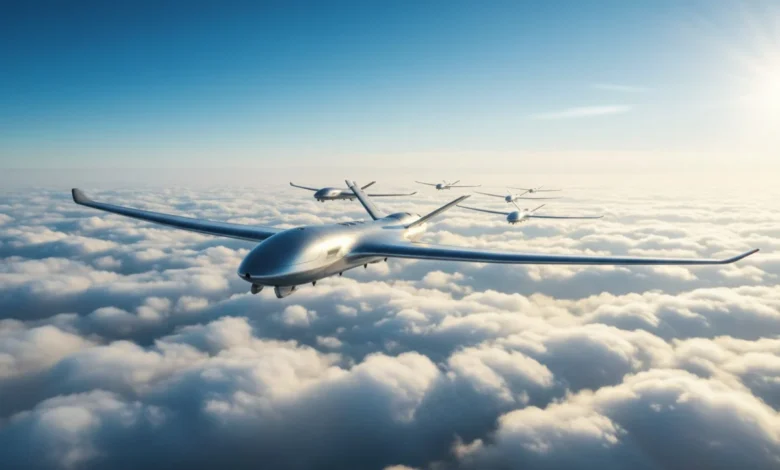
The landscape of modern aerial warfare is undergoing a fundamental transformation as Swarm Aero, a defense technology innovator, recently unveiled the Gamera. This 72-foot uncrewed aerial system (UAS) is designed to serve as a high-endurance, cost-effective successor to the aging MQ-9A Reaper fleet. By offering a reported range of 10,357 miles—a figure that significantly eclipses the operational capacity of its predecessor—the Gamera is being positioned by its developers as a strategic answer to the challenges of contested airspace and the demand for long-range intelligence, surveillance, and reconnaissance (ISR) capabilities.
The announcement of the Gamera platform comes at a critical juncture for the U.S. Air Force. For decades, the MQ-9A Reaper has been the workhorse of the American uncrewed arsenal, proving its worth in counter-insurgency and precision strike operations. However, the Reaper’s vulnerability to advanced integrated air defense systems and its escalating maintenance costs have led Pentagon planners to seek more resilient and economical alternatives. The Gamera project seeks to address these deficiencies through a clean-sheet design that emphasizes modularity, swarm compatibility, and the ability to operate in environments where high-value assets might otherwise be considered too risky to deploy.
Technical Specifications and Operational Design
The most striking feature of the Gamera is its reach. With a listed range of 10,357 miles, the aircraft is theoretically capable of conducting transoceanic missions from domestic bases, potentially alleviating the logistical burden of forward-basing large crews and support equipment. This capability is particularly relevant to the U.S. military’s pivot toward the Indo-Pacific theater, where vast distances between operational nodes define the strategic environment.
Constructed from a clean-sheet design, the Gamera focuses on the "attritable" concept—a doctrine that prioritizes the production of aircraft cheap enough to be lost in combat without compromising the overall mission success or the military’s budgetary health. While specific payload capacities remain classified, Swarm Aero has indicated that the aircraft is engineered for a multi-mission profile, including advanced communications relay and ISR. The modular nature of the design suggests that the platform could be rapidly reconfigured for different operational requirements, ranging from electronic warfare to kinetic strike missions.
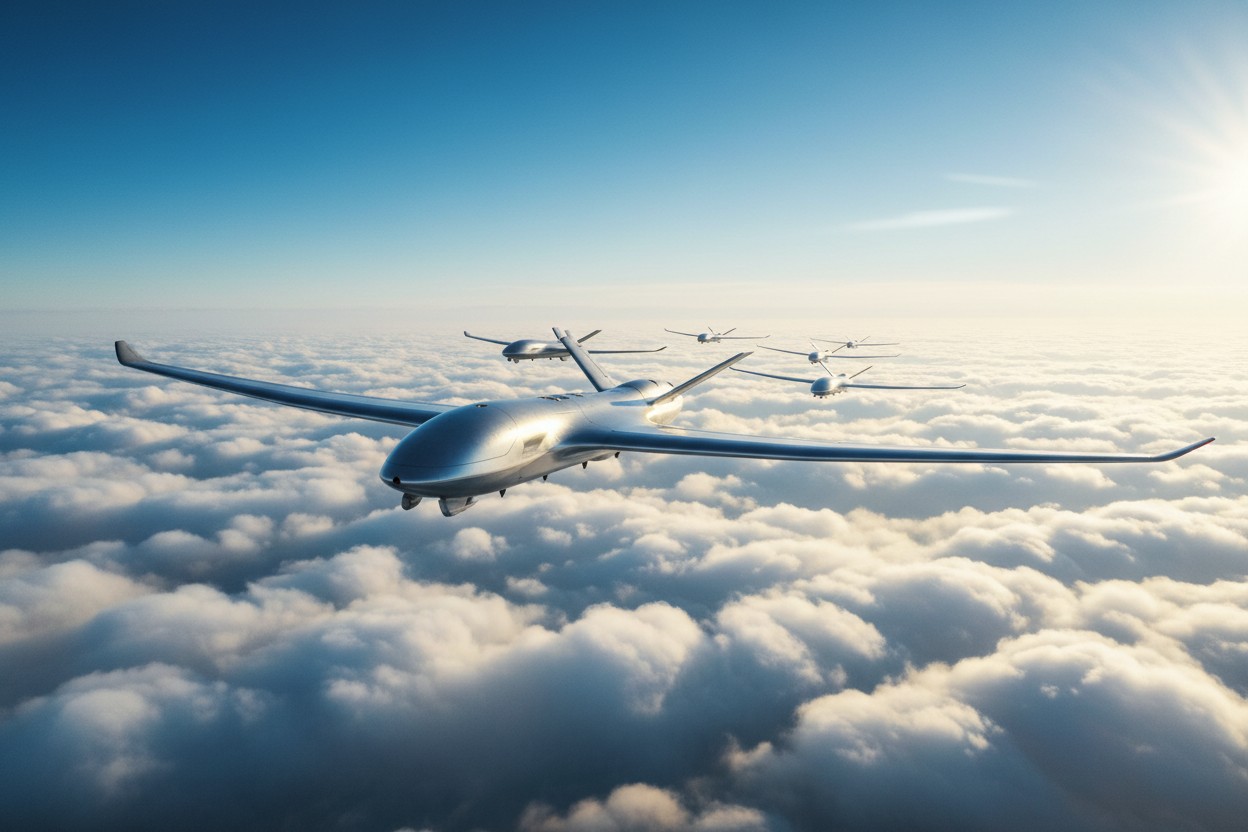
The decision to emphasize swarm mission capability marks a departure from the traditional "single-pilot-to-single-drone" control paradigm. By integrating autonomous swarm logic, the Gamera is designed to act as a coordinated network rather than a solitary actor, allowing a single operator to manage a constellation of aircraft. This shift in operational control is intended to saturate adversary defenses and provide redundant sensor coverage across wide geographic areas.
The Evolution of the Reaper Replacement Program
The procurement of a Reaper replacement has been a persistent priority for the Department of Defense. The MQ-9A, while highly effective in low-threat environments, has suffered significant losses in recent years, including incidents involving regional conflicts and state-actor interference. Budget documents from the Department of Defense have consistently highlighted the need for systems that can operate with a higher degree of survivability while maintaining a footprint that does not require the heavy logistics tail associated with traditional piloted or large-scale remotely piloted aircraft.
The target cost for the Gamera, while not explicitly confirmed by the company, is reportedly aligned with the Air Force’s desire for a platform costing a fraction of the current Reaper fleet, which has seen its unit costs climb as capabilities have been added over time. By targeting a price point of roughly $10 million per unit, the Gamera project aligns with broader DoD initiatives, such as the Collaborative Combat Aircraft (CCA) program, which seeks to integrate low-cost, uncrewed platforms with manned fifth- and sixth-generation fighters.
Strategic Context and Global Drone Proliferation
The introduction of the Gamera occurs against a backdrop of rapid global innovation in uncrewed technology. The ongoing conflict in Ukraine has served as a crucible for drone warfare, demonstrating that inexpensive, mass-produced systems can successfully neutralize much larger, more expensive assets. This "democratization" of precision strike capability has forced global military powers to reconsider their dependence on monolithic, expensive, and difficult-to-replace airframes.
Beyond the battlefield, the proliferation of uncrewed systems has extended into domestic airspace. The Federal Aviation Administration (FAA) has seen a surge in applications for drone operations, ranging from commercial delivery trials to law enforcement surveillance. This trend has sparked a robust debate regarding privacy, data sovereignty, and the legal frameworks governing the use of uncrewed systems. While the Gamera is strictly a military-grade platform, its development is inextricably linked to the broader technological evolution of autonomous flight, which is now penetrating nearly every facet of modern aviation.
Perspectives on Oversight and Ethics
The rapid expansion of uncrewed surveillance and strike capabilities has drawn scrutiny from civil liberties organizations and legislative watchdogs. Critics argue that the deployment of large-scale, persistent surveillance aircraft, such as the Gamera, fundamentally alters the relationship between the state and the individual. Concerns regarding the "surveillance state" have been amplified by the integration of facial recognition, AI-driven pattern analysis, and the potential for these systems to be used in ways that exceed initial mission parameters.
Senator Ed Markey and various privacy advocacy groups have frequently warned of the dangers inherent in a lack of transparency regarding drone deployment. The primary concern is that as these systems become cheaper and more ubiquitous, the threshold for their use will lower, leading to a permanent state of aerial observation. In response to these concerns, Swarm Aero has stated that the Gamera program is designed to comply with all existing legal and regulatory requirements, including international laws of armed conflict. Company representatives emphasize that the aircraft’s primary function is to enhance national security and protect personnel by removing them from harm’s way, rather than to expand domestic surveillance.
Independent Verification and Future Milestones
Despite the ambitious claims made by Swarm Aero, defense analysts remain cautious, noting that the company has yet to provide independent verification of the Gamera’s performance metrics. In the aerospace industry, the transition from a design concept to a flight-ready prototype is often fraught with technical challenges, particularly when integrating advanced communication and sensor suites.
The next phase of the program is expected to focus on rigorous ground testing and initial flight demonstrations. These tests will be critical in determining whether the aircraft can meet the endurance and range requirements projected by the manufacturer. Following these tests, a production decision will be contingent upon the platform’s performance during evaluation and its integration into the existing Air Force command-and-control infrastructure.
The industry anticipates further disclosures regarding the Gamera at upcoming defense exhibitions, where the company is expected to provide more granular details on the aircraft’s sensor fusion capabilities, weapons integration, and potential deployment timelines. For now, the aviation and defense community will be closely watching the Gamera’s progress, as it represents a tangible shift in how the U.S. military intends to conduct long-range operations in an era of renewed great-power competition.
Implications for the Future of Airpower
The Gamera is more than just an aircraft; it is a manifestation of the current shift in military philosophy. By prioritizing range, modularity, and cost-efficiency over the traditional "gold-plated" approach to defense procurement, the program seeks to provide the U.S. military with the flexibility needed to respond to an increasingly complex and unpredictable global security environment.
Should the Gamera prove successful in its upcoming trials, it could establish a new benchmark for uncrewed systems, potentially signaling the sunset of the Reaper era and the dawn of a new generation of autonomous, high-endurance, and swarm-capable aircraft. As the Pentagon continues to refine its strategy, the success or failure of the Gamera will likely serve as a litmus test for the viability of the "attritable" aircraft model, influencing military investment for decades to come.
The integration of such technology into the fleet will require not only engineering prowess but also a robust legal and ethical framework to ensure that the rapid advancement of drone capabilities remains consistent with democratic values and international norms. As the world watches, the Gamera stands as a symbol of the rapid, often volatile, trajectory of modern aerospace innovation, poised to reshape the skies of the 21st century.