Unlocking the Sugar Code: How New Antibody-Lectin Chimeras Could Revolutionize Cancer Immunotherapy

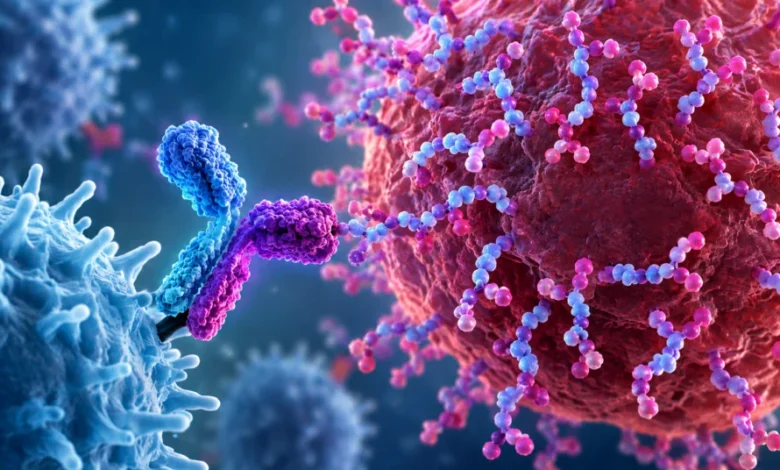
Cancer cells have long been understood as masters of camouflage, evolving sophisticated biological strategies to remain invisible to the human immune system. While much of modern oncology has focused on the protein-based "handshakes" that tumors use to suppress immune surveillance, a burgeoning field of research suggests that the most critical clues to cancer’s survival may be found in the dense, sugar-rich forest coating the surface of every cell. Recent findings from a collaborative team of researchers at MIT and Stanford have introduced a novel therapeutic class known as antibody-lectin chimeras (AbLecs), a breakthrough that offers a new mechanism for disabling the "sugar shields" tumors use to evade destruction.
The Glycan Defense Mechanism
To understand the significance of this development, one must first look at the glycobiology of the cell. Every cell in the human body is enveloped in a complex, diverse layer of glycans—sugar-containing molecules that act as an identification badge. In a healthy physiological state, these glycans help the immune system distinguish between "self" and "foreign" invaders. However, oncological processes often hijack this system.
Tumors frequently engage in hypersialylation, a process characterized by the overexpression of sialic acid-capped glycans on the cell surface. These sialic acids act as a "don’t eat me" signal. When these sugar chains interact with inhibitory receptors on immune cells known as Siglecs (sialic acid-binding immunoglobulin-type lectins), they effectively pull the emergency brake on the immune system. This glyco-immune checkpoint creates a localized environment of immunosuppression, allowing the tumor to proliferate without triggering an aggressive T-cell or macrophage response. Unlike protein-based checkpoints like PD-1 or CTLA-4, which have been the focus of successful pharmaceutical interventions for over a decade, this sugar-based signaling axis has remained largely untargeted by current clinical therapies.
The Chronology of Discovery and Development
The development of AbLecs represents the culmination of years of foundational research in chemical biology. The project was spearheaded by the laboratory of Nobel laureate Carolyn Bertozzi at Stanford University, a pioneer in the field of bioorthogonal chemistry.
The trajectory of this research can be mapped through several critical milestones:
- Foundational Glycobiology (2010s): Initial studies identified the role of sialic acid and Siglec interactions in immune evasion, establishing the hypothesis that blocking these interactions could restore anti-tumor immunity.
- Molecular Engineering (2020–2024): Researchers worked to design a modular protein structure capable of high-affinity binding. The objective was to create a molecule that could simultaneously "anchor" itself to a cancer cell while masking the inhibitory sugar signals.
- The Nature Biotechnology Breakthrough (2025): The publication of the study in Nature Biotechnology provided the first comprehensive evidence that AbLecs could effectively neutralize the inhibitory signaling of glycans in both controlled cell cultures and humanized mouse models.
- Commercial Transition (Present): The technology has moved into a translational phase, with Valora Therapeutics—a startup co-founded by researchers Jessica Stark and Carolyn Bertozzi—tasked with the rigorous process of optimizing the drug candidate for future clinical trials.
Technical Mechanics: How AbLecs Function
The genius of the AbLec system lies in its modularity and dual-action mechanism. An AbLec molecule is essentially a two-part construct. The first component is a traditional antibody designed to bind to a specific tumor-associated antigen. This ensures that the therapeutic is delivered precisely to the site of the cancer.
The second component is a lectin—a carbohydrate-binding protein. This lectin acts as a "decoy receptor." Instead of the cancer cell’s sialic acids reaching out to engage the inhibitory Siglec receptors on immune cells, the lectin domain on the AbLec intercepts the signal. By occupying the space where the inhibitory signal would normally be transmitted, the AbLec prevents the tumor from sending the "stand down" command. Consequently, the immune cell remains in an activated state, primed to carry out antibody-dependent cellular phagocytosis or cytotoxicity.
Data from the study indicate that this system is effective even in scenarios where tumor cells have downregulated their surface antigens to avoid detection—a common mechanism of treatment resistance in existing antibody therapies. By decoupling the immune activation from the absolute requirement of antigen density, AbLecs offer a potential solution to a significant hurdle in current immunotherapy.
Data-Driven Implications and Limitations
In the experimental results published by the MIT and Stanford team, the application of AbLecs resulted in a measurable reduction in tumor burden within humanized mouse models. These models are particularly vital because they contain engrafted human immune cells, providing a more accurate reflection of how a human system might respond to the treatment than traditional mouse models.
However, the scientific community maintains a cautious, evidence-based stance. Dr. Carolyn Bertozzi and her team have been clear that the current data, while promising, represent early-stage preclinical research. The leap from mouse models to human clinical trials involves complex physiological variables, including potential off-target effects, toxicity, and the challenge of systemic delivery. As of early 2025, no human patients have been treated with AbLec-based therapies.
Furthermore, the term "removing the sugar shield," popularized in some media outlets, is a slight misnomer. The AbLecs do not physically strip the sugars from the cell; rather, they functionally bypass the inhibitory signal, leaving the underlying glycan structures intact while neutralizing their suppressive effect. This distinction is vital for researchers and clinicians as it defines the mechanism of action as a blockade of signaling rather than the physical degradation of the tumor’s surface coating.
Broader Context: The Future of Immunotherapy
The significance of this research extends beyond the individual molecule. It highlights a paradigm shift in how we perceive the tumor microenvironment. If protein-based checkpoints are the "brakes" of the immune system, the glycan-Siglec axis represents a "steering" mechanism that directs immune cells away from their targets.
Existing immunotherapies, such as PD-1 inhibitors, have revolutionized the prognosis for patients with metastatic melanoma, lung cancer, and other malignancies. Yet, for a significant percentage of patients, these drugs fail to elicit a durable response. The potential for synergy between AbLecs and existing checkpoint inhibitors is perhaps the most exciting prospect of this research. In the initial laboratory findings, AbLecs demonstrated an additive effect when combined with conventional immunotherapy, suggesting that a multi-pronged approach—targeting both protein-based and sugar-based suppression—could be the next frontier in cancer treatment.
As Valora Therapeutics moves toward the development phase, the medical community will be watching for data on safety profiles and dosage thresholds. The path to clinical approval is notoriously difficult, with a high attrition rate for experimental oncology drugs. Nevertheless, the ability to "read" and manipulate the glycan code opens a new diagnostic and therapeutic window.
For now, the AbLec system remains a proof-of-concept, an elegant engineering solution to one of the most stubborn defensive strategies employed by cancer. It serves as a reminder that the human body’s internal chemistry is far more complex than the sum of its proteins, and that by peering into the sugar-coated surface of cells, scientists may find the keys to unlocking more effective, personalized treatments for patients who currently have few options.
Disclaimer: This information is provided for educational and informational purposes only and does not constitute medical advice, diagnosis, or treatment. Always seek the advice of a physician or other qualified health provider with any questions regarding a medical condition. Do not disregard professional medical advice or delay seeking treatment based on information found in this article.
AI Disclaimer: This article was created with the assistance of artificial intelligence tools and has been reviewed and edited by a human editor to ensure factual accuracy and adherence to professional journalistic standards.
Related posts: