Beyond Calories: Ultra-Processed Diets Linked to Hidden Muscle Degeneration and Elevated Knee Osteoarthritis Risk

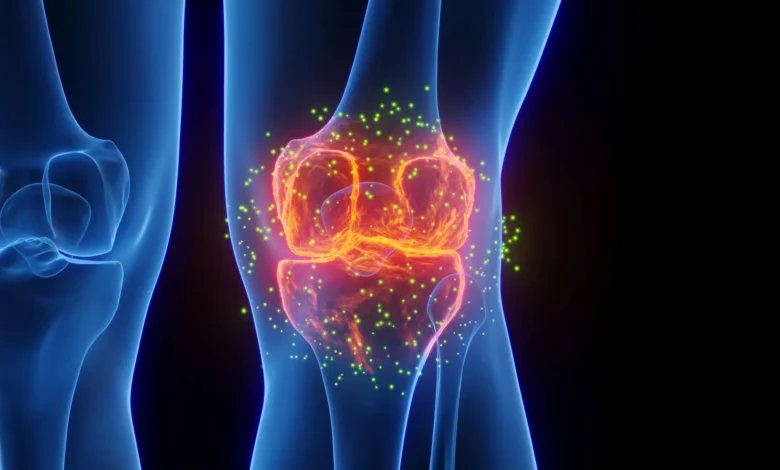
New scientific research indicates that a diet heavy in ultra-processed foods may drive unhealthy physiological transformations within human thigh muscles, potentially accelerating the risk of developing knee osteoarthritis. Published in the peer-reviewed medical journal Radiology—a publication of the Radiological Society of North America (RSNA)—the study evaluated individuals deemed at risk for joint degeneration. The findings reveal that participants who consumed higher quantities of industrially manufactured food products exhibited significantly greater accumulations of fat embedded directly inside their thigh muscles. Crucially, this localized fatty degeneration occurred independently of total caloric consumption, overall dietary fat intake, physical activity levels, and standard sociodemographic variables.
The investigation underscores a growing consensus among nutritional epidemiologists and musculoskeletal researchers: the chemical composition and processing level of modern food items may inflict specific structural damage on human tissues, extending far beyond the traditional metrics of body weight gain and caloric surplus. As global rates of obesity and degenerative joint diseases continue to climb in tandem, public health authorities are increasingly scrutinizing the modern Western dietary pattern, where natural ingredients are systematically displaced by synthetic additives, flavor enhancers, and chemical preservatives.
Defining the Scope: What Constitutes an Ultra-Processed Food?
To understand the physiological implications of the study, it is necessary to examine the classification of ultra-processed foods (UPFs). According to widely accepted nutritional frameworks such as the NOVA classification system, UPFs are industrial formulations manufactured from substances derived from foods or synthesized from other organic sources. They are engineered to be hyper-palatable, highly convenient, and exceptionally shelf-stable, utilizing complex combinations of added sugars, refined sodium, hydrogenated fats, and chemical additives designed to stimulate the brain’s mesolimbic reward pathway.
Common examples of ultra-processed foods found in contemporary diets include mass-packaged breakfast cereals, commercial margarines and spreads, convenience snack foods, hot dogs and processed meat analogs, carbonated soft drinks, energy drinks, packaged candies, commercial baked desserts, frozen pizzas, ready-to-heat convenience meals, and industrially manufactured sliced breads.
Lead study author Dr. Zehra Akkaya, a researcher and clinical consultant for the Clinical & Translational Musculoskeletal Imaging group within the Department of Radiology and Biomedical Imaging at the University of California, San Francisco (UCSF), highlighted the historical dietary shift that preceded current public health crises.
"Over the past decades, in parallel to the rising prevalences of obesity and knee osteoarthritis, the use of natural ingredients in our diets has steadily diminished and been replaced by industrially-processed, artificially flavored, colored and chemically altered food and beverages, which are classified as ultra-processed foods," Dr. Akkaya explained.
Methodology and Participant Cohort Profile
To investigate the direct relationship between UPF consumption and internal muscle composition, Dr. Akkaya and her research colleagues analyzed existing clinical data and imaging records sourced from the Osteoarthritis Initiative (OAI). Sponsored by the National Institutes of Health (NIH), the OAI is a comprehensive, nationwide longitudinal research endeavor designed to identify biomarkers and risk factors associated with the onset and progression of knee osteoarthritis, ultimately informing future preventative and therapeutic interventions.
The study cohort comprised 615 carefully selected participants—consisting of 275 men and 340 women—who presented with no clinical or imaging evidence of knee osteoarthritis at the baseline analysis. The average age of the cohort was 60 years old, providing a representative sample of an aging demographic increasingly vulnerable to degenerative musculoskeletal conditions. The participants exhibited an average body mass index (BMI) of 27, placing the typical individual squarely within the clinical overweight category.
Dietary habits were meticulously quantified using validated food frequency questionnaires that evaluated nutritional intake over the preceding twelve-month period. Upon analyzing the dietary data, researchers calculated that approximately 41 percent of the total daily food energy consumed by the cohort was derived from ultra-processed food products.
MRI Technology Reveals Intramuscular Fatty Infiltration
By employing advanced magnetic resonance imaging (MRI) protocols, the research team was able to visualize and quantify the precise distribution of adipose tissue within the major muscle groups of the thigh. The scans revealed a direct, linear correlation: participants who reported the highest consumption of ultra-processed foods displayed the most pronounced accumulation of intramuscular fat.
Rather than maintaining a uniform composition of healthy, contractile muscle fibers, the affected muscle tissue exhibited visible streaks of fat, a pathological presentation known as fatty degeneration. This infiltration compromises the structural integrity and mechanical efficiency of the muscle, diminishing its capacity to support adjacent joints adequately.
Significantly, the research team utilized widely available, non-enhanced MRI scans for the analysis. This methodological choice carries profound clinical implications, ensuring that the diagnostic approach remains practical, accessible, and economically viable for routine clinical implementation and future epidemiological studies.
"In addition to investigating the quality of our modern diet in relationship to thigh muscle composition, in this study, we used widely available, non-enhanced MRI, making our approach accessible and practical for routine clinical use and future studies," Dr. Akkaya noted. "These MRIs do not require advanced or costly technology, which means they can be easily incorporated into standard diagnostic practices."
Chronology of Research and Institutional Context
The publication in Radiology represents the culmination of years of targeted investigation into the intersection of nutritional science, advanced medical imaging, and chronic musculoskeletal pathology. While previous waves of scientific inquiry established clear links between ultra-processed foods and systemic metabolic disturbances—such as type 2 diabetes, cardiovascular disease, and systemic inflammation—empirical data concerning localized body composition changes remained sparse.
Historically, clinical management of knee osteoarthritis has relied heavily on macro-level interventions: weight reduction, physical therapy, pharmacological pain management, and surgical joint replacement in advanced stages. Knee osteoarthritis represents one of the most burdensome and economically costly non-cancer-related healthcare challenges in the United States and globally, driven largely by aging populations and escalating obesity rates.
By initiating this study, the UCSF research team sought to bridge a critical knowledge gap, providing the first systematic assessment of how ultra-processed foods specifically alter thigh muscle composition via non-invasive MRI imaging. The project’s timeline aligns with an accelerating shift in biomedical research toward precision nutrition—recognizing that the biochemical quality of food matters just as much as its macronutrient breakdown or caloric value.
Implications for Clinical Practice and Dietary Guidelines
The implications of these findings extend far beyond the specific context of knee osteoarthritis, offering a compelling critique of modern dietary guidelines that focus exclusively on caloric arithmetic (calories in versus calories out).
Traditional weight-loss regimens and lifestyle interventions prescribed for arthritis management have historically emphasized overall caloric restriction combined with low-impact aerobic exercise. While these strategies remain foundational, the UCSF study suggests that ignoring food processing levels may leave patients vulnerable to ongoing muscular degradation, even if weight loss targets are achieved.
"This research underscores the vital role of nutrition in muscle quality in the context of knee osteoarthritis," Dr. Akkaya stated. "Addressing obesity is a primary objective and frontline treatment for knee osteoarthritis, yet the findings from this research emphasize that dietary quality warrants greater attention, and weight loss regimens should take into account diet quality beyond caloric restriction and exercise."
Medical professionals and registered dietitians observing the study’s release point out that reducing ultra-processed food intake could soon become a standard component of preventative rheumatology and orthopedics. By preserving muscle quality and preventing intramuscular fatty infiltration, patients may maintain better joint stability, experience reduced pain, and potentially delay or avoid the need for invasive surgical interventions.
Future Directions in Musculoskeletal Health Research
As the medical community digests the findings published in Radiology, researchers are already planning subsequent investigations to build upon this foundational work. Future studies aim to track patient cohorts longitudinally to determine whether actively eliminating ultra-processed foods from an individual’s diet can reverse existing intramuscular fat accumulation or halt the progression of early-stage knee osteoarthritis.
Furthermore, researchers intend to explore the specific biochemical mechanisms driving the observed tissue changes. Hypotheses under investigation include the role of chronic low-grade systemic inflammation induced by dietary emulsifiers, advanced glycation end-products (AGEs), and refined sugars, which may selectively target skeletal muscle metabolism.
For patients and consumers navigating the modern food environment, the message from the clinical imaging data is clear: achieving and maintaining musculoskeletal health requires looking past nutrition labels that list only calories, fat grams, and carbohydrate counts. As science continues to decode the complex relationship between industrial food manufacturing and human physiology, minimizing ultra-processed food consumption emerges as a vital strategy for protecting joint longevity and preserving foundational muscle tissue.