Shaping the Modern Wellness Economy: Loren D. Israelsen Reflects on Four Decades of Advocacy and the Legacy of DSHEA

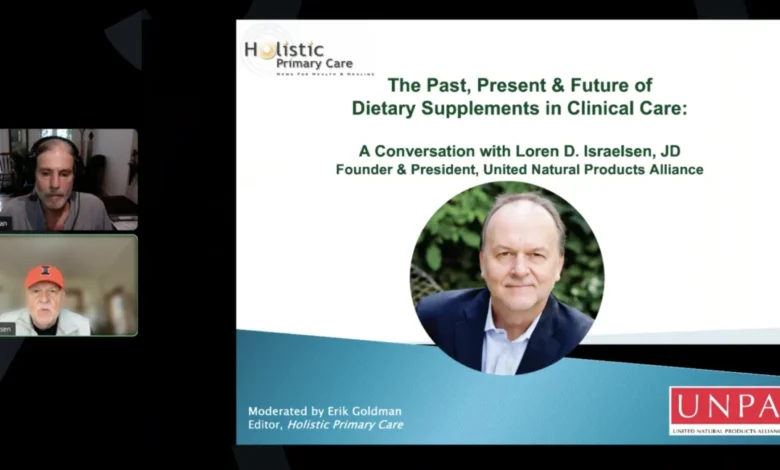
For millions of health-conscious consumers, integrative practitioners, and clinical researchers, the availability of dietary supplements is a routine aspect of modern healthcare. Vitamins, minerals, and herbal preparations line the shelves of conventional pharmacies, grocery stores, and specialized clinics, representing a multi-billion-dollar global industry. Yet, the foundational legality, accessibility, and regulatory framework that govern these products are the result of deliberate, decades-long legislative and legal battles. At the center of this transformation stands Loren D. Israelsen, JD, whose retirement on June 29, 2026, marks the end of an era for the natural products movement.
As an attorney, legislative architect, and founder of the United Natural Products Alliance (UNPA), Israelsen has spent over 40 years steering the trajectory of the dietary supplement sector. On the eve of his formal retirement, Israelsen sat down for an exclusive interview with Holistic Primary Care to reflect on the turbulent history of the industry, the landmark legislation that established it, and the future of integrative medicine. This milestone serves as an appropriate juncture to examine the profound impact of Israelsen’s career on American healthcare, the historical context of supplement regulation, and the ongoing evolution of the wellness economy.
The Pre-DSHEA Landscape: When Herbs Were Treated as Unapproved Drugs
To understand the magnitude of Israelsen’s contributions, one must look back at the regulatory environment of the United States prior to 1994. During the 1970s and 1980s, the American healthcare landscape regarding nutritional supplements was starkly adversarial. Federal regulatory bodies, primarily the Food and Drug Administration (FDA), often viewed non-pharmaceutical health products with deep suspicion.
In this era, vitamins, amino acids, and botanical extracts were frequently categorized under restrictive regulatory definitions. Herbs and high-potency nutritional supplements were often classified as "unapproved new drugs." Consequently, the distribution, marketing, and clinical recommendation of these items carried severe professional and legal risks. Physicians and licensed healthcare practitioners who integrated botanical medicine or nutritional therapies into their clinical protocols faced intense scrutiny. State medical boards routinely disciplined, suspended, or revoked the licenses of doctors who recommended natural remedies, and in some jurisdictions, practitioners faced the threat of criminal arrest.
Consumers faced severe limitations as well. Access to specialized formulations was restricted, and manufacturers operated in a state of constant legal precarity, vulnerable to sudden product seizures and injunctions. The medical establishment largely dismissed nutritional science, and public health discourse treated dietary supplements as marginal, unproven, and potentially hazardous anomalies outside legitimate medicine.
The Legislative Turning Point: The Birth of DSHEA
Recognizing the unsustainable nature of this regulatory hostility, a coalition of natural health advocates, visionary legislators, industry pioneers, and legal experts mobilized to reshape federal policy. Among the principal architects of this movement was Loren D. Israelsen. Working alongside key political figures—most notably the late Senator Orrin Hatch of Utah—Israelsen dedicated years to drafting, lobbying for, and securing the passage of a legislative framework that would protect consumer access while establishing standards for product integrity.
The culmination of these efforts was the Dietary Supplement Health and Education Act of 1994 (DSHEA). Signed into law in October 1994, DSHEA fundamentally redefined the American regulatory landscape. The legislation officially established a distinct statutory category known as "dietary supplements." Rather than regulating these items as food additives or unapproved drugs, DSHEA created a balanced framework acknowledging that vitamins, minerals, herbs, and amino acids serve to supplement the diet and support overall health.
DSHEA established several critical principles:
- Consumer Access: It protected the right of American consumers to choose from a wide variety of dietary supplements to support their personal health and wellness goals.
- Scientific Foundation: It required manufacturers to ensure product safety while permitting truthful, non-misleading statements regarding dietary support and structure-function claims.
- Regulatory Oversight: It empowered the FDA and the Federal Trade Commission (FTC) to monitor product safety, labeling compliance, and manufacturing practices, while placing the burden of proof on regulators to demonstrate that a product presented a significant or unreasonable risk before it could be removed from the market.
For Israelsen and his contemporaries, DSHEA was not merely a legislative victory; it was a foundational shift that democratized healthcare choices and laid the groundwork for the modern integrative medicine movement.
Foundational Leadership and the Establishment of the UNPA
Following the passage of DSHEA, the dietary supplement industry faced a new set of challenges. The rapid commercialization of the market necessitated robust self-regulation, scientific validation, and ethical leadership to ensure that rapid growth did not compromise product quality or consumer safety.

To address these imperatives, Israelsen channeled his legal expertise and industry insight into founding the United Natural Products Alliance (UNPA). Under his leadership, the organization evolved into a premier international association representing high-quality dietary supplement and functional food companies, ingredient suppliers, clinical researchers, and holistic healthcare thought leaders.
Throughout his tenure at the helm of the UNPA, Israelsen championed rigorous industry standards, advocating for current Good Manufacturing Practices (cGMPs), transparent labeling, sustainable sourcing, and evidence-based science. He consistently urged member companies to hold themselves to standards that exceeded baseline regulatory requirements, fostering a culture of compliance and professional credibility. By bridging the gap between commercial enterprises, clinical practitioners, and regulatory agencies, Israelsen helped transition the natural products sector from a fragmented cottage industry into a sophisticated, highly respected component of the broader healthcare economy.
Supporting Data and Economic Evolution
The transformation of the dietary supplement sector over the past four decades is reflected in remarkable economic and demographic data. In the early 1990s, the market for nutritional supplements was valued at a fraction of its current size, dominated by small specialty shops and a niche consumer base.
According to recent market research data from the Council for Responsible Nutrition (CRN) and industry analysts:
- Market Penetration: Over 75% of American adults currently consume dietary supplements regularly, spanning all demographic groups, geographic regions, and socioeconomic strata.
- Economic Valuation: The U.S. dietary supplement market has grown into a robust industry valued at over $50 billion annually, contributing significantly to employment, agricultural supply chains, and retail economies.
- Clinical Integration: Surveys of conventional physicians and integrative healthcare providers indicate that a vast majority of clinical practitioners now routinely discuss supplement use with their patients, acknowledging the role of targeted nutrition in chronic disease prevention and health optimization.
This exponential growth underscores the prescience of the framework established by DSHEA. By providing a stable legal environment, the legislation enabled investment in clinical research, manufacturing technology, and quality assurance, directly benefiting the modern consumer.
Perspectives on the Future of Natural Healthcare
During his final formal interview with Holistic Primary Care on June 29, 2026, Israelsen offered a reflective analysis of the past, present, and future of natural medicine. He emphasized that while the industry has achieved unprecedented mainstream acceptance, new challenges continue to emerge.
Key themes from Israelsen’s parting observations include:
- The Imperative of Rigorous Science: Israelsen stressed that the long-term credibility of the natural products industry depends on continued investment in rigorous clinical trials, pharmacokinetic studies, and mechanistic research to substantiate health claims.
- Navigating Global Regulatory Pressures: As international markets become increasingly interconnected, harmonization of quality standards and compliance protocols remains a vital priority for manufacturers and policymakers alike.
- The Convergence of Conventional and Integrative Care: Israelsen expressed optimism regarding the ongoing integration of nutritional science into conventional medical education and clinical practice, noting that modern patients increasingly demand a collaborative approach to health and wellness.
Industry leaders, legal experts, and clinical colleagues have widely praised Israelsen’s enduring legacy. Observers note that his ability to navigate complex legislative environments while maintaining an unwavering commitment to consumer health sets a gold standard for public advocacy.
Broader Implications and Legacy
As Loren D. Israelsen transitions into retirement, the impact of his life’s work resonates across multiple sectors of American society. The legal protections secured by DSHEA and refined through decades of UNPA advocacy have fundamentally altered the relationship between citizens and their healthcare choices.
By defending the right of individuals to access safe, high-quality nutritional supplements, Israelsen helped shift the philosophical paradigm of medicine from a strictly reactive model of disease treatment toward a proactive model of health maintenance and wellness optimization. For clinicians who integrate nutritional protocols into patient care, and for the millions of individuals who rely on dietary supplements to support their daily health, Israelsen’s contributions remain a quiet yet powerful force behind modern wellbeing.
The legacy he leaves behind is not merely a body of legislation or a successful trade association, but a permanently expanded horizon for healthcare freedom, consumer empowerment, and scientific inquiry within the natural products community.