Martin "The Martian" Fitzwater Embraces Innovative Training for 2026 Mr. Olympia Redemption After 2025 Disappointment.

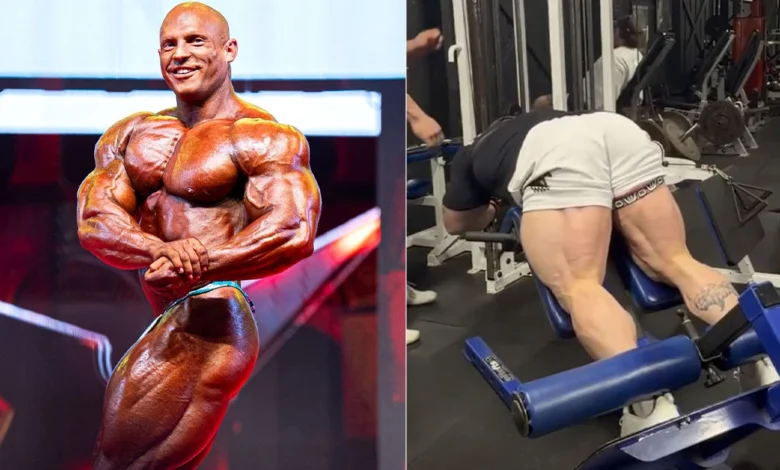
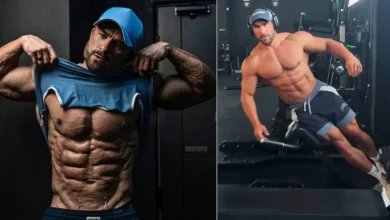
Bodybuilding luminary Martin "The Martian" Fitzwater is embarking on an intensive training regimen, strategically incorporating novel exercises, as he sets his sights on a more impactful performance at the 2026 Mr. Olympia in Las Vegas. This renewed focus comes on the heels of a fifth-place finish at the 2025 Mr. Olympia final, an outcome that, while commendable by many standards, fell short of the lofty expectations often associated with an athlete of Fitzwater’s caliber. Having already secured an early qualification for the prestigious 2026 event, Fitzwater is leveraging this preparatory window to build significant momentum, notably by integrating unique movements such as the cable Nordic curl into his hamstring development routine. This specialized exercise, while requiring meticulous setup, has been championed by Fitzwater as his new preferred method for targeting the posterior chain, reflecting a broader trend among elite athletes to seek out marginal gains through innovative training protocols.
The Aftermath of the 2025 Mr. Olympia: A Quest for Redemption
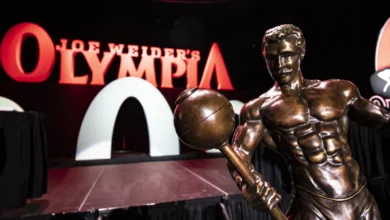
The Mr. Olympia competition stands as the pinnacle of professional bodybuilding, a stage where legends are forged and careers defined. Athletes dedicate years to honing their physiques, pushing the boundaries of human muscularity, symmetry, and conditioning. The 2025 event, held in a highly anticipated contest, saw Derek Lunsford clinch back-to-back Sandows, solidifying his reign. The field was intensely competitive, featuring a roster of formidable contenders including previous champions Samson Dauda and Hadi Choopan, each bringing their unique strengths and conditioning to the forefront. For Martin Fitzwater, securing a fifth-place position among such an elite lineup is, objectively, a significant achievement. However, within the highly competitive and self-critical world of professional bodybuilding, where the ultimate goal is always the top spot, a fifth-place finish can often be perceived by the athlete themselves as a stepping stone that revealed areas for improvement rather than a final destination. This perspective underscores the relentless drive for perfection that characterizes top-tier bodybuilders like Fitzwater, fueling his determination to refine his physique and strategy for the upcoming year.
Fitzwater’s performance in 2025 highlighted areas where he aims to gain a definitive edge. In a sport judged on minute details, where muscle fullness, separation, and overall balance can sway the judges’ scores, every muscle group undergoes intense scrutiny. The hamstrings, often overlooked in favor of more visually prominent muscle groups like the quadriceps, play a crucial role in presenting a complete, well-balanced physique, especially in mandatory poses such as the side chest and side triceps, and particularly in rear poses that showcase hamstring striations and glute-ham tie-ins. The perceived need for enhanced hamstring development could very well be a strategic component of Fitzwater’s current training focus, aiming to address any perceived imbalances or areas of relative weakness that might have been noted by the judges or his own critical eye.
Early Qualification: A Strategic Advantage for 2026
Fitzwater’s qualification for the 2026 Mr. Olympia was secured with an impressive showing at the EVLS Prague Pro in October of the preceding year. This early qualification is not merely a formality; it represents a substantial strategic advantage. Unlike athletes who might be scrambling for qualification spots closer to the Olympia date, Fitzwater now has an extended, uninterrupted period to focus solely on optimizing his physique. This allows for a more structured and less stressful preparation phase, enabling him to experiment with training methods, fine-tune his diet, and prioritize recovery without the added pressure of needing to compete in other shows to secure his place.
The EVLS Prague Pro, held annually in the Czech Republic, is a prominent fixture on the IFBB Pro League calendar. It consistently attracts a strong international roster of competitors vying for valuable Olympia qualification points and direct invitations. Fitzwater’s victory there underscored his competitive prowess and confirmed his status as a serious contender for the Mr. Olympia title. This early success provides a psychological boost and the logistical freedom to dedicate himself fully to the intricate demands of preparing for the sport’s biggest stage. It allows for a periodized approach to training, incorporating phases of strength building, hypertrophy, and conditioning, all geared towards peaking precisely for the 2026 event.
The Rise of Novel Training: The Cable Nordic Curl
In his pursuit of competitive excellence, Fitzwater has openly shared his enthusiasm for a particular exercise he refers to as "Cable Nordic Curls" or "Romanian Chair Hamstring Curls." In a recent Instagram post to his substantial following of nearly 320,000, Fitzwater, also referencing fellow bodybuilder Brett Wilkin, stated, "Cable Nordic Curls? Romanian Chair Hamstring Curls? I don’t know what you call it, but this is a new favorite of Brett Wilkin and I’s." This public endorsement from a high-profile athlete often sparks interest and adoption within the broader fitness community, highlighting the influence top professionals wield in disseminating training innovations.
The standard Nordic curl is a highly effective, bodyweight-based exercise known for its ability to target the hamstrings, particularly in their eccentric (lengthening) phase. It involves anchoring the lower legs, typically under a stable object or with a partner, and then slowly lowering the torso towards the ground using only the strength of the hamstrings to control the descent. This exercise is lauded for its potential to improve hamstring strength, flexibility, and to reduce the risk of hamstring injuries, a common concern among athletes. Fitzwater’s modification, however, introduces an additional layer of intensity by integrating a cable system, a method that allows for variable and progressive resistance.
Biomechanics and Hypertrophy: The Science Behind the Cable Nordic Curl
To understand the efficacy of Fitzwater’s innovative approach, it is essential to delve into the anatomy and biomechanics of the hamstring muscle group. The hamstrings comprise three distinct muscles: the biceps femoris (long and short heads), the semimembranosus, and the semitendinosus. These muscles originate from the ischial tuberosity (the sitting bone) and insert onto various points around the knee joint. Their primary functions include knee flexion (bending the knee) and hip extension (moving the leg backward), making them crucial for movements like running, jumping, and squatting.
Traditional Nordic curls primarily focus on the eccentric contraction of the hamstrings, where the muscle lengthens under tension. This type of contraction is highly effective for inducing muscle damage, which is a key stimulus for hypertrophy (muscle growth). By anchoring the lower legs and resisting gravity as the torso lowers, the hamstrings are forced to work intensely to control the movement. This mechanism places significant stress on the hamstrings, hips, and lower back, as these muscle groups collectively bear the load.
Fitzwater’s cable adaptation amplifies this effect by adding external resistance. While some athletes might use a barbell across the shoulders or hold dumbbells for additional weight during standard Nordic curls, a cable system offers distinct advantages. The cable provides a consistent line of pull throughout the entire range of motion, which can be more stable and controlled than free weights. This fixed path of resistance minimizes the risk of injury that can sometimes accompany free-weight variations, especially when pushing heavy loads. Moreover, the constant tension from the cable ensures that the hamstrings are under load not just eccentrically but also concentrically (during the lifting phase) and isometrically (at peak contraction), maximizing the time under tension—a critical factor for muscle hypertrophy. This sustained tension can lead to greater metabolic stress and mechanical tension, both potent drivers of muscle growth.
Executing the Cable Nordic Curl: Fitzwater’s Method
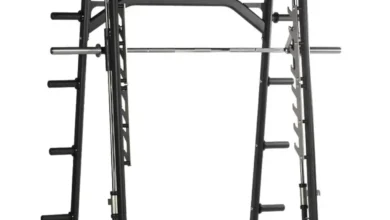
Fitzwater’s detailed instructions for performing his cable Nordic curl variation emphasize precision and form, crucial for both effectiveness and injury prevention. The setup involves utilizing a hyperextension or Roman chair, a common piece of gym equipment designed to support the lower body while allowing the upper body to move freely.
- Setup and Anchoring: The initial step involves positioning oneself on the hyperextension/Roman chair. Fitzwater instructs the user to wear a cable belt attachment, positioned just under the armpits, with the cable machine situated in front of the setup. This ensures the line of pull is directed appropriately to create resistance against the forward lean. Crucially, the ankles must be firmly anchored, and the knees pressed firmly into the pads of the chair. This fixation of the lower body is paramount, as it isolates the movement to the hamstrings and hip extensors.
- Form Cues: Fitzwater provides specific guidance on form: "Ankle and knees firmly pushed into the pad don’t hyperextend, but rather pull hips straight back, curling at the knee." This emphasizes that the movement should primarily originate from the knee joint (hamstring flexion) and hip extension, rather than an excessive arching of the lower back. He further advises, "You want to keep upper body in a straight line and try to keep movement out of your low back." Maintaining a straight line from shoulders to knees helps to prevent compensatory movements from the lumbar spine, ensuring the hamstrings bear the brunt of the work and protecting the lower back from undue strain.
- Controlled Movement: The essence of the Nordic curl, even with added resistance, lies in controlled, deliberate movement. The eccentric phase (lowering the torso) should be slow and controlled, maximizing the time under tension. The concentric phase (raising the torso) should also be executed with control, focusing on contracting the hamstrings and glutes to pull the body back to the starting position.
Fitzwater’s advice to "Start light" and acknowledge that "It’s very heavy and humbling" underscores the intensity of this exercise. Even with lighter loads, the cable Nordic curl can be extremely challenging, highlighting its potential for significant strength and muscle development.
The Strategic Edge: Why Innovation Matters in Elite Bodybuilding
In a sport where the margins between victory and defeat are often razor-thin, elite bodybuilders are constantly searching for any advantage. This pursuit extends beyond genetic potential and standard training protocols, leading many to explore novel exercises, advanced nutritional strategies, and cutting-edge recovery techniques. The adoption of a specialized exercise like the cable Nordic curl by an athlete of Fitzwater’s caliber is indicative of this relentless quest for "marginal gains"—small, incremental improvements across various facets of preparation that collectively contribute to a superior overall package on stage.
Innovation in training can serve multiple purposes. Firstly, it can target specific muscle groups more effectively, addressing weaknesses or enhancing strengths that conventional exercises might not fully capitalize on. Secondly, it can introduce new stimuli, preventing plateaus and keeping the muscles adapting and growing. Thirdly, it can offer alternatives that are easier on the joints or reduce the risk of injury, allowing athletes to train harder and more consistently over time. Finally, there’s a psychological component; the belief that one is employing a superior or unique method can boost confidence and mental fortitude, which are invaluable assets in the high-pressure environment of competitive bodybuilding.
Fitzwater’s willingness to experiment and share his findings also contributes to the broader evolution of training methodologies within the bodybuilding community. As athletes at the pinnacle of the sport demonstrate the effectiveness of certain techniques, these methods often cascade down to amateur competitors and fitness enthusiasts, enriching the collective knowledge base.
Looking Ahead: The 2026 Mr. Olympia Landscape
The 2026 Mr. Olympia promises to be another epic showdown. Martin Fitzwater will once again share the stage with a pantheon of bodybuilding giants. Reigning champion Derek Lunsford will undoubtedly be aiming for a three-peat, bringing a combination of mass, conditioning, and stage presence that has proven incredibly difficult to overcome. Samson Dauda, a former Mr. Olympia, possesses an aesthetic and proportion that many consider ideal, and he will be relentlessly working to reclaim his title. Hadi Choopan, known for his incredible density and conditioning, remains a perennial threat, capable of upsetting any competitor on his day.
Against this formidable backdrop, Fitzwater’s meticulous preparation, including his innovative approach to hamstring training, becomes even more critical. His journey is not just about physical transformation but also about strategic refinement. The pressure to edge out such high-caliber competition demands a holistic approach to training, nutrition, and mental preparation. Every muscle fiber, every pose, and every drop of sweat contributes to the final package presented to the judges.
Conclusion
Martin "The Martian" Fitzwater’s proactive approach to his 2026 Mr. Olympia campaign, particularly his embrace of innovative exercises like the cable Nordic curl, underscores the relentless pursuit of perfection that defines elite bodybuilding. His disappointing fifth-place finish in 2025 has clearly served as a catalyst for introspection and strategic adjustment, propelling him to seek out every possible advantage. With an early qualification secured, Fitzwater has the luxury of time and focus to hone his physique, and his public endorsement of specialized hamstring training signals a deep commitment to addressing specific areas for improvement. As the bodybuilding world anticipates the 2026 Mr. Olympia, all eyes will be on Fitzwater to see if his unique training methodologies will translate into the decisive edge needed to contend for the coveted Sandow trophy against a field of unparalleled talent. His journey exemplifies the dynamic nature of competitive bodybuilding, where continuous innovation and unwavering dedication remain paramount to achieving ultimate success.