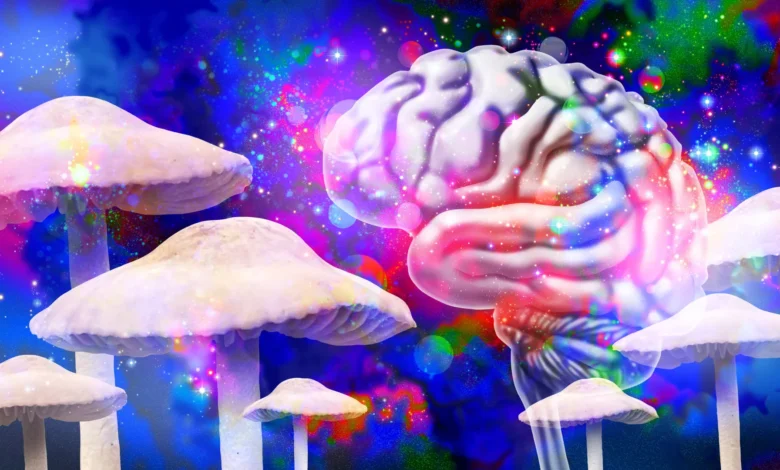
This groundbreaking study, published in Nature Communications, involved healthy adults who had no prior experience with psychedelics and no diagnosed mental health conditions. Despite this, the findings offer profound clues into the potential therapeutic mechanisms of psilocybin for debilitating conditions such as depression, anxiety, and addiction. The research delves into the intricate relationship between a psychedelic experience, temporary increases in brain "entropy" – a term describing the variety and unpredictability of neural activity – and subsequent lasting improvements in mental well-being and cognitive function. This work signifies a critical advancement in understanding how psychedelic-assisted therapy might fundamentally alter brain function to foster psychological healing.
The Resurgence of Psychedelic Research: A New Frontier
The study emerges amidst a "psychedelic renaissance," a period witnessing a dramatic resurgence in scientific interest in compounds like psilocybin, MDMA, and LSD for their therapeutic potential. For decades following the 1960s, psychedelic research was largely halted due to societal backlash and strict regulatory controls. However, pioneering work, initially by researchers like Dr. Rick Doblin and organizations such as the Multidisciplinary Association for Psychedelic Studies (MAPS), began to systematically explore these substances in controlled clinical environments. This renewed focus has been driven by a growing recognition of the limitations of conventional psychiatric treatments, which often have side effects, are not universally effective, and can require prolonged adherence.
The current landscape sees psilocybin, in particular, gaining significant traction due to its promising results in treating various mental health conditions. Previous studies have indicated its efficacy in reducing symptoms of major depressive disorder, generalized anxiety disorder, obsessive-compulsive disorder, and even existential distress in terminally ill patients. However, the precise neurobiological mechanisms underlying these therapeutic effects have remained a complex area of investigation. This UCSF and Imperial College London collaboration aimed to bridge this gap, moving beyond subjective reports to uncover the objective physiological changes within the brain.
Deconstructing the Study Design: Healthy Minds, Deep Insights
The researchers employed a meticulous, two-stage experimental design involving 28 healthy volunteers, carefully selected to ensure no history of psychedelic use or mental illness. This crucial criterion allowed the team to establish baseline brain activity and to isolate the effects of psilocybin without confounding factors from pre-existing conditions or prior drug exposure.
The experiment commenced with participants receiving a 1 milligram dose of psilocybin, which was treated as a placebo due to its sub-perceptual effects. Brain activity was monitored using electroencephalography (EEG), a non-invasive technique that records electrical signals through electrodes placed on the scalp, offering real-time insights into neural oscillations. Over the subsequent weeks, a battery of psychological assessments was administered to evaluate psychological insight, overall well-being, and cognitive performance. Further brain imaging was conducted using functional MRI (fMRI), which measures brain activity by detecting changes in blood flow, and diffusion tensor imaging (DTI), a specialized MRI technique that examines the integrity and connectivity of white matter tracts by tracking water molecule movement.
One month after the initial placebo dose, the participants received a full psychedelic dose of 25 milligrams of psilocybin. This amount is known to induce a powerful, immersive psychedelic experience. Crucially, researchers again recorded brain activity with EEG during the peak of the experience and repeated the same comprehensive psychological and imaging assessments in the weeks that followed. This innovative design allowed for a direct comparison of brain and psychological changes induced by a full psychedelic dose against a sub-threshold dose, providing a robust framework for isolating psilocybin’s specific effects.
The Entropic Brain: Unlocking Psychological Insight
Within approximately 60 minutes of administering the 25 mg dose, EEG recordings revealed a significant and temporary surge in brain entropy. This finding is central to the study’s conclusions. Increased entropy signifies a state where the brain generates and processes a broader, more diverse, and less predictable range of information. In simpler terms, the brain’s activity patterns become less rigid and more flexible, allowing for new connections and perspectives to emerge.
"Psychedelic means ‘psyche-revealing,’ or making the psyche visible," remarked senior author Robin Carhart-Harris, PhD, the Ralph Metzner Distinguished Professor of Neurology at UCSF. "Our data shows that such experiences of psychological insight relate to an entropic quality of brain activity and how both are involved in causing subsequent improvements in mental health. It suggests that the trip — and its correlates in the brain — is a key component of how psychedelic therapy works." This statement underscores the study’s emphasis on the subjective experience of the psychedelic journey not merely as a side effect, but as an integral part of its therapeutic mechanism.
The researchers observed a direct correlation: a larger rise in brain entropy during the minutes and hours immediately following the high dose was associated with greater emotional insight reported by participants the very next day. This insight, characterized by new understandings about oneself, one’s past, and one’s relationships, was then found to be a significant predictor of improved well-being one month later. This chronological link suggests a causal pathway: increased brain entropy facilitates insight, which in turn drives lasting psychological benefits.
Lasting Physical and Psychological Transformation
Perhaps one of the most compelling findings of the study was the detection of physical changes in the brain that persisted for a month. When researchers re-examined participants one month after the full psilocybin dose using DTI, they discovered signs that neural tracts – the white matter pathways that connect different brain regions – were denser and exhibited greater integrity. This pattern is particularly striking because it represents a reversal of changes commonly associated with aging, during which neural tracts tend to become more diffuse and less efficient.
While the researchers cautioned that further studies are needed to fully elucidate the precise meaning of these structural findings, they highlighted this as a previously unseen indication that psychedelics may indeed produce lasting, tangible changes in the brain’s physical architecture. This neuroplasticity, or the brain’s ability to reorganize itself by forming new neural connections, is believed to be a fundamental mechanism by which psychological interventions, including therapy, can lead to lasting change. Psilocybin appears to act as a powerful catalyst for this process.
Beyond the physical alterations, the psychological gains were equally impressive. The day after receiving 25 mg of psilocybin, a remarkable 27 out of 28 participants described the experience as the "single most" unusual state of consciousness they had ever encountered, with the remaining participant ranking it among their top five. This profound subjective experience was accompanied by substantially more reported psychological insight compared to the placebo dose. Measures of well-being, encompassing aspects like optimism and problem-solving ability, showed significant improvements two weeks and four weeks after the high dose. Moreover, participants demonstrated enhanced performance on a test of cognitive flexibility one month post-treatment, indicating an improved ability to adapt thinking and respond to changing information.
"Psilocybin seems to loosen up stereotyped patterns of brain activity and give people the ability to revise entrenched patterns of thought," explained Taylor Lyons, PhD, a research associate at Imperial College London and the first author of the paper. "The fact that these changes track with insight and improved well-being is especially exciting." This observation points to psilocybin’s potential to break cycles of rigid, negative thought patterns often characteristic of conditions like depression and anxiety.
Broader Implications for Mental Health Treatment
The implications of this research are far-reaching, particularly given the global burden of mental health disorders. According to the World Health Organization, depression affects over 280 million people worldwide, while anxiety disorders impact more than 300 million. Current treatments, including antidepressants and psychotherapy, while effective for many, leave a significant portion of patients with residual symptoms or without adequate relief. The potential for a single or limited number of psilocybin-assisted sessions to produce sustained benefits represents a paradigm shift.
This study provides a crucial scientific foundation for understanding how psilocybin exerts its effects, moving beyond anecdotal reports to quantifiable brain changes. This knowledge can help clinicians refine psilocybin treatments for individuals suffering from mental health conditions. For instance, the findings could inform strategies to optimize dosage, aiming for a level that induces sufficient brain entropy to foster meaningful insight without necessarily creating an unnecessarily intense or overwhelming experience. This titration of effects could make psilocybin therapy more accessible and manageable for a wider range of patients.
Furthermore, the identification of brain entropy and neural tract integrity as measurable correlates of psilocybin’s effects opens avenues for developing biomarkers. These biomarkers could potentially be used to predict treatment response, personalize therapy, or even identify individuals who might benefit most from psychedelic interventions. The emphasis on psychological insight as a mediator also reinforces the critical role of therapeutic support and integration sessions that typically accompany psilocybin administration in clinical trials. These sessions help patients process and integrate the insights gained during their psychedelic experience into their daily lives, ensuring the lasting nature of the benefits.
Challenges and the Road Ahead
Despite the immense promise, the path to widespread clinical adoption of psilocybin therapy is complex and multifaceted. Regulatory bodies like the U.S. Food and Drug Administration (FDA) and the European Medicines Agency (EMA) are closely monitoring research, with psilocybin having received "breakthrough therapy" designation for depression, accelerating its development and review process. However, rigorous clinical trials, including larger-scale Phase 3 studies, are still necessary to confirm efficacy, establish optimal treatment protocols, and comprehensively assess long-term safety across diverse patient populations.
The need for highly controlled clinical settings, specialized therapist training, and careful patient screening to mitigate potential risks remains paramount. While psilocybin is generally considered physiologically safe in controlled environments, psychological risks, such as transient anxiety or paranoia, can occur, especially without proper preparation and support.
"We already knew psilocybin could be helpful for treating mental illness," Carhart-Harris concluded. "But now we have a much better understanding of how." This research marks a pivotal moment, providing tangible evidence of psilocybin’s ability to instigate both profound subjective experiences and measurable objective changes within the brain. It reinforces the notion that the psychedelic "trip" is not merely a transient altered state, but a critical window of neurobiological and psychological plasticity that can be harnessed to promote lasting mental health and well-being. The findings lay a robust foundation for future research, poised to unlock new therapeutic avenues for millions suffering from mental health challenges worldwide.
Related posts: