Rethinking Longevity: Why ‘Optimal’ Health Might Be Overrated and the Basics Reign Supreme

The quest for a longer, healthier life has captivated humanity for centuries, but in the modern era, this pursuit has evolved into a complex, multi-billion dollar industry. Fuelled by influential figures in health and biohacking, social media trends, and a deep-seated desire to "outlive peers and age expectancies," many individuals are drawn to elaborate protocols promising maximized healthspan and lifespan, disease prevention, and sustained youth well into their 90s and beyond. However, this burgeoning "longevity optimization" culture often presents a daunting landscape of extraordinary effort, time commitment, financial investment, and baffling complexity, prompting a critical question: Is all this intensity truly necessary, effective, or even sustainable for the average person?
The Rise of the Optimization Movement: A New Frontier in Health

Over the past decade, the public consciousness around aging has shifted dramatically. No longer content with merely avoiding illness, a growing segment of the population seeks to actively engineer their biological future. This movement, often termed "biohacking" or "longevity optimization," champions personalized, data-driven interventions designed to fine-tune every aspect of human physiology. Luminaries such as Dr. Peter Attia, Dr. Andrew Huberman, Dr. Rhonda Patrick, and the notoriously regimented Bryan Johnson have become prominent voices, sharing intricate regimens that include advanced dietary restrictions, specific supplement stacks, cutting-edge diagnostic tests, and highly specialized exercise routines.
The appeal is undeniable: the promise of a life free from chronic disease, endowed with peak cognitive function, and maintaining physical vitality deep into old age. This narrative offers a comforting sense of control over an otherwise unpredictable biological process. Yet, for mainstream health organizations and those like Precision Nutrition (PN), who have collectively coached hundreds of thousands of individuals through real-world challenges, the concept of "optimal" is often a mirage—unrealistic, unaffordable, and, crucially, unnecessary for achieving significant health gains.
The Law of Diminishing Returns in Health Efforts

A fundamental principle often overlooked in the pursuit of extreme optimization is the law of diminishing returns. While initial efforts in health and fitness yield substantial benefits, the returns on investment—whether measured in improved longevity, disease prevention, or quality of life—tend to plateau as efforts become increasingly intense.
Consider a graphical representation: small, consistent health efforts can dramatically improve longevity. However, as these efforts escalate, the additional longevity benefits become progressively smaller, eventually reaching a point where further input provides negligible, if any, additional gains. This suggests that the foundational behaviors, consistently applied, offer the most significant "return on investment." Conversely, attempting too many complex interventions can lead to:
- Burnout and decreased consistency: The sheer burden of maintaining an extreme regimen can be overwhelming, leading to eventual abandonment of even basic healthy habits.
- Reduced enjoyment of life: A hyper-focus on optimization can inadvertently diminish spontaneity, social engagement, and the simple pleasures that contribute to overall well-being.
- Financial strain: Many "cutting-edge" therapies and supplements come with prohibitive price tags, creating a barrier for most and diverting resources from more impactful areas.
- Potential for harm: Some unproven methods carry risks, and an excessive focus on minute physiological parameters can foster anxiety and an unhealthy preoccupation with the body.
The notion that the "basics" aren’t enough is a pervasive myth within optimization culture. The reality, as supported by extensive public health data and clinical experience, is that a consistent adherence to fundamental health practices—regular exercise, a nutrient-rich diet, adequate sleep, effective stress management, robust social connections, minimizing known harms, and engaging in preventive healthcare—works remarkably well. The primary challenge isn’t the lack of sophisticated strategies, but the widespread failure to consistently implement these relatively simple, yet profoundly effective, behaviors.

The Pillars of Enduring Health: Re-emphasizing the Foundational Behaviors
To truly reduce the risk of chronic disease and extend both healthspan and lifespan, the focus should firmly remain on a set of well-established, evidence-based practices.
1. Exercise: The Cornerstone of Physical Vitality
Physical activity is universally acknowledged as a powerful longevity tool. Studies, including those involving Harvard alumni, consistently demonstrate that regular exercise reduces the risk of all-cause mortality, independent of other factors like body weight or smoking status. The benefits are dose-dependent but with a clear sweet spot. Research on 272,550 older adults indicated steep declines in mortality risk from cancer, cardiovascular disease, and all causes when accumulating 7.5 to 15 MET-hours (Metabolic Equivalent Hours) of activity per week. Beyond this, benefits continue but at a significantly lower rate.

The Centers for Disease Control and Prevention (CDC) and World Health Organization (WHO) recommend:
- Aerobic Activity: At least 150 minutes per week of moderate-intensity (e.g., brisk walking) or 75 minutes per week of vigorous-intensity (e.g., running) aerobic activity, or an equivalent combination.
- Resistance Training: Muscle-strengthening activities targeting all major muscle groups at least two days per week.
Walking, a highly accessible activity, also offers profound benefits. A study of 28,000 adults found every 1,000 daily step increase was associated with a 12% lower risk of death, with benefits continuing up to 17,000 steps. Specifically for cognitive health, just 3,826 steps per day was linked to a 25% reduced risk of dementia, while 9,826 steps reduced risk by 50%.
The combination of cardiovascular and resistance training is crucial. Resistance training preserves muscle mass (combating sarcopenia), maintains mental sharpness, improves bone density (reducing fall-related injuries, a leading cause of death in older adults), and supports metabolic health. Conversely, a sedentary lifestyle dramatically increases the risk of cardiovascular disease, diabetes, hypertension, and various cancers.

However, even with exercise, "more is not always better." The "Extreme Exercise Hypothesis" suggests a U-shaped curve of benefits. While moderate to high levels of exercise are protective, extreme volumes (e.g., daily ultra-marathon training) may lead to overtraining syndrome, hormonal disruptions, chronic fatigue, increased injury risk, and potentially adverse cardiovascular remodeling such as myocardial fibrosis or atrial fibrillation. The sweet spot for maximal health benefits appears to be around 7-10 hours of cardio and 3-4 resistance training sessions per week, striking a balance between adequate stimulus and recovery.
2. Nourishing Diet: The Foundation of Cellular Health
Eating well doesn’t require a rigid, hyper-specific diet. Three fundamental principles guide optimal nutrition:
-
Prioritize Whole and Minimally-Processed Foods: These foods—rich in fiber, healthy fats, vitamins, minerals, and phytochemicals—are naturally less calorie-dense and contain significantly less added sugar, sodium, and unhealthy trans fats than ultra-processed foods (UPFs). Diets high in whole foods are linked to lower rates of depression, heart disease, type 2 diabetes, cancer, and improved longevity. The largest study on UPFs, involving nearly 10 million participants, associated them with 32 harmful health outcomes, including type 2 diabetes, mental health disorders, obesity, and cardiovascular disease. Another study revealed that consuming four or more servings of UPFs daily increased all-cause mortality risk by 62%. Aiming for 70-80% of dietary intake from whole or minimally processed foods typically yields significant health improvements and satisfaction. Most Americans, unfortunately, derive only about 28.5% of their calories from whole foods, with 56% coming from highly processed options.

-
Consume Five Servings of Fruits and Vegetables Daily: This long-standing advice remains paramount. A meta-analysis of over 1.8 million people found that five servings a day were associated with a 13% lower risk of death from any cause compared to two servings. Benefits plateaued at this intake level, suggesting that while more won’t harm, it might not provide significantly additional longevity benefits. Emphasizing a variety of colors ensures a broad spectrum of beneficial phytochemicals. Despite clear evidence, only about 10% of Americans meet the combined recommendation for fruits and vegetables.
-
Ensure Adequate Protein Intake: Protein is critical, especially with aging, to combat sarcopenia (muscle loss), frailty, and neuromuscular decline. While plant protein is consistently linked to reduced cardiovascular disease risk and all-cause mortality, animal proteins like fish, poultry, and low-fat dairy are also valuable. Processed red meats (bacon, hot dogs) should be limited due to links with diabetes, CVD, and cancer, and even unprocessed red meat intake should ideally be capped at about 18 oz per week. The recommended daily protein intake is at least 1.2 g/kg of body weight (0.55 g/lb) for most adults, with 1.6-2.2 g/kg (0.75-1 g/lb) optimal for muscle growth, strength, or those on GLP-1 medications where muscle loss is a concern. While most adults meet the lower 0.8 g/kg minimum, many, particularly older adults and young women, fall short of the more beneficial 1.2 g/kg.
3. Sleep: The Unsung Hero of Health
Sleep is not merely rest; it’s an active process vital for physical and mental restoration. Quality sleep significantly impacts longevity and disease risk. Men getting adequate sleep may live almost five years longer, and women two and a half years longer. It is as crucial for heart health as exercise and diet. A one-hour decrease from 7 hours of sleep is linked to an 11% increased risk of cardiovascular disease and a 9% increased risk of type 2 diabetes. For older adults, less than 6 hours of sleep raises the risk of dementia and cognitive decline, as deep sleep is crucial for clearing neurotoxic waste products like beta-amyloid plaques from the brain.

The consensus from sleep experts points to 7-9 hours of quality sleep per night for most adults, with at least 7 hours on most nights. However, individual needs vary; the ideal amount allows one to wake refreshed and maintain sustained energy throughout the day. Approximately one-third of US adults fail to meet these recommendations. Interestingly, excessive sleep (over 9 hours) is also associated with increased risks of cardiovascular disease and type 2 diabetes, though this correlation may reflect underlying health issues (e.g., depression, sleep apnea) rather than being a direct cause.
4. Stress Management: Cultivating Resilience
Chronic, unmanaged stress has pervasive negative effects, impacting nearly every physiological system—from immune function and hormone regulation to cognitive clarity and mood. It elevates heart rate, blood pressure, and inflammation, increasing cardiovascular disease risk, and exacerbates anxiety and depression. However, stress itself is a natural and even beneficial part of life, providing motivation and engagement. The goal is not to eliminate stress but to cultivate resilience and effective coping mechanisms.
Stress management encompasses more than meditation; it includes mindset shifts like self-compassion and a growth mindset, as well as practical self-regulation skills. Viewing stress as a "jug" that needs refilling through recovery practices (deep breathing, journaling, nature exposure) helps maintain balance. Even 3-5 minutes of purposeful recovery can make a difference. Data indicates a significant portion of the population struggles with stress, with over a quarter of Americans reporting being so stressed they cannot function on most days.

Optimal stress management is about finding a "sweet spot" where one feels energized and engaged, rather than bored or overwhelmed. Over-scheduling "stress reduction" activities can paradoxically become another source of stress if it adds to an already packed schedule.
5. Social Connection: The Power of Human Bonds
Often overlooked in physical health discussions, social connection is a powerful predictor of longevity and well-being. The Harvard Study of Adult Development, spanning over 87 years, found strong relationships to be the greatest predictor of both life satisfaction and longevity, surpassing wealth, IQ, or genetics. Robust social ties increase the likelihood of survival by 50%.
Conversely, social isolation and loneliness are profound health risks, comparable to smoking 15 cigarettes a day, and exceeding the risks of obesity or physical inactivity. They increase the risk of heart disease, stroke, type 2 diabetes, depression, anxiety, dementia, and premature death. Approximately one-third of adults report feeling lonely.

Research suggests that having 3-5 close friends with whom one interacts regularly (1-3 times per week, in-person or by phone) provides the most significant social benefit. While individual needs vary, authentic connection and a sense of belonging are key. Excessive social engagement, paradoxically, might increase mortality risk due to mental/emotional fatigue and potential exposure to risky behaviors (e.g., heavy alcohol consumption), underscoring the importance of balance.
6. Minimizing Known Harms: Protecting Against the Obvious
Some of the most impactful longevity strategies involve simply avoiding activities with well-documented, severe health consequences.
-
Don’t Smoke: Tobacco use remains a leading preventable cause of death globally, responsible for over 8 million premature deaths annually. It is a major risk factor for coronary heart disease, stroke, emphysema, and various cancers, accounting for about a quarter of all cancer deaths. Despite widespread awareness, 11.5% of US adults still smoke.

-
Limit Alcohol Consumption: The scientific consensus is increasingly clear: alcohol has negative health implications, particularly with regular, heavy use. It contributes causally to over 200 diseases, including liver diseases, heart conditions, at least seven types of cancer, and neurological disorders like dementia. In 2019, 2.6 million deaths worldwide were attributable to alcohol. For individuals aged 15-49, alcohol is the leading risk factor for death. The World Health Organization has even stated that no amount of alcohol is "safe." US guidelines suggest moderate intake (up to 1 drink/day for women, up to 2 for men), where a "drink" is precisely defined (e.g., 12 oz beer, 5 oz wine). Most Americans exceed these guidelines, with average consumption around 10 standard drinks per week, and underreporting is common, especially among heavy drinkers. While small doses may not significantly impact health, risks rise exponentially with heavier drinking. Recommendations often include avoiding binge drinking and limiting weekly intake to 3-6 drinks for men and 0-3 for women.
7. Basic Preventive Health Measures: The Unsexy but Essential
Beyond daily habits, consistent engagement in routine preventive care and safety practices is crucial. This includes:
- Regular medical check-ups and age-appropriate screenings (e.g., mammograms, colonoscopies).
- Vaccinations (flu, pneumonia, COVID-19, etc.).
- Dental hygiene (brushing, flossing, regular dental visits).
- Vision and hearing tests.
- Wearing seatbelts and helmets.
- Sun protection.
- Food safety practices.
- Avoiding unnecessary risks.
These seemingly mundane actions collectively contribute significantly to preventing disease, detecting issues early, and avoiding accidents. For instance, only 32% of Americans floss daily, and helmet usage among cyclists is around 50%. Hearing loss, preventable through measures like the "60/60 rule" for headphones (60% volume for 60 minutes), is the number one modifiable risk factor for dementia. While not always glamorous, these protective behaviors are immeasurably more impactful than chasing the latest "optimization" fad. It is also critical to acknowledge that "social determinants of health" (e.g., poverty, discrimination, lack of access to care) make these protective behaviors challenging or impossible for many, highlighting systemic inequities in health.

Bonus: Fostering Purpose and Meaning
A strong sense of purpose and meaning in life is consistently linked to improved health, well-being, and longevity. This "existential health" provides motivation, often leading to greater engagement in other health-promoting behaviors (like sleep and diet), and improves mental health, reducing the risk of depression. Ultimately, having a purpose—whether it’s raising a family, contributing to a community, pursuing a passion, or mastering a skill—can instill a desire to live longer and healthier to fulfill that purpose.
The Real Costs of Hyper-Optimization: Time, Money, and Quality of Life
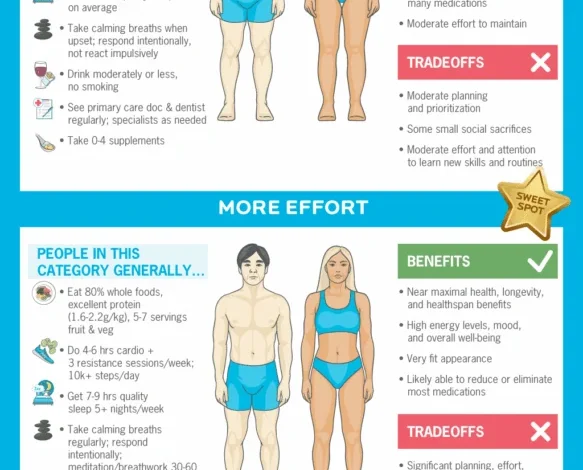
While the foundational behaviors require effort, the "optimizer" lifestyle demands exponentially more. A comparative analysis reveals that an "optimizer" might invest 3-4 times the time, effort, and money compared to someone consistently following the basic recommendations. This includes extensive time on specialized workouts, meal prep for exotic diets, daily meditation, rigorous sleep hygiene, and costly supplements.

Beyond daily routines, the "optimizer" often engages in less frequent but extremely expensive interventions: advanced blood panels (e.g., TruDiagnostic), expensive imaging (e.g., full-body MRI, DEXA scans), cryotherapy, hyperbaric oxygen therapy, peptides, red light therapy, or even experimental gene therapies. These can easily add an extra $10,000+ per year, often for benefits that are unproven in long-term human studies, or, if present, are marginal compared to the impact of the basics.
The most significant trade-off, however, lies in the potential erosion of well-being and quality of life. An extreme focus on physical optimization can lead to an unhealthy preoccupation with the body, fostering anxiety, orthorexia (an unhealthy obsession with healthy eating), and sacrificing social connections, spontaneity, and enjoyment. The pursuit of peak physical health can inadvertently neglect other crucial aspects of "deep health" – emotional, mental, social, environmental, and existential well-being. A life spent meticulously tracking every metric and adhering to an inflexible regimen, while perhaps adding a few marginal years, might diminish the joy and richness of the years being lived.
Conclusion: Clarity Amidst the Noise

The desire for health and longevity is natural, but the path to achieving it need not be fraught with extreme complexity or exorbitant costs. The evidence overwhelmingly supports the efficacy of consistent, foundational health behaviors over hyper-optimized, often unproven, protocols.
For individuals seeking to improve their health trajectory, the actionable steps are clear:
- Clarify Goals: Reflect on what truly constitutes a "good life" for you. How does maximizing lifespan align with other personal priorities?
- Evaluate Trade-offs: Realistically assess the time, money, and effort you are willing and able to commit. What are you prepared to sacrifice, and what is non-negotiable for your overall well-being?
- Prioritize the Basics: Review the foundational behaviors outlined in this article. Identify areas for consistent improvement before venturing into niche "optimization" strategies. Consistent, moderate effort will yield the vast majority of desired results.
- Filter the Noise: Recognize that social media influencers and self-proclaimed biohackers often promote strategies that lack robust scientific validation or are simply not practical for most people. Trust established scientific consensus and qualified healthcare professionals.
Ultimately, the power to shape a longer, healthier, and more fulfilling life lies not in complex biohacks, but in the disciplined yet balanced application of well-understood principles. Making informed choices aligned with personal values and available resources ensures that the pursuit of longevity enhances, rather than detracts from, the richness of life itself.