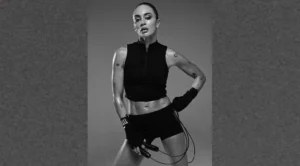
Effective Communication: The New Frontier for Fitness Professionals in a Digital Age, According to Expert Jen Gottlieb


In an increasingly competitive digital landscape, the fitness industry faces a paradox: while most professionals possess an encyclopedic knowledge of training methodologies and human physiology, a significant number struggle with the crucial art of communicating their expertise to a broader audience. This disconnect, which can impede business growth and limit impact, was recently highlighted by author, keynote speaker, and former personal trainer Jen Gottlieb, who argues that the ability to articulate one’s value is now as vital as the technical skills themselves.
Gottlieb, who transitioned from a career in personal training to becoming a successful entrepreneur and communication strategist, brings a unique perspective to this challenge. Her own journey revealed that understanding the intricacies of exercise was only half the battle; mastering the art of connecting with potential clients and building a public profile was the true gatekeeper to success. "You go from being able to hide behind a role," Gottlieb observed in an interview with Muscle & Fitness, "to having to actually be yourself, and you’re risking being judged." This fear of exposure and criticism, she contends, is a primary barrier preventing many talented fitness professionals from achieving their full potential in the modern, digitally-driven market.
The Evolving Landscape of Fitness and the Creator Economy
The fitness industry has undergone a profound transformation over the past decade, shifting from predominantly brick-and-mortar gyms and in-person training to a burgeoning online ecosystem. The proliferation of social media platforms, coupled with advancements in digital content creation and remote coaching technologies, has democratized access to fitness expertise. This evolution, significantly accelerated by the global pandemic, has given rise to the "fitness creator economy," where individuals can build substantial businesses and personal brands entirely online. Industry reports indicate that the global online fitness market, valued at approximately $6 billion in 2022, is projected to reach over $59 billion by 2030, underscoring the imperative for digital proficiency and effective online presence.
However, this democratization also brings unprecedented competition. With millions of trainers, coaches, and wellness advocates vying for attention, simply being knowledgeable is no longer sufficient. Visibility, authenticity, and the ability to cut through the digital noise have become paramount. Marketing strategists widely concur that in this crowded environment, a strong personal brand, built on consistent and compelling communication, is the ultimate differentiator. This context makes Gottlieb’s insights particularly timely, as they address a fundamental skill gap that many in the fitness community are only beginning to recognize.
Unpacking the Psychological Barriers: Why Professionals Stay Quiet
Gottlieb delves deeper into the root causes of this communication struggle, identifying it not as a lack of skill, but an internal battle. She refers to the myriad internal voices and self-doubts as "symptoms of fear," manifesting as perfectionism, imposter syndrome, and the pervasive feeling that someone else is always more qualified. These psychological hurdles are often amplified within the fitness domain, an environment inherently focused on measurable progress, tangible results, and objective improvement.
The challenge with communication, Gottlieb explains, is its subjective nature. Unlike a strength gain or a body fat percentage reduction, the impact of a social media post or a video message cannot be quantified with the same precision. This ambiguity makes fitness professionals, accustomed to clear metrics, particularly vulnerable to self-doubt. "You’re risking people thinking you’re cringe or saying, ‘Who the hell does she think she is?’" she states, capturing the essence of the fear of judgment that leads to hesitation, endless tweaking, and ultimately, inaction. The irony, as Gottlieb points out, is that the very mindset attributes that drive success in physical training—attention to detail, discipline, and the pursuit of perfection—can become paralyzing when applied to the less predictable realm of public communication. This internal conflict often leads to paralysis by analysis, where the pursuit of an ideal, flawless message prevents any message from being delivered at all.
The Shift to "Interest Media": Why "Vanilla Content" Fails
The landscape of online engagement has undergone a significant transformation, moving beyond simple "social media" to what Gottlieb aptly terms "interest media." This shift implies that content is no longer primarily distributed to an existing follower base via chronological feeds. Instead, sophisticated algorithms prioritize and push content to users based on their engagement patterns, preferences, and demonstrated interests. This algorithmic gatekeeping means that content lacking a distinct point of view or failing to evoke a strong response is likely to disappear into the digital ether.
Gottlieb’s term for this ineffective approach is "vanilla content"—material that aims to be universally palatable but ultimately fails to resonate with anyone deeply. "It’s basically content that everybody would like," she explains, "Just nice content. Doesn’t really state my opinion." The critical flaw in this strategy, she argues, is that "nobody cares about nice." In the interest media ecosystem, content needs to be polarizing, sparking either enthusiastic agreement or passionate disagreement. "You want people to say one of two things only," Gottlieb asserts. "You want them either to say, ‘Oh my God, me too…’ or you want them to say, ‘Not me. I hate it.’"
This imperative for strong, opinionated content can be deeply uncomfortable for many, particularly in an industry where being liked and perceived as universally appealing has traditionally been seen as beneficial. However, trying to occupy the middle ground—to appeal to everyone—is now the surest path to being ignored. In a saturated market like fitness, where countless voices are clamoring for attention, being ignored represents a far greater risk than alienating a small segment of the audience. The implication is clear: authenticity, even if it’s controversial, trumps bland neutrality in the quest for digital visibility and engagement.
Communication as a Skill: The "Reps" Approach
For those who feel awkward or unnatural in front of a camera, Gottlieb offers a simple yet profound insight: that discomfort doesn’t dissipate on its own. "It is the weirdest thing in the world to talk to a camera," she admits, even for someone with a background in acting. The key, she stresses, is to approach communication like any other skill in fitness: through consistent practice and repetition.
Gottlieb herself embodies this principle. "I live stream every morning while I put my makeup on," she reveals. "I do it to practice speaking to the camera like a normal person." This dedication to daily "reps" demonstrates that confidence isn’t a prerequisite for starting; it’s a byproduct of persistent effort. This perspective directly challenges the common misconception that one must feel confident before engaging in public communication. Instead, it posits that consistent action, even in the face of discomfort, builds confidence over time.
She also provides a practical technique for overcoming the robotic or inauthentic tone that often plagues on-camera communication. "I think about someone I love and I imagine that I’m sending them a video message," she suggests. "So, I’ll be like, ‘Hey, [name],’ and then I just edit out the ‘Hey, [name] part." This simple mental shift redirects focus from self-consciousness to the audience, fostering a more natural, engaging delivery. By thinking of the person on the other side of the screen, the communicator naturally adopts a more conversational and empathetic tone, which is far more effective than an overly rehearsed or self-focused presentation.
The Power of Persistence: Consistency Over Instant Gratification
In fitness, the concept of consistency is universally understood and embraced. No one expects significant results from a single workout; progress is the accumulation of countless, often mundane, repetitions over time. Yet, when it comes to online content creation, many harbor unrealistic expectations, anticipating immediate traction and widespread engagement after just a few posts. When these instant results fail to materialize, they abandon their efforts—a critical mistake, according to Gottlieb.
"You might be posting for a very long time before you get your first hit," she cautions, emphasizing that viral success often appears "overnight" only after years of consistent, unseen effort. Her strategy is to depersonalize the process, removing emotional attachment to individual post performance and instead treating content creation as a non-negotiable habit. "Posting one time per day… needs to be a non-negotiable habit," she advises. The value lies not in every post being a runaway success, but in the cumulative effect and the increased probability that one of those consistent efforts will eventually resonate profoundly, changing the trajectory of one’s online presence. This long-game approach aligns perfectly with the foundational principles of physical training, where patience and perseverance are key to achieving lasting results.
Redefining Authority: Documenting the Journey, Not Just Demonstrating Expertise
One of the most significant psychological barriers for aspiring fitness creators is the belief that they are not yet "ready" to share their voice. This often stems from a perception that one must be the absolute expert, possess a vast client roster, or have achieved peak physical condition themselves before daring to speak publicly. Gottlieb emphatically challenges this notion.
"You don’t necessarily need to be an expert per se," she argues. Instead of striving to present an image of infallible authority, she advocates for a more relatable and authentic approach: documenting one’s own journey. "You can be on a journey," she suggests. "Come along the journey with me as I do it." This shift from purely "teaching" to openly "sharing" resonates deeply with contemporary audiences who are increasingly wary of polished, inauthentic portrayals. People are not searching for perfection; they are seeking genuine human connection, relatable experiences, and transparent processes.
The most successful creators, Gottlieb observes, are not those who wait until they have all the answers, but those who are brave enough to start communicating while they are still in the process of learning and evolving. This approach not only makes content more accessible and engaging but also builds a loyal community around shared experiences and continuous growth, fostering a sense of camaraderie rather than a hierarchical expert-student dynamic.
The Ethical Imperative: Visibility as a Professional Responsibility
Bringing her arguments full circle, Gottlieb concludes with a powerful reframe of the entire concept of online presence: "If you have a service, a story, or a product that helps people, visibility is your responsibility." This statement elevates communication from a mere marketing tactic to an ethical imperative. It shifts the motivation from self-promotion to a moral obligation to serve.
For fitness professionals who possess valuable knowledge and the ability to positively impact lives, remaining silent is not a neutral act. Every day that a skilled trainer refrains from sharing their expertise, a vacuum is created, which can be filled by less experienced, less scrupulous, or less caring individuals. This is the profound, often unseen, cost of staying quiet. In an industry where the barrier to entry can be low, but the potential impact on public health and well-being is immense, simply being proficient at one’s craft is often insufficient. People need to know about that expertise, and that knowledge transfer only occurs when professionals are willing to step into the spotlight, to be seen, and to be heard.
In an age defined by digital connectivity, Jen Gottlieb’s insights offer a crucial roadmap for fitness professionals seeking not only to survive but to thrive. By embracing communication as a trainable skill, overcoming internal fears, adapting to algorithmic shifts, and recognizing the profound responsibility that comes with sharing valuable knowledge, fitness experts can transcend the limitations of traditional practice and truly amplify their positive impact on the world.
Follow Jen on Instagram @jen_gottlieb