The Psychological Portfolio: How Emotional Regulation and Distress Tolerance Drive Financial Decision-Making

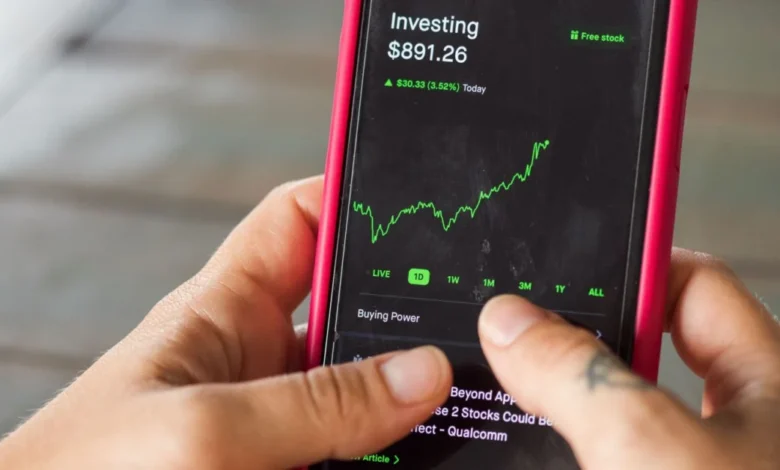
The intersection of behavioral psychology and wealth management has increasingly drawn the focus of financial advisors and clinical practitioners alike, as empirical evidence suggests that sound financial decision-making relies heavily on psychological resilience rather than mere quantitative literacy. Recent trends among entrepreneurial clients seeking behavioral therapy for financial anxiety highlight a profound overlap between clinical psychology and portfolio management. Specifically, core therapeutic competencies—such as emotional regulation, distress tolerance, self-awareness, and the capacity to navigate profound uncertainty—frequently dictate whether investors succeed or falter during periods of severe market volatility.
This dynamic has long been observed by behavioral economists, but clinicians are uniquely positioned to witness the physiological and emotional drivers behind catastrophic portfolio mistakes. When financial markets experience sharp corrections, the underlying human reaction is rarely an objective calculation of economic loss; rather, it is a visceral fear response characterized by an urgent compulsion to act.
A Chronology of Crisis: The March 2020 Market Crash
To understand the friction between human emotion and financial discipline, financial historians and behavioral psychologists frequently examine acute systemic shocks, such as the onset of the COVID-19 pandemic in late March 2020. As global lockdowns were instituted and economic forecasts plummeted into deep uncertainty, major equity indices suffered historic intraday declines.
During this brief window, millions of retail and institutional investors faced a severe test of distress tolerance. Chronologically, the market reaction unfolded in rapid succession:
- Late February 2020: Initial reports of international transmission trigger localized anxiety across global supply chains.
- March 9 to March 18, 2020: The S&P 500 triggers multiple circuit breakers, halting trading as panic selling accelerates.
- Late March 2020: Liquidation peaks among retail portfolios as individual investors capitulate, selling equities at or near market troughs.
- April to August 2020: Central bank interventions and massive fiscal stimulus ignite one of the fastest market recoveries in history, leaving panic-sellers locked out of substantial gains.
For many individuals who liquidated their holdings during the March 2020 trough, the motivation was driven less by quantitative risk models and more by an intolerable psychological state. The compulsion to "do something" in the face of overwhelming fear mirrors clinical presentations observed in trauma therapy, where patients struggle to remain present amid difficult emotional reprocessing.
The Eight Pillars of Behavioral Portfolio Management
Synthesizing decades of behavioral finance research with clinical observations yields eight foundational principles that explain why emotional regulation is the primary determinant of long-term investment outcomes.
- Time in the Market as a Measure of Distress Tolerance
Conventional wisdom dictates that "time in the market beats timing the market." However, adhering to this maxim requires sustained distress tolerance. As legendary investor Warren Buffett famously noted, the stock market functions as a mechanism that transfers wealth from the impatient to the patient.
When markets experience drawdowns, the urge to check account balances or reallocate assets mimics anxious behavioral loops. Overcoming the omission bias—the psychological preference for harmful action over perceived inaction—remains one of the most formidable hurdles for long-term investors.
- Urgency Mistaken for Empirical Insight
A pervasive cognitive distortion in trading is the conflation of emotional urgency with actionable market intelligence. When an asset experiences rapid price fluctuations, investors frequently interpret collective panic or euphoria as proprietary information.
In clinical practice, therapists observe that when an emotional state reaches a certain threshold of intensity, the individual begins to experience that feeling as an objective fact. Historically, broad market indices like the S&P 500 have recovered from every major historical drawdown to reach new highs over extended horizons. Despite this empirical reality, the immediate discomfort of sitting on a declining portfolio often overrides historical precedent.
- Volatility as an Inevitable Economic Fee
Behavioral finance expert Morgan Housel characterizes market volatility not as a punitive fine for poor behavior, but as a mandatory fee paid for the privilege of earning superior long-term equity returns. Just as therapeutic breakthroughs often require patients to confront painful psychological truths—signaling progress rather than failure—portfolio volatility is a structural characteristic of growth, not an inherent malfunction.
- The High Cost of the Illusion of Control
Anxiety frequently drives individuals toward hyper-vigilance, prompting them to research, monitor, and micro-manage individual stock selections. This illusion of control creates a false sense of security.
In reality, retail investors operating on publicly available news feeds are at a structural disadvantage. Institutional hedge funds deploy high-frequency trading algorithms and proprietary data networks that price in public announcements within milliseconds. Consequently, attempting to outmaneuver the market through constant intervention typically results in underperformance and elevated transactional friction.
- Borrowed Conviction and Leveraged Stress
The use of margin debt and leveraged financial instruments magnifies not only potential capital gains and losses, but also psychological pressure. When capital is borrowed, the threshold for distress tolerance drops precipitously.
Global financial authorities have repeatedly highlighted the systemic risks of leveraged retail investing. For instance, surges in margin debt—such as those observed in South Korea’s retail markets—frequently correlate with heightened rates of forced liquidation during market downturns. Leveraging a portfolio often reflects an underlying inability to tolerate the natural pace of organic wealth accumulation.
- Systematic Investing as an Emotional Bypass
To mitigate the influence of cognitive biases, financial systems have increasingly adopted automated mechanisms, such as dollar-cost averaging and target-date retirement funds. By utilizing systematic contributions, investors remove the burden of continuous decision-making.
This mirrors therapeutic interventions such as EMDR (Eye Movement Desensitization and Reprocessing) future templates, wherein clinicians help patients mentally rehearse adaptive responses to anticipated stressors before emotional flooding occurs. Automated investing establishes a predefined strategy that executes independently of transient emotional states.
- The Impact of Time Horizon on Cognitive Framing
Psychological stress often narrows an individual’s temporal focus to the immediate present—a phenomenon akin to fixating entirely on an obstacle directly in front of a vehicle while ignoring the broader highway. Broadening one’s investment time horizon does not eliminate market discomfort, but it fundamentally alters the cognitive relationship to that discomfort, fostering emotional equilibrium.
- Minimizing Behavioral Monitoring
Two investors holding identical asset allocations can experience radically different psychological outcomes based solely on monitoring frequency. Continuous portfolio tracking induces chronic stress activation. Establishing structural boundaries—such as limiting account reviews—insulates the investor from the psychological noise of daily price fluctuations.
Broader Economic Implications and Industry Analysis
Financial economists and wealth management firms increasingly emphasize that behavioral coaching is just as critical to client retention and portfolio success as asset allocation modeling. Traditional financial advising focused almost exclusively on mathematical optimization, modern portfolio theory, and tax efficiency. However, industry data consistently demonstrates that the average investor’s actual returns lag significantly behind the stated returns of the underlying funds they hold—a discrepancy known as the "behavioral gap."
This gap is driven almost entirely by inopportune buying and selling decisions executed during periods of heightened market stress. As a result, modern wealth management firms are incorporating behavioral finance specialists into their practices to help clients manage psychological reactivity.
Conclusion
Ultimately, sustained financial success is rarely a function of superior market forecasting or insider access. Rather, it is the byproduct of robust emotional regulation and high distress tolerance. By recognizing that fear, greed, and the illusion of control often masquerade as rational financial strategy, investors can implement systematic safeguards that protect their long-term portfolios from the impulses of the human mind.