The Greater Good Science Center Releases September 2026 Happiness Calendar Focused on Cultivating Meaningful Conversations

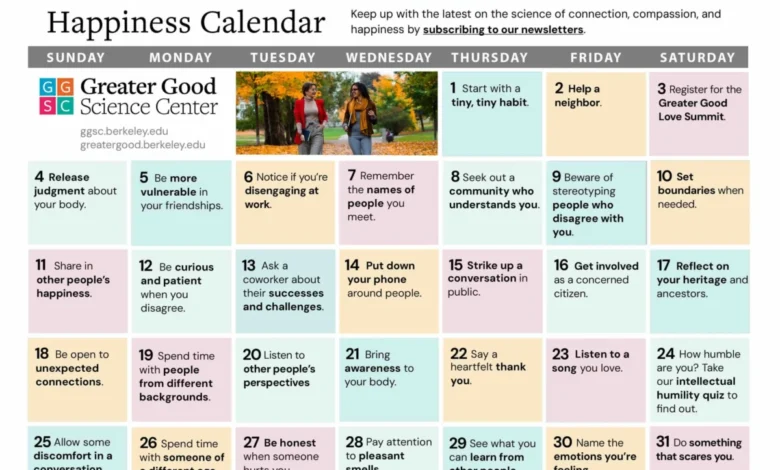
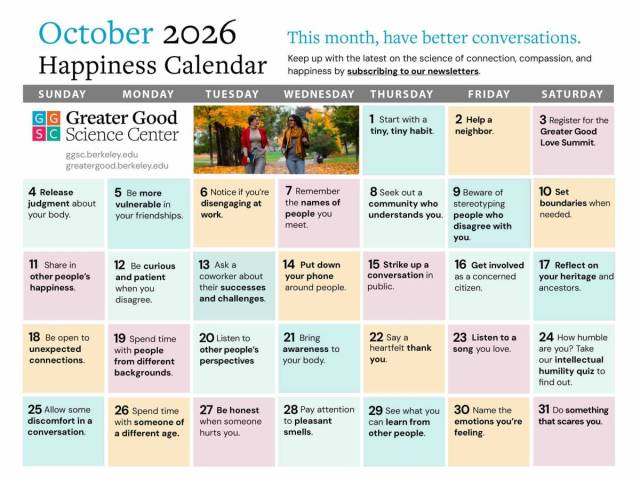
As the digital age continues to reshape the landscape of human interaction, the Greater Good Science Center (GGSC) at the University of California, Berkeley, has unveiled its September 2026 Happiness Calendar, an initiative specifically curated to address the growing deficit in deep, interpersonal communication. In an era often characterized by fragmented messaging and increased social isolation, this month’s guide provides a structured, day-by-day framework designed to encourage mindfulness, empathy, and intentionality in daily discourse.
The Science of Connection and Communication
The GGSC’s latest project arrives at a time when sociologists and mental health professionals are increasingly concerned about the quality of modern relationships. Data from the American Psychological Association (APA) suggests that while individuals are more digitally connected than at any point in history, reports of loneliness and a lack of substantive social support have reached historic highs.
Meaningful conversation is not merely a social nicety; it is a fundamental human need that impacts physiological health. Research published in the Journal of Social and Psychological Personality Science indicates that frequent, substantive conversations are positively correlated with higher levels of subjective well-being. These interactions—often defined as discussions that move beyond small talk to include self-disclosure and emotional sharing—have been shown to reduce cortisol levels, the body’s primary stress hormone, and strengthen cardiovascular health.
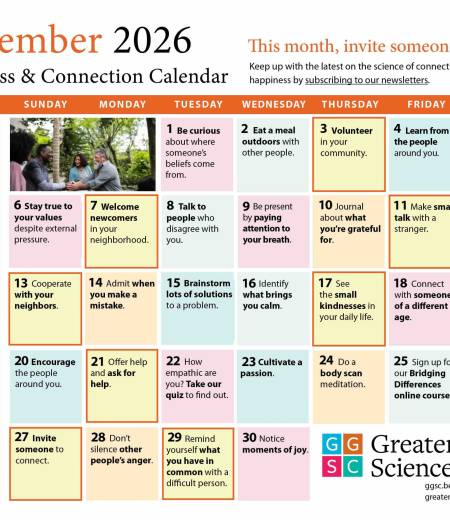
The September 2026 calendar serves as a practical application of these psychological findings. By providing daily prompts, the GGSC encourages participants to move past the "autopilot" mode of communication. The calendar is designed to be accessible, offering integration with major digital platforms like Google Calendar and iCal, ensuring that the practice of intentional dialogue becomes a scheduled priority rather than an afterthought.
Chronology of the Initiative
The Greater Good Science Center has maintained a tradition of releasing monthly guides to well-being for several years, each focused on a different pillar of human flourishing. The decision to dedicate September 2026 to "better conversations" follows a multi-month period of observation regarding the changing communication patterns of the post-pandemic workforce and the rise of remote-first social structures.

- Early 2026: GGSC researchers conducted internal reviews of user feedback, noting a recurring request for tools that could help bridge communication gaps in both personal and professional spheres.
- May 2026: Planning began for the "Happiness and Connection" series, with a specific focus on the mechanics of dialogue, such as active listening and non-violent communication techniques.
- August 2026: The editorial team finalized the curriculum for September, integrating evidence-based practices from the fields of positive psychology and communication studies.
- September 30, 2026: The official launch of the digital calendar, featuring interactive links that allow users to dive deeper into the science behind each day’s specific challenge.
Data-Driven Approaches to Dialogue
The curriculum embedded within the September calendar is built upon established communication frameworks, most notably the work of Dr. Marshall Rosenberg on non-violent communication and the "Active-Constructive Responding" model popularized by Dr. Shelly Gable.
Active-constructive responding is a method of engaging with others that involves reacting enthusiastically to their good news, which has been shown to increase relationship satisfaction significantly more than passive or destructive responses. The September calendar incorporates these concepts by assigning specific daily tasks that require users to practice validation and deep inquiry.

According to a study by the National Institute of Mental Health (NIMH), individuals who engage in structured communication exercises over a 30-day period report a 15% increase in perceived social connectivity. The GGSC aims to replicate these benefits by providing a low-barrier, high-impact tool that participants can use to navigate complex social environments.
Institutional and Professional Perspectives
Experts associated with the Greater Good Science Center have long argued that the quality of one’s relationships is the single strongest predictor of long-term health and happiness. Kira M. Newman, a key contributor to the GGSC, has emphasized in her recent writings that communication is a skill set that requires consistent training.

"We often treat conversation as something that just happens to us," a senior researcher associated with the program noted during a recent internal briefing. "The reality is that conversation is a practice. By scheduling it, and by focusing on specific elements like listening, empathy, and vulnerability, we can fundamentally change the architecture of our social lives."
While the center acts as an academic resource, its outreach materials are designed for a general audience. The adoption of these tools by educational institutions and corporate wellness programs has been growing, signaling a broader societal shift toward prioritizing soft skills in environments that have historically focused solely on technical output.

Broader Implications for Social Well-being
The emphasis on conversation as a tool for public health has significant implications for how communities are structured. As urban density increases and the average household size continues to shrink, the burden of social interaction is increasingly falling on digital interfaces.
The GGSC’s initiative highlights a critical tension: the need to leverage technology to facilitate connection without losing the depth that only human-to-human, synchronous interaction can provide. By using digital tools—such as the Google Calendar and iCal integrations—to remind users to step away from digital noise and engage in real-world dialogue, the project seeks to harmonize technology with human needs.

Furthermore, the focus on "better conversations" is an intervention against the rising tide of polarization. When communication becomes a process of winning an argument rather than understanding a perspective, the bonds of community fray. The exercises in the September calendar encourage techniques like perspective-taking, which is a foundational element in reducing prejudice and fostering civic engagement.
Conclusion and Future Outlook
The Greater Good Science Center’s September 2026 Happiness Calendar serves as a microcosm of a larger movement within the social sciences: the shift from viewing well-being as an individual pursuit to viewing it as a communal, relational achievement. As the month progresses, the GGSC expects to track user engagement through its newsletter and online forums, potentially using this data to refine future monthly themes.

For those looking to improve their social health, the calendar serves as a manageable entry point. By dedicating even a few minutes each day to the prompts provided, individuals may find that they are not only improving their relationships but also building a more resilient, empathetic approach to the world around them. As the research continues to evolve, initiatives like these underscore the importance of intentionally investing in the mechanics of human connection—a resource that remains, perhaps, the most valuable asset in the modern human experience.
The full calendar, along with supplementary resources, is available to the public through the Greater Good Science Center’s official digital portal. Users are encouraged to utilize the provided browser tips to ensure full functionality, reflecting the center’s commitment to accessibility as a core component of its mission. Through this blend of academic rigor and accessible design, the GGSC continues to offer a roadmap for those seeking a more meaningful life in a complex world.