The Session Blueprint Series: Revolutionizing Structured Client Journeys in Coaching and Therapy

PositivePsychology.com has introduced the Session Blueprint Series, a comprehensive collection of ready-to-implement, 15-session treatment and coaching programs designed to streamline the delivery of impactful mental wellness interventions. This innovative series addresses a significant challenge faced by practitioners: the daunting task of developing structured, evidence-based programs from the ground up, particularly in complex areas like relationship dynamics, self-esteem enhancement, or navigating difficult life events.
The Evolving Landscape of Mental Wellness and the Need for Structure
In an era marked by increasing awareness of mental health and a growing demand for effective support, practitioners across coaching and therapy disciplines are seeking robust tools to enhance client outcomes. While clinical expertise is paramount, the journey from initial client intake to successful outcome requires more than just individual session insights. It necessitates a meticulously crafted arc of change—a programmatic approach that sequences techniques logically, anticipates common client responses, and maintains consistent momentum across multiple sessions.
Historically, developing such a program has been a resource-intensive endeavor. It demands not only deep clinical knowledge but also expertise in curriculum design, outcome measurement, and the pedagogical sequencing of interventions. For many professionals, especially those in private practice, the time and effort required to build these programs from scratch can be prohibitive, often leading to less structured, session-by-session approaches that, while valuable, may lack the coherent, impactful journey clients often need. The Session Blueprint Series emerges as a direct response to this systemic need, offering a pre-designed, scientifically informed framework that frees practitioners to focus on client engagement and therapeutic alliance rather than program architecture.
Introducing the Session Blueprint Series: A Comprehensive Overview
The Session Blueprint Series is a meticulously crafted collection of three distinct, fully developed programs, each comprising 15 sessions. These blueprints are tailored to address common yet significant issues encountered by adult clients in both coaching and therapeutic contexts. A core principle of the series is its use of neutral, non-pathologizing language, emphasizing skills development, observable patterns, and goal attainment rather than clinical diagnoses. This makes the programs equally appropriate for licensed therapists and certified coaches, fostering a broader accessibility for clients seeking structured personal growth.
Each blueprint is designed for immediate implementation, providing practitioners with a clear, step-by-step path from the initial consultation to the achievement of defined client outcomes. This structured approach ensures clients experience a consistent, high-quality journey, optimizing their potential for lasting change. The series is also built with flexibility in mind, allowing practitioners to modify content and pacing as required to meet the unique needs of their practice and individual clients.

Target Audience and Application
The Session Blueprint Series is specifically intended for mental health professionals, including psychologists, counselors, social workers, and certified coaches, who work with adult clients navigating common life challenges. The non-diagnostic, skill-based nature of the programs ensures their utility across a wide spectrum of professional practices. Understanding when and how to apply each blueprint is crucial for maximizing its effectiveness. While each program revolves around a central theme, successful application often requires practitioners to look beyond surface presentations to identify the underlying patterns that align with a particular blueprint’s focus.
Addressing Core Client Challenges: A Deep Dive into Each Blueprint
The series currently features three foundational blueprints, each addressing a prevalent area of client concern:
-
Self-Esteem: Low self-esteem is a pervasive issue, with studies indicating that a significant portion of the adult population struggles with feelings of inadequacy, self-doubt, and chronic self-criticism. This can manifest in various aspects of life, from career progression and academic performance to personal relationships and overall well-being. The self-esteem blueprint is specifically designed to support clients whose self-image significantly impacts their engagement with life and their interactions with others. It may be particularly suitable for clients who exhibit patterns such as:
- Persistent self-criticism or negative self-talk.
- Difficulty accepting compliments or acknowledging their achievements.
- A tendency towards perfectionism and fear of failure.
- Social anxiety or avoidance due to fear of judgment.
- Struggles with asserting boundaries or expressing their needs.
- Frequent comparison of themselves to others, often leading to feelings of inferiority.
This blueprint aims to foster a more flexible, compassionate, and robust self-concept, empowering clients to engage more authentically and confidently in their lives.
-
Coping with Difficult Life Events: Life is inherently unpredictable, and individuals frequently encounter adverse events such as significant health scares, the loss of a loved one, relationship dissolutions, career setbacks, or major life transitions. While such events are universal, the capacity to cope effectively varies widely. Maladaptive coping strategies can prolong distress, impede recovery, and lead to secondary mental health issues. Research underscores the importance of adaptive coping mechanisms in navigating stress and trauma. The coping blueprint is an intervention tailored to help clients regain their emotional and psychological footing after experiencing such challenging circumstances. It is an ideal fit for clients who present with:
- Feelings of being overwhelmed or stuck in the aftermath of an event.
- Difficulty processing emotions related to the event, leading to numbness or intense swings.
- Avoidance behaviors that prevent them from moving forward.
- Rumination or persistent dwelling on negative aspects of the event.
- A sense of loss of control or efficacy in their lives.
- Challenges in re-engaging with daily routines or social connections.
This program is designed to be effective regardless of how recent the event is, providing tools for both immediate crisis management and long-term resolution of unresolved issues. It focuses on enhancing clients’ coping styles and their perceived efficacy as the primary drivers of change.
-
Navigating Relationships: Human connection is fundamental to well-being, yet relational patterns—often unconsciously learned from early experiences—can become sources of significant distress. Challenges in communication, intimacy, trust, and conflict resolution are common reasons individuals seek therapeutic or coaching support. The relationships blueprint is crafted to support clients who struggle with learned patterns of responding to closeness, tension, uncertainty, and vulnerability, leading to recurrent difficulties in their personal and professional connections. This blueprint can be highly beneficial for clients who:
- Experience repeated patterns of conflict or misunderstanding in relationships.
- Struggle with setting healthy boundaries or communicating their needs effectively.
- Grapple with fear of intimacy, abandonment, or rejection.
- Find themselves in cycles of unhealthy attachment or dependency.
- Report feeling unheard, unvalued, or misunderstood by others.
- Observe similar relational dynamics recurring across different relationships (e.g., romantic, familial, professional).
This program assists clients in identifying and progressively transforming these unhelpful patterns, fostering healthier and more fulfilling connections. It often proves particularly insightful for clients who recognize these recurring patterns across various domains of their lives, suggesting deeply ingrained relational habits.
Inside the Blueprints: A Structured Approach to Transformation

Each program within the Session Blueprint Series adheres to a consistent, repeatable session structure, ensuring both ease of implementation for practitioners and a coherent, progressive journey for clients. This methodical design is a hallmark of evidence-based practice, allowing for incremental skill-building and sustained progress.
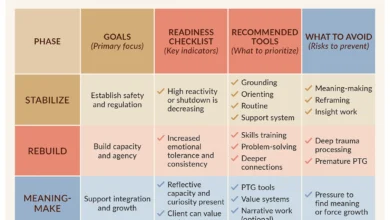
For each of the three blueprints, the 15 sessions are divided into three distinct phases:
-
Self-Esteem Blueprint: This program conceptualizes self-esteem not as a fixed trait but as a dynamic way of responding to the world, amenable to change over time. The aim is to cultivate greater flexibility and freedom in how self-esteem manifests.
- Phase 1: Understanding and Awareness: Focuses on helping clients identify their current self-concept, explore its origins, and recognize the triggers and patterns that diminish their self-worth. This involves self-reflection exercises and initial assessments.
- Phase 2: Challenging and Rebuilding: Guides clients through techniques to challenge negative self-beliefs, cultivate self-compassion, develop new internal narratives, and practice more adaptive responses to perceived threats to self-image.
- Phase 3: Integration and Sustainment: Supports clients in integrating their newfound sense of self-worth into daily life, developing strategies for maintaining progress, and building resilience against future setbacks.
Progress throughout this blueprint is monitored using the Rosenberg Self-Esteem Scale (RSES, 1965). The RSES is a widely validated 10-item Likert scale designed to measure global self-worth by assessing both positive and negative feelings about the self. Its consistent use for baseline assessment and outcome evaluation provides an objective measure of the program’s impact.
-
Coping with Difficult Life Events Blueprint: Recognizing that challenging life events are inevitable, this blueprint focuses on enhancing clients’ coping styles rather than solely on the event itself. This approach makes the program broadly applicable across diverse client experiences.
- Phase 1: Acknowledgment and Assessment: Clients are guided to acknowledge the difficult event, process initial emotional responses, and identify their current coping mechanisms, both adaptive and maladaptive.
- Phase 2: Skill Development and Practice: This phase introduces and helps clients practice a range of adaptive coping strategies, stress management techniques, and cognitive reframing tools to develop more effective responses to distress.
- Phase 3: Resilience Building and Future Planning: Focuses on consolidating new coping skills, building long-term resilience, and developing proactive strategies for navigating future challenges, thereby integrating lessons learned.
Throughout this program, the General Self-Efficacy Scale (GSE, Schwarzer & Jerusalem, 1995) is employed. This scale measures an individual’s belief in their capacity to exert control over their own motivation, behavior, and social environment. Tracking changes in self-efficacy provides insight into clients’ growing confidence in their ability to manage life’s demands and utilize new coping strategies.
-
Navigating Relationships Blueprint: This blueprint acknowledges that relational patterns are often deeply ingrained from early experiences and assists clients in consciously identifying and incrementally changing those patterns that no longer serve them. It often draws on principles of attachment theory and interpersonal neurobiology.
- Phase 1: Pattern Identification and Exploration: Clients work to map their existing relational patterns, understand their origins (e.g., family dynamics, past relationships), and recognize how these patterns manifest in current interactions.
- Phase 2: Skill Building and Behavioral Change: This phase focuses on developing and practicing new communication skills, boundary setting, vulnerability, and conflict resolution techniques to foster healthier interactions.
- Phase 3: Integration and Secure Connection: Supports clients in consolidating these new patterns, fostering more secure and satisfying connections, and maintaining awareness of their relational dynamics moving forward.
Progress in this blueprint is tracked using the Experiences in Close Relationships – Short Form (ECR-SF, Wei et al., 2007). This instrument, rooted in attachment theory, assesses adult attachment styles (anxiety and avoidance) and provides a valuable metric for understanding shifts in relational patterns and security over the course of the program.
Each blueprint package includes a comprehensive practitioner manual detailing all 15 sessions, a client workbook for exercises and reflections, scientifically validated outcome measures for baseline and end-of-program assessment, and instructional videos offering guidance on introducing and working with specific techniques.
Expert Guidance and Practical Application
Integrating structured programs into practice requires thoughtful implementation. The Session Blueprint Series provides practitioners with invaluable guidance to ensure optimal client engagement and outcomes. Key tips for working with clients across all three blueprints include:

- Pacing and Individualization: While structured, the blueprints are frameworks. Practitioners are encouraged to adapt the pace and specific activities to the individual needs, learning styles, and emotional capacity of each client. Rushing through material can be counterproductive; flexibility is key.
- Emphasizing Client Agency: Empowering clients by explaining the rationale behind each intervention and encouraging their active participation in goal setting and reflection fosters greater ownership and motivation.
- Leveraging Psychoeducation: Providing clear, concise psychoeducation about the psychological principles underlying the techniques helps clients understand "why" certain strategies are effective, enhancing buy-in and application outside sessions.
- Integrating Reflection and Feedback: Regularly checking in with clients about their experiences with the program, their progress, and any challenges they face allows for real-time adjustments and strengthens the therapeutic or coaching alliance.
- Focusing on Strengths: Aligned with the principles of positive psychology, encouraging clients to identify and utilize their inherent strengths can significantly bolster their confidence and capacity for change.
- Beyond the Session: Encouraging and structuring "homework" or practice outside of sessions is critical for integrating new skills into daily life and reinforcing learning.
- Utilizing Outcome Measures: The included validated scales are not merely for end-of-program assessment but can be powerful tools for discussion, demonstrating progress, and collaboratively identifying areas that require more focus.
The Broader Impact: Elevating Professional Practice and Client Outcomes
The introduction of the Session Blueprint Series carries significant implications for both individual practitioners and the broader mental wellness industry.
For practitioners, these blueprints offer an unprecedented level of efficiency and confidence. The time saved in program development can be redirected towards client care, professional development, or practice growth. The structured nature of the programs can reduce decision fatigue and burnout, providing a clear roadmap even when navigating complex client presentations. Furthermore, the inclusion of validated outcome measures supports evidence-based practice, enabling practitioners to objectively track client progress and demonstrate the efficacy of their interventions, a crucial aspect in an increasingly accountable healthcare landscape. This also fosters a higher degree of standardization and quality control across different practitioners using the same blueprint.
For clients, the benefits are equally profound. A structured journey ensures consistency in care, a clear understanding of the process, and measurable progress, which can be highly motivating. Clients are less likely to feel adrift or uncertain about their therapeutic or coaching path, benefiting from a coherent and logically sequenced intervention designed for maximum impact. The non-pathologizing language also promotes a sense of empowerment and growth rather than focusing solely on deficits.
On an industry level, the Session Blueprint Series contributes to the professionalization and integration of mental wellness services. By providing robust, scientifically informed tools that bridge the gap between coaching and therapeutic modalities, it encourages a more unified approach to supporting mental health. It highlights the value of structured, evidence-based interventions in promoting well-being and resilience, setting a new standard for program design and delivery in the field. The series also makes high-quality, structured support more accessible by equipping a wider range of practitioners with advanced tools.
Frequently Asked Questions and Accessibility
Addressing common queries, the Session Blueprint Series is designed for broad accessibility. It is suitable for both coaches and therapists working with adult clients, irrespective of their specific background or practice context. The materials are presented in an accessible format, ensuring utility for a diverse professional audience. Each blueprint includes a comprehensive practitioner manual outlining all 15 sessions in a consistent structure, a client workbook, scientifically validated outcome measures, and training videos, along with instructional videos for specific techniques. The programs are adaptable for both online and in-person delivery, with materials and session structures optimized to fit a typical 45-minute session format, ensuring practicality for most practice settings.
The Session Blueprint Series represents a significant advancement in the provision of structured, impactful mental wellness support. By equipping practitioners with meticulously designed, ready-to-implement programs, PositivePsychology.com is fostering greater efficiency, enhancing client outcomes, and elevating the standards of professional practice in the dynamic fields of coaching and therapy.