Exploring Dimethyltryptamine: A Deep Dive into Claims of Alternate Realities and the Frontiers of Consciousness Research

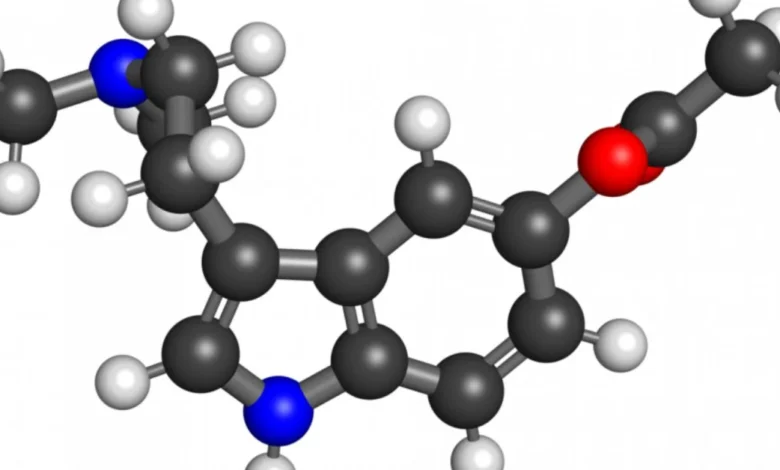
Dimethyltryptamine (DMT) is a potent, naturally occurring psychedelic compound renowned for inducing profound visual and auditory hallucinations. Present in various plant species and found in trace amounts within the human body, DMT experiences are frequently described by users not merely as hallucinations but as vivid encounters with an "alternate reality" or a dimension perceived as more fundamental than conventional waking consciousness. This unique perception has positioned DMT at the nexus of scientific inquiry, philosophical debate, and spiritual exploration, driving a contemporary resurgence of interest in its properties and implications.
Historical Context and the Rise of DMT Research
The chemical synthesis of DMT dates back to 1931 by chemist Richard Manske, but its psychoactive properties were not widely recognized until the mid-20th century. Its presence in various traditional shamanic brews, most notably Ayahuasca from the Amazon basin, suggests its use by indigenous cultures for centuries, if not millennia, for spiritual and healing purposes.
Modern scientific investigation into DMT gained significant traction in the latter half of the 20th century, propelled by pioneers such as Terence McKenna and Rick Strassman. McKenna, an ethnobotanist and philosopher, became a prominent figure in the psychedelic counterculture, widely lecturing and writing about his own DMT experiences and theories concerning its role in human consciousness and evolution. He famously referred to DMT as "the most powerful psychedelic known to man," often describing encounters with "self-transforming machine elves" and other highly complex entities.
Psychiatrist Dr. Rick Strassman, often dubbed the "godfather of DMT research," conducted the first new human research with psychedelic compounds in the United States in over two decades, beginning in 1990. His groundbreaking studies at the University of New Mexico, detailed in his influential book "DMT: The Spirit Molecule," involved administering intravenous DMT to volunteers and meticulously documenting their experiences. Strassman’s research provided critical insights into the compound’s rapid onset, short duration, and the consistency of profound, often transcendent, experiences reported by subjects, including perceptions of parallel universes, encounters with alien entities, and near-death-like experiences. His work significantly contributed to establishing DMT as a serious subject of neuroscientific and psychological study, laying the groundwork for its current renaissance.
Contemporary Discourse: Goler’s Claims and the Simulation Hypothesis
The conversation surrounding DMT has recently seen a surge in public visibility, amplified by popular media platforms. A notable example is the recent interview conducted by YouTube podcaster Shawn Ryan with independent researcher Danny Goler. Goler, characterized as a 21st-century DMT pioneer due to his extensive personal experimentation—reportedly ingesting the compound thousands of times—has offered provocative insights into the nature of reality, human consciousness, religion, and spirituality, all informed by his DMT experiences.
Goler posits that his profound encounters have led him to a revised understanding of our conventional reality, suggesting it pales in comparison to the reality glimpsed through DMT. Among the most intriguing and often controversial "reveals" from his discussions are two central claims:
- "Code in the Walls": Thousands of individuals, while under the influence of DMT, have purportedly reported seeing intricate "code" – reminiscent of computer programming or ancient, cryptic languages – embedded within their visual field, particularly on surfaces like walls. This phenomenon has spurred discussions about a proposed "Rosetta Stone" project aimed at cataloging and deciphering these recurring symbols, seeking to establish a shared language of the DMT experience.
- Computational Reality: Building on the "code" observations, Goler and others suggest that these visions are not merely subjective hallucinations but evidence that our perceived physical world is computationally rendered, implying that reality itself is an illusion or a sophisticated computer simulation.
These claims, while captivating, invite rigorous scrutiny and prompt fundamental philosophical and scientific questions about the veracity of subjective experience and the nature of reality itself.
The Neuroscientific Perspective: Endogenous Production and Brain Mechanisms
A distinguishing characteristic of DMT, setting it apart from other well-known psychedelics like LSD, psilocybin, and ketamine, is its natural production within the human brain and other living systems. This endogenous presence has fueled speculation about its potential role in natural states of consciousness, dreams, near-death experiences, and even birth. While the exact physiological function and production pathways of endogenous DMT in the human brain are still not fully understood, research suggests it may interact with serotonin receptors, particularly 5-HT2A receptors, which are crucial for mediating the effects of classical psychedelics.
From a neuroscientific standpoint, the "DMT trip" is understood as a profound alteration of brain activity, leading to changes in perception, cognition, and emotion. Functional magnetic resonance imaging (fMRI) studies on individuals under the influence of DMT have shown significant alterations in brain connectivity, particularly a decrease in the activity of the default mode network (DMN), a network associated with self-referential thought and our sense of a stable, consistent reality. Simultaneously, there’s often an increase in connectivity between normally segregated brain regions, leading to the synesthetic and highly integrated experiences reported by users.
The brain’s capacity to generate such immersive and complex experiences raises questions about whether DMT is revealing an external, objective reality or merely unlocking latent capacities within our own neurological architecture. The intricate visual patterns, geometric forms, and perceived entities could be the brain’s way of interpreting heightened sensory input and reorganized neural firing patterns. This perspective suggests that while the experience is undeniably real to the individual, its external ontological status remains a subject of scientific investigation rather than a foregone conclusion.
Philosophical Inquiries: Deconstructing Claims of "Another Reality"
The claims made by DMT users, particularly regarding access to a "different reality," necessitate a deeper philosophical examination.
1. A Different Reality or a Different Way of Experiencing Reality?
The conviction among many DMT users that the compound grants access to an objectively different dimension or reality is powerful. However, a critical philosophical question arises: Can we truly access a veridical, external reality simply by ingesting a chemical compound into our human system? Even when experiencing profound alterations, our perception is still fundamentally mediated by our uniquely human sensory and cognitive apparatus. We are still processing information through a human brain, albeit one operating in an altered state.
Consider the analogy of a video game: when Pac-Man consumes a power pellet, he temporarily gains the ability to eat the predatory ghosts. While his experience of the game world changes dramatically—his capabilities are enhanced, and his perception of threats is inverted—he remains within the same game world. The underlying code and parameters of the game haven’t fundamentally shifted; rather, Pac-Man’s interaction with and experience of that world have been temporarily modified. Similarly, DMT might offer a temporary excursion into a radically different way of experiencing human reality, rather than a direct portal to an entirely separate, objective reality. The subjective experience is undeniably real and impactful, but its objective ontological status requires further interrogation.
2. Codifying Subjective Experience: The "Other Minds Problem"
The proposed "Rosetta Stone" project, aimed at identifying and codifying symbols seen by DMT users, confronts a classical philosophical challenge: the "other minds problem." This problem, central to modern philosophy of mind, questions how we can truly know that another person’s subjective experience of a phenomenon is qualitatively identical to our own.
Philosopher John Locke famously highlighted that "secondary qualities" like color, smell, and taste are not inherent properties of objects but rather depend on our perceptual faculties. Thus, while two individuals might both label an object "pink," there’s no way to empirically verify that the internal, subjective experience of "pinkness" is the same for both. One might be experiencing what another calls "green," while still using the label "pink" due to learned linguistic convention.
If this epistemological hurdle exists under normal, waking conditions, it becomes exponentially more complex when individuals are under the influence of a potent hallucinogen. How can researchers confidently assert that what one person describes as "code" or a "squiggle" manifests identically in another person’s brain? The variability in subjective experience, even without pharmacological intervention, suggests that attempts to universally codify complex, internally generated visual phenomena face significant methodological and philosophical limitations. While recurring motifs might emerge, attributing objective, shared meaning to them remains a considerable challenge.
3. The Simulation Hypothesis and Perceived "Code"
The claim that seeing "code in the walls" provides evidence for the simulation hypothesis—the idea that our reality is a computational construct—is another area warranting critical examination. The simulation hypothesis, popularized by philosophers like Nick Bostrom, posits that it is highly probable that we are living in a computer simulation, given certain assumptions about technological progress and the desire of advanced civilizations to run ancestral simulations. This hypothesis has valid philosophical and empirical avenues of exploration.
However, interpreting perceived "code" during a hallucinogenic state as literal evidence of a computational substrate is a contentious leap. In any sophisticated simulation, the rendered output (e.g., the Pac-Man maze) is distinct from the underlying programming lines of code. The user interface and the backend architecture operate on different levels of abstraction. If our reality were a simulation, it would be highly inefficient and counterintuitive for the "programmers" to allow the "code" to be visible within the simulated environment, particularly in a manner that requires a hallucinogen to perceive.
A more parsimonious explanation, from a neuroscientific perspective, is that DMT might be activating or "hacking" into specific neural systems within the human brain that process symbols, patterns, and language. The brain is an intricate pattern-recognition machine, constantly seeking order and meaning. Under the influence of DMT, this mechanism might be overstimulated or misdirected, leading to the perception of structured "code" or symbolic patterns everywhere, even in the absence of external stimuli. This does not invalidate the profound nature of the experience for the individual but offers an alternative, brain-centric interpretation of the phenomena.
Challenges and Future Directions in DMT Research
The growing societal acceptance of psychedelic-assisted therapy has created a fertile ground for renewed interest in compounds like DMT. However, rigorous scientific methodology is paramount to distinguish genuine insights from anecdotal claims.
One crucial area for future research involves the implementation of placebo-controlled studies. The pervasive cultural narratives surrounding DMT, including widely publicized claims of seeing "code" or entities, could influence participants’ expectations and shape their subjective experiences. A study design where some participants receive DMT and others a placebo would help researchers differentiate between experiences genuinely induced by the compound and those potentially influenced by suggestion or pre-packaged cultural tropes. While such studies still confront the "other minds problem" (as subjective placebo experiences are equally difficult to objectively verify), they could help establish a baseline for consistency between "unusual" and "nothing unusual" perceptions, thereby strengthening the empirical foundation of DMT research.
Furthermore, ethical considerations surrounding the administration of potent psychedelics require careful navigation. The therapeutic potential of DMT, particularly in areas like end-of-life care or treating severe depression, is being explored, but it remains distinct from the purely exploratory or recreational use that often underpins discussions of "alternate realities."
Conclusion
DMT stands as a potent and enigmatic compound, pushing the boundaries of our understanding of consciousness, perception, and the very nature of reality. From its ancient use in indigenous rituals to its contemporary exploration in scientific laboratories and online forums, DMT continues to fascinate and challenge. While claims of direct access to alternate realities and evidence for computational existence are deeply compelling, a critical, multidisciplinary approach—integrating neuroscience, philosophy, and rigorous empirical research—is essential.
The profound subjective experiences reported by users are undeniably real and can have transformative personal impacts. However, the scientific and philosophical communities must continue to differentiate between the subjective reality of an experience and its objective ontological status. As research into DMT and other psychedelics progresses, a clearer picture may emerge, not only of the compound’s mechanisms of action but also of the astonishing capacities of the human mind itself to construct and experience reality in myriad forms. The journey to understand DMT is ultimately a journey into the depths of human consciousness, promising to reshape our understanding of what it means to perceive, to exist, and to be.
Related posts: