US Department of Health and Human Services Seeks Public Input on Potential Health and Environmental Impacts of Wireless Radiation

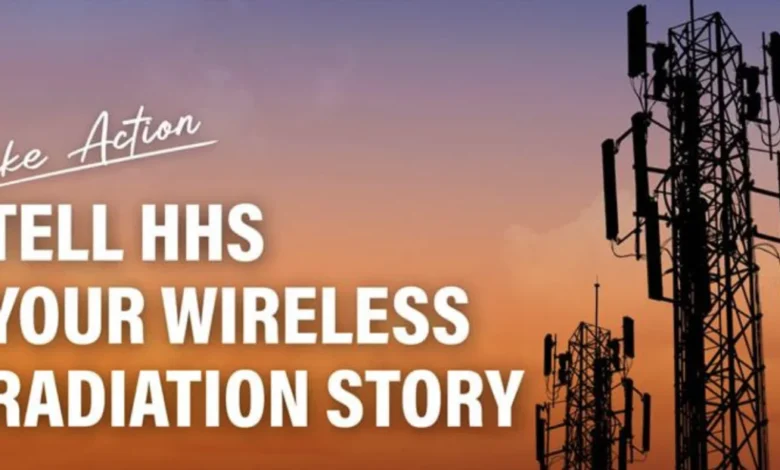
The United States Department of Health and Human Services (HHS) has formally initiated a public comment period to gather critical information regarding the potential adverse health and environmental effects associated with radiofrequency (RF) radiation and electromagnetic fields (EMFs). This call for public input represents a significant regulatory pivot, as oversight concerning wireless technology has historically fallen under the jurisdiction of the Federal Communications Commission (FCC) rather than federal health agencies equipped with specialized expertise in medicine, epidemiology, and biology.
The public submission window is officially open, with the final deadline for stakeholder contributions set for October 21, 2026. Under the leadership of HHS Secretary Robert F. Kennedy Jr., the agency is encouraging widespread participation from a diverse array of stakeholders, including clinical researchers, medical professionals, public health advocates, equipment manufacturers, affected individuals, and concerned citizens. This federal inquiry underscores a growing nationwide demand to reassess the long-term biological implications of exponential increases in human exposure to wireless infrastructure, ranging from personal cellular devices to community-wide 5G deployment and neighborhood cell towers.
Background Context and Jurisdictional Shifts
For decades, the regulation of wireless communications infrastructure and spectrum allocation has been governed primarily by the FCC, established under the Communications Act of 1934. While the FCC evaluates technical standards and interference parameters, public health organizations and environmental advocates have long argued that the agency lacks the comprehensive biological expertise required to thoroughly evaluate the subtle, chronic health impacts of non-ionizing radiation.
Federal exposure guidelines currently enforced by the FCC were largely established in the 1990s and are primarily designed to protect the human body against acute thermal effects—meaning tissue heating caused by high-intensity short-term exposures. However, a vast and growing body of independent scientific literature suggests that non-thermal biological effects—such as oxidative stress, cellular damage, neurological changes, and disruptions to melatonin production—can occur at exposure levels well below current federal limits.
By stepping into this domain, HHS aims to bridge the regulatory gap by leveraging its core competencies in public health and biomedical research. The transition marks a long-sought objective for scientific advocacy groups, medical practitioners observing unexplained symptoms in patients, and grassroots coalitions seeking a more rigorous, health-centric evaluation of modern telecommunications technology.
Scope of the Inquiry and Targeted Participants
The Request for Information (RFI) issued by HHS seeks empirical data, qualitative accounts, and clinical observations regarding electromagnetic fields and radiofrequency radiation. The federal agency has structured the inquiry to be inclusive, welcoming input from multiple societal sectors:

- Clinical and Scientific Researchers: Epidemiologists, toxicologists, and biophysicists are invited to submit peer-reviewed data, ongoing study outcomes, and identification of research gaps concerning chronic low-level RF exposure.
- Medical Professionals: Physicians, neurologists, primary care providers, and occupational health specialists who treat patients presenting with symptoms potentially linked to environmental exposures are encouraged to share clinical case studies.
- Affected Individuals and Families: Citizens who report experiencing physiological symptoms—such as chronic fatigue, sleep disturbances, cognitive impairment, headaches, or cardiac irregularities—following the installation of nearby cellular infrastructure or increased personal device usage can document their personal experiences.
- Advocacy Groups and Legal Scholars: Organizations focused on environmental health, municipal autonomy, and civil rights are submitting coordinated frameworks addressing systemic regulatory challenges.
The inclusion of anecdotal and qualitative patient reports alongside quantitative laboratory data highlights an acknowledgment by federal health authorities that the subjective lived experiences of citizens must inform exploratory public health research.
Chronology and Key Deadlines
- Late 2025 – Early 2026: Grassroots coordination intensifies across multiple environmental health organizations, including the WAPF (Wise Traditions) initiatives and the "704 No More" legal coalition, focusing attention on inadequate FCC guidelines and the preemption of local municipal zoning control.
- October 2026: HHS officially opens the public comment portal via regulations.gov, soliciting comprehensive feedback on RF radiation and EMFs.
- October 21, 2026: The definitive deadline for all public submissions, expert testimonies, and organizational briefs to be logged into the federal docket.
- Post-October 2026: Anticipated aggregation and review phase by HHS panels to determine federal research priorities, potential guideline updates, and collaborative frameworks with other scientific bodies.
Core Issues: FCC Guidelines and Local Autonomy
The current national discourse surrounding wireless radiation centers heavily on two primary structural grievances: the obsolescence of federal exposure thresholds and the erosion of local zoning authority.
Under current federal statutory interpretations, specifically the Telecommunications Act of 1996, local municipalities are legally barred from denying the siting, construction, or modification of wireless facilities based on environmental or health concerns, provided that the equipment complies with FCC radiofrequency emission guidelines. Critics argue this creates a legal preemption that strips local communities of their traditional right to protect public health and neighborhood aesthetics.
The "704 No More" initiative, representing a coalition of more than 100 civic groups, legal experts, and public health advocates, has spearheaded efforts to challenge these limitations. Proponents of local control argue that municipal governments are better positioned to evaluate the density and proximity of transmitting antennas to residential areas, schools, and hospitals. By elevating these concerns to HHS, advocates hope to establish an evidentiary bridge that could eventually prompt legislative or regulatory modernization at the federal level.
Scientific and Public Health Implications
The outcome of the HHS inquiry could carry profound ramifications for the telecommunications industry, municipal planning boards, and federal health policy. While industry stakeholders maintain that decades of deployment have occurred safely under existing regulatory frameworks, independent scientists point to emerging longitudinal studies—such as the multi-million-dollar National Toxicology Program (NTP) report linking high-intensity RF radiation to specific types of tumors in animal models—as evidence that precautionary principles must be applied.
Furthermore, vulnerable populations, particularly children whose developing nervous systems and thinner cranial bones absorb electromagnetic radiation differently than adults, have become a focal point of public health concern. Pediatricians and researchers emphasize that cumulative, lifetime exposure profiles differ vastly from the short-term exposure scenarios tested decades ago.
If HHS commits to establishing a dedicated research agenda and incorporates public health data into inter-agency policy discussions, it could reshape how wireless infrastructure is deployed across the United States. A formal acknowledgment of non-thermal biological effects by a primary health agency would challenge the long-standing regulatory consensus upheld by the FCC and initiate a new era of interdisciplinary oversight regarding technology and human health.
Related posts: