The Escalation Trap: How Precision Warfare and Strategic Miscalculation Lead to Global Crisis

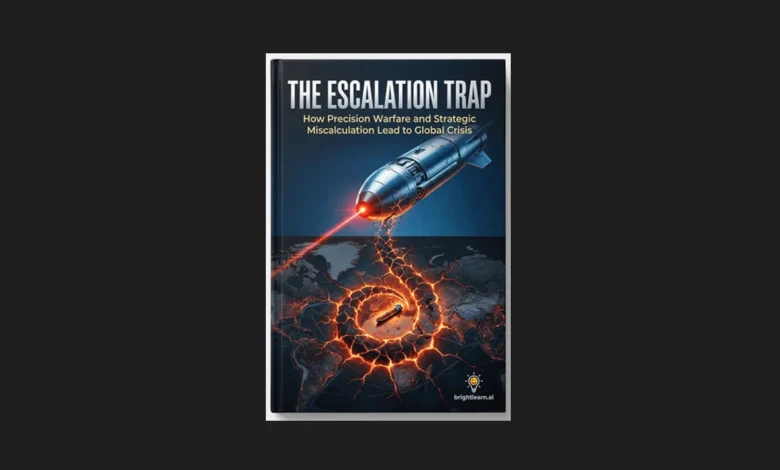
Robert Pape’s groundbreaking new book, "The Escalation Trap: How Precision Warfare and Strategic Miscalculation Lead to Global Crisis," delivers a potent and urgent warning, fundamentally challenging the prevailing narrative of modern warfare. Far from being a dry academic exercise, Pape’s work serves as a critical wake-up call, exposing the pervasive and dangerous illusion that technological advancements in warfare can effectively grant political control over the inherent chaos of conflict. This book is a forensic dissection of a deeply ingrained, and potentially catastrophic, miscalculation that has defined military strategy for decades.
At its core, Pape’s central argument is stark and unsettling. For the past thirty years, the international discourse surrounding military technology has been dominated by the assertion that precision-guided munitions—smart bombs, drones, and cruise missiles—have revolutionized warfare. The widely accepted narrative suggests that these technologies enable leaders to strike targets with unparalleled accuracy from vast distances, ostensibly minimizing civilian casualties and achieving political objectives without the need for extensive ground troop deployments. This has fostered a perception of warfare as a clean, efficient, and eminently controllable endeavor.
Pape systematically dismantles this comforting, yet dangerously flawed, premise. He argues with compelling evidence that this belief is not merely incorrect, but actively perilous. The danger lies in what he terms the "escalation trap": the deceptive notion that tactical success, defined by the ability to hit a specific target, automatically translates into strategic victory, the achievement of broader political goals. This trap, Pape explains, springs shut when inevitable retaliation occurs, compelling leaders into a cycle of endless escalation in a desperate attempt to avoid admitting strategic failure.
To substantiate his claims, Pape draws upon a rich tapestry of historical case studies, each illustrating the profound disconnect between tactical precision and strategic outcomes. The Vietnam War serves as a poignant example, where the United States Air Force achieved remarkable success in destroying over 80% of its designated targets, yet ultimately lost the war. The 1991 Gulf War, often lauded as a paradigm of precision bombing’s effectiveness, is re-examined by Pape, who posits its success was contingent upon its narrowly defined political objective rather than an inherent triumph of precision. The 1999 Kosovo conflict, he argues, only yielded results due to the credible threat of ground intervention and discreet back-channel diplomacy with Russia. The 2003 invasion of Iraq stands as the ultimate cautionary tale, showcasing tactical brilliance in the swift overthrow of Saddam Hussein, followed by a devastating strategic catastrophe in the ensuing occupation and insurgency.
The Smart Person’s Mistake: Confusing Technical Prowess with Political Control
A particularly insightful section of "The Escalation Trap" delves into what Pape identifies as "the smart person’s mistake." This phenomenon describes the tendency of highly educated leaders and strategic planners to conflate the technical ability to strike a target with the capacity to control complex political outcomes. They tend to overestimate the power of precision weaponry while profoundly underestimating the intangible, yet decisive, human factors that shape conflict on the ground. These factors include deeply ingrained cultural norms, historical grievances, concepts of honor, religious convictions, tribal loyalties, and the sheer, unyielding human will to resist.
Pape meticulously demonstrates how this overconfidence has become institutionalized within military and political structures. It is perpetuated through curricula in war colleges, reinforced by think tank analyses, and embedded within the sophisticated models and simulations utilized by Pentagon planners. These analytical frameworks, he contends, tend to prioritize technological capabilities and firepower, treating warfare as an engineering problem amenable to a solvable equation. Crucially, they often omit or marginalize factors that are difficult to quantify—the lived experiences of millions, the intricate web of human motivations, and the unpredictable dynamics of resistance and retaliation. Because these elements do not readily appear on a spreadsheet, they are effectively dismissed as irrelevant. This, Pape asserts, represents a profound intellectual failure, one that has exacted a devastating toll in trillions of dollars and hundreds of thousands of lives.
The New Reality: Decentralized Destruction and the Democratization of Warfare
Beyond its critical examination of past conflicts, "The Escalation Trap" offers a chilling forecast of future warfare, presenting a roadmap to a potentially volatile landscape. Pape dedicates significant attention to what he terms "the democratization of destruction"—the alarming trend where inexpensive, readily available commercial technology places unprecedented destructive power into the hands of smaller states and non-state actors.
Consider the stark economic disparity highlighted by Pape: a single drone, costing a mere few thousand dollars, possesses the capability to neutralize a billion-dollar warship. A swarm of such drones could potentially cripple an entire aircraft carrier battle group. The Houthi rebels in Yemen, a group lacking a formal air force or navy, have demonstrated this principle by effectively disrupting a substantial portion of global oil supply using technology assembled from commercial components. Iran has leveraged its drone program to establish a "strategic veto" over the Strait of Hormuz, a critical maritime chokepoint through which approximately 20% of the world’s oil transits.
The implications of this shift are staggering. The era of the unchallenged aircraft carrier, long a symbol of American military dominance, is demonstrably drawing to a close. This decline is not necessarily precipitated by a peer competitor possessing a comparable naval fleet, but rather by the proliferation of inexpensive, commercially accessible aerial machines. The economic calculus is brutally straightforward: a single Patriot interceptor missile costs over a million dollars, while a Houthi drone can be acquired for a few thousand. This creates a profound cost-exchange ratio heavily favoring the attacker, even before the first shot is fired.
Pape also masterfully connects the dots between military strategy and economic realities in ways that often elude mainstream analysis. He illuminates how protracted "forever wars" have engendered a hidden economic crisis, inflicting hardship on ordinary citizens while enriching the military-industrial complex. The immense costs of these conflicts are frequently externalized, deferred to future generations through accumulating debt, imposed upon the poor via inflationary pressures, and borne by the most vulnerable nations through sharp spikes in food and energy prices.
The analysis of a potential blockade of the Strait of Hormuz is particularly chilling. Pape meticulously details the cascading phases of economic collapse that would ensue from a disruption of this vital chokepoint. Price surges would manifest within days, industrial production would plummet within weeks, inventories would be depleted within months, and ultimately, the global economy would face a recession that would dwarf the 2008 financial crisis. He identifies August 1st as a potential date of reckoning, marking the point at which strategic petroleum reserves would be exhausted. This projection, Pape emphasizes, is not alarmist rhetoric but sober analysis grounded in publicly available data. The world’s oil inventories are currently at near five-year lows, a consequence of deliberate underinvestment in new production and ongoing geopolitical disruptions. Any conflict involving Iran, he warns, would serve as the spark igniting this volatile powder keg.
The Path Forward: Rebuilding Resilience and Confronting the Truth
Remarkably, "The Escalation Trap" does not conclude with a sense of despair. The final chapters outline a potential path out of the escalating trap, though one that demands considerable courage, unvarnished honesty, and a willingness to confront deeply entrenched vested interests.
Pape advocates for "localization" as a fundamental solution. This entails rebuilding resilience at the community level through decentralized energy production, robust local food systems, the adoption of sound monetary principles (such as gold and silver), and the establishment of mutual aid networks capable of functioning independently when global supply chains falter. He presents this not as a utopian ideal, but as a pragmatic survival strategy for a world where the existing global system is showing clear signs of strain and potential collapse.
Furthermore, Pape calls for an honest and comprehensive accounting of the "forever wars." He envisions the establishment of a national truth commission tasked with meticulously documenting every life lost, every dollar expended, and every environmental scar inflicted by the conflicts that have unfolded since the September 11th attacks. Independent estimates place the death toll from these conflicts at over four million and the financial cost at more than eight trillion dollars. These are not abstract figures; they represent immense human suffering that must be acknowledged and understood before any meaningful progress toward a more peaceful future can be made.
"The Escalation Trap" is an indispensable read for anyone seeking to comprehend the catastrophic failures of modern warfare and to chart a course toward a more peaceful and resilient global future. It is a book that policymakers, military officers, journalists, and ordinary citizens alike, weary of the prevailing narratives of "clean" wars and "limited" interventions, should engage with.
Robert Pape has rendered an invaluable service by clearly identifying the escalation trap, meticulously detailing its mechanisms, and offering a viable escape route. The critical question that remains is whether humanity possesses the collective wisdom to heed his urgent and vital counsel.
The book "The Escalation Trap: How Precision Warfare and Strategic Miscalculation Lead to Global Crisis" is available for purchase and can be accessed for free download on platforms like Books.BrightLearn.ai, which also offers the ability to create and share books. Further insights into Professor Robert Pape’s work and his discussions on critical geopolitical issues, including the Iran conflict and the global energy crisis, can be found in interviews such as the one with Health Ranger Mike Adams on the Health Ranger Report channel on Brighteon.com. These resources provide a broader context for understanding the complex challenges addressed in Pape’s seminal work.