Sweet Success: How the Aroma of Chocolate Can Boost Athletic Performance Without Increasing Perceived Exertion

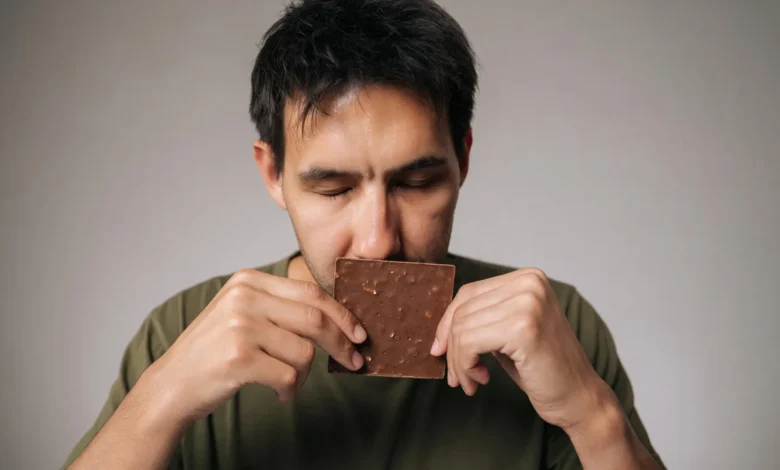
The intersection of sensory neuroscience and sports science has long explored how external stimuli can alter human physical output. From rhythmic auditory cues to visual motivational imagery, athletes and researchers continually seek legal, non-invasive methods to optimize training efficiency. Recently, a novel frontier in this pursuit has emerged from an unexpected source: the olfactory system. According to a landmark study published in the peer-reviewed journal Frontiers in Physiology, exposure to specific chocolate aromas before and during resistance exercise can significantly enhance muscular endurance. Crucially, this performance boost occurs without elevating the athlete’s perceived exertion, suggesting a powerful psychobiological mechanism linking scent, appetite regulation, and physical capacity.
The Anatomy of the Study: Methodology and Participant Demographics
To investigate the relationship between olfaction, dietary cues, and muscular output, a team of researchers at the University of Malaya designed a controlled experiment. The study focused on a cohort of 23 healthy, moderately trained male participants in their early to mid-twenties. These individuals were selected to ensure a baseline level of physical fitness and familiarity with resistance training, thereby minimizing performance anomalies stemming from physical exhaustion or unfamiliarity with the equipment.
The experimental design required participants to undergo a minimum ten-hour fasting period prior to testing, ensuring that baseline metabolic and hunger states were relatively uniform across the group. The researchers then divided the participants into three distinct exposure groups. Each group was subjected to one of three olfactory stimuli administered via controlled dissemination: a liquified dark chocolate sample containing 90 percent cocoa solids, a liquified milk chocolate sample containing 60 percent cocoa solids, and an odorless water sample functioning as a methodological control.
The physical task selected for the trial was the leg extension exercise. Performed on specialized equipment, this movement requires the participant to sit upright and straighten the lower legs against mechanical resistance, effectively isolating the quadriceps. Researchers measured leg extension performance both prior to and continuously throughout the training sets. Simultaneously, they tracked subjective metrics—including hunger, fullness, and the immediate desire to eat—before the exercise regimen and following intermittent 30-second olfactory exposures between training sets.
Divergent Effects: Dark Versus Milk Chocolate Aromas
The findings revealed distinct psychobiological responses depending on the type of chocolate aroma introduced. The aroma of 90 percent dark chocolate produced a marked suppressive effect on subjective appetite markers. Compared to both the water control and the milk chocolate conditions, participants exposed to the dark chocolate scent reported significantly lower levels of hunger, a reduced desire and intention to eat, and heightened feelings of physical fullness prior to engaging in physical exertion.
This suggests that the dark chocolate aroma acted as a powerful cognitive cue, tricking the physiological system into an anticipatory state of satiety despite the ten-hour fast. Dr. Mohamed Nashrudin bin Naharudin, an assistant professor at the Faculty of Sports and Exercise Science at the University of Malaya and senior author of the study, noted the unique nature of this response. The scent essentially served as a learned neurological signal associated with a rich, bitter, and highly satiating food product.
In contrast, the milk chocolate aroma—derived from a 60 percent cocoa concentration—elicited a different behavioral and sensory profile. While participants consistently rated the smell of milk chocolate as more pleasant than either the dark chocolate or the control samples, it failed to significantly alter metabolic hunger signals or baseline appetite metrics. Instead of inducing satiety, the sweeter milk chocolate scent functioned primarily as a hedonic reward cue, generating a pleasurable sensory environment that supported sustained physical effort without altering internal metabolic perceptions.
Quantitative Gains in Resistance Exercise Volume
Beyond its impact on appetite perception, the olfactory stimulation yielded substantial, quantifiable improvements in physical endurance. The most striking metric recorded during the trial was the total training volume completed by the participants.
When exposed to the 90 percent dark chocolate aroma, participants completed an average of approximately 18 additional repetitions during their leg extension sets compared to the baseline water control group. Meanwhile, exposure to the 60 percent milk chocolate aroma yielded an average increase of approximately nine additional repetitions over the control condition.
Significantly, these performance gains were achieved without a corresponding increase in the rate of perceived exertion (RPE). The participants reported that the workouts felt no more difficult while under the influence of the chocolate aromas than they did during the control sessions. This decoupling of physical output from subjective fatigue represents a significant psychobiological outcome, demonstrating that olfactory cues can effectively mask or mitigate the mental barriers typically associated with muscular exhaustion.
Psychobiological Mechanisms: Learned Associations and Anticipatory Responses
To understand how a simple scent can generate such profound physical and psychological changes, researchers look to the wiring of the human brain. Olfactory pathways are uniquely and powerfully connected to the limbic system—the neural network governing emotion, memory, and appetite. From early childhood, humans repeatedly experience specific food aromas in tandem with the physical act of eating. Over time, these aromas become deeply ingrained neural signals that allow the brain and body to anticipate the physiological consequences of food consumption.
This learned association can trigger anticipatory mechanisms long before any nutrients enter the digestive tract. In the case of the dark chocolate aroma, the familiar scent of a dense, bitter food substance acted as a conditioned stimulus for satiety. The brain registered the familiar cue and initiated preparatory digestive and metabolic responses that mirrored the state of actually having consumed food.
The implications of this phenomenon extend into the realm of fasting and exercise science. Historically, fasting athletes face compromised performance metrics due to low energy availability and psychological fatigue. By leveraging targeted food aromas, sports scientists may be able to harness anticipatory metabolic and psychological shifts to sustain high-intensity efforts during periods when nutritional intake is restricted or timed around intermittent fasting schedules.
Methodological Limitations and Areas for Future Research
Despite the compelling nature of the findings, the research team emphasizes several important limitations that must be addressed before these insights can be broadly applied to professional athletic training or clinical guidelines.
First and foremost, the biological mechanisms hypothesized by the researchers remain largely speculative. The study did not measure systemic biomarkers, such as circulating blood hormones (e.g., ghrelin or leptin), nor did it utilize neuroimaging techniques to map real-time neural activity. Consequently, while the behavioral outcomes are clear, the precise biochemical and neurological pathways responsible for the shifts in appetite and exercise capacity require further empirical validation.
Additionally, experimental variables such as aroma intensity posed minor challenges. Ensuring the exact perceptual intensity of dark and milk chocolate aromas is complex due to the inherent chemical differences between the two compounds. Furthermore, because the control condition utilized odorless water, participants were occasionally able to discern when they were in the control group, introducing a potential blinding limitation.
Finally, the demographic scope of the study was intentionally narrow. Comprising exclusively 23 healthy, moderately trained young men in their early twenties, the cohort does not reflect the broader population. Subsequent research must expand to include female athletes, older populations, untrained individuals, and elite competitors to determine whether these olfactory performance boosts generalize across diverse physiological profiles.
Broader Implications for Sports Science and Nutrition
The University of Malaya study opens intriguing avenues for future inquiry within sports science, nutritional psychology, and human performance optimization. A primary question remaining for researchers is whether chocolate possesses unique neurochemical properties or if other familiar, highly rewarding food aromas can elicit comparable ergogenic effects.
While the researchers suspect that chocolate is not entirely unique, they emphasize that it occupies a specific psychological niche as a universally recognized reward cue. For an olfactory stimulus to successfully trigger the necessary psychological shift in appetite and performance, the individual must find the odor familiar and appealing—or at least devoid of negative associations.
If future studies confirm that other pleasant food aromas can replicate these results, the practical applications within fitness and athletics could be vast. Aromatherapy protocols could eventually be integrated into pre-workout routines, locker room environments, or direct athletic equipment to help athletes maximize training volume, delay the onset of mental fatigue, and optimize recovery states without the ingestion of stimulants or caloric supplements. As sports science continues to explore the boundaries of the mind-body connection, the humble sense of smell may soon take its place as a legitimate, highly accessible tool in the elite training arsenal.