Effective Strategies for Managing and Relieving Chronic Neck and Shoulder Tension

Chronic neck and shoulder discomfort has emerged as a pervasive public health concern in the 21st century, closely mirroring the rapid integration of sedentary technology-based work into daily life. Data from the Global Burden of Disease study suggests that neck pain is one of the most frequent musculoskeletal complaints worldwide, often resulting in significant productivity losses and healthcare expenditures. While acute tension is frequently dismissed as a minor inconvenience, medical experts warn that the accumulation of myofascial tightness can lead to long-term postural dysfunction, chronic headaches, and restricted range of motion.
The phenomenon, frequently colloquially referred to as "tech neck," involves the forward projection of the cervical spine. Biomechanical studies indicate that for every inch the head shifts forward from its neutral, vertical alignment, the strain on the cervical musculature increases significantly. Given that the average human head weighs between 10 and 12 pounds, a forward tilt of just 45 degrees can exert a force equivalent to nearly 50 pounds of pressure on the neck. Over a typical eight-hour workday, this repetitive stress creates a cumulative load that the body is ill-equipped to sustain.
The Evolution of Modern Musculoskeletal Strain
The shift toward remote work environments and the ubiquity of mobile devices have accelerated the prevalence of these symptoms. In the late 20th century, workplace ergonomics were primarily focused on industrial manufacturing and physical labor. Today, the focus has shifted to the "digital workstation." A 2022 survey conducted by the American Chiropractic Association noted that nearly 70% of office workers reported experiencing moderate to severe neck or upper-back pain at least once per week.
This timeline of physical degradation typically follows a predictable trajectory:

- Initial Phase: Occasional muscle fatigue and stiffness following prolonged periods of inactivity or sustained focus on a screen.
- Developmental Phase: The onset of "muscle memory" where the shoulders begin to maintain an elevated, hunched position even when away from the desk, often exacerbated by psychological stress.
- Chronic Phase: The development of trigger points, reduced mobility in the thoracic spine, and a heightened risk of cervicogenic headaches, where tension in the neck radiates to the skull.
The Physiological Role of Yoga and Targeted Mobility
Medical researchers and physical therapists have increasingly recognized the efficacy of structured movement programs in mitigating these symptoms. Unlike passive treatments, such as massage or topical analgesics, therapeutic movement—often categorized under the umbrella of yoga or clinical Pilates—addresses the root cause of the tension: the shortening of muscle fibers and the locking of joints in static positions.
From a physiological perspective, gentle, sustained stretching encourages the release of acetylcholine, a neurotransmitter that aids in muscle relaxation. Furthermore, the practice of controlled breathing, a hallmark of yoga, acts as a biological intervention against the "fight or flight" sympathetic nervous system response. By stimulating the vagus nerve, slow, deep breathing helps downregulate cortisol levels, which in turn reduces the unconscious bracing of the trapezius and levator scapulae muscles.
Standardized Therapeutic Movements
Clinicians often recommend a specific series of movements to counteract the structural damage caused by modern habits. These exercises are designed to restore the natural curvature of the spine and open the anterior chest wall.
Lateral Cervical Release
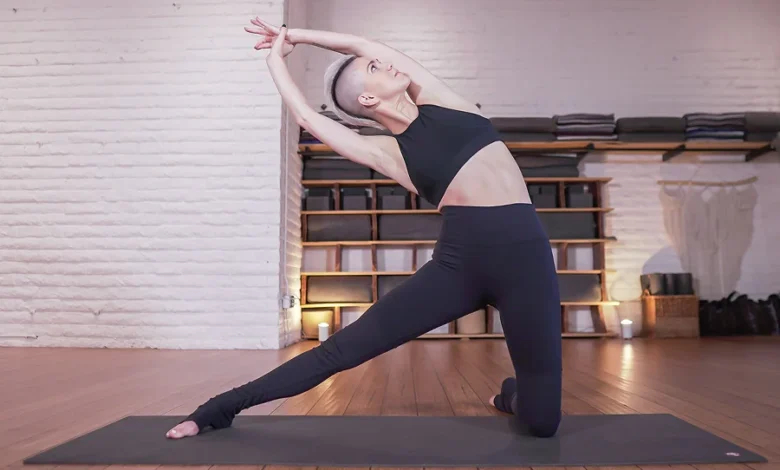
By allowing the ear to gravitate toward the shoulder while anchoring the opposing arm, an individual can stretch the sternocleidomastoid and upper trapezius muscles. This movement is critical for counteracting the lateral compression often caused by holding a phone between the ear and shoulder.
The Thoracic Extension (Puppy Pose)
This movement specifically targets the latissimus dorsi and the pectoral muscles. By keeping the hips aligned over the knees while extending the arms, the practitioner creates a mechanical lever that pulls the thoracic spine into alignment. When paired with a gentle chin tuck, it addresses the "forward head" posture directly, lengthening the posterior cervical chain.

Rotational Mobility (Seal Pose with Dips)
The thoracic spine is designed for rotation, yet modern sitting habits effectively "lock" these vertebrae. Integrating rotational movements, such as shoulder dips while in a prone chest-lift, forces the thoracic spine to rotate. This increases circulation to the intervertebral discs and helps dissipate the tension that accumulates between the scapulae.
Clinical Implications and Long-Term Prevention
The primary challenge in managing neck and shoulder tension is not the intensity of the treatment, but the frequency. "Consistency is the primary driver of physiological adaptation," notes Dr. Elena Vance, a specialist in musculoskeletal health. "A five-minute intervention performed three times daily is exponentially more effective than a single, hour-long session once a week."
This suggests that the future of ergonomic health lies in the "micro-break" model. Organizations are beginning to incorporate mandatory movement intervals into their workflows, recognizing that healthy employees are not only more comfortable but also more cognitively capable. When the body is free from the distraction of chronic pain, focus and mental clarity improve, leading to higher levels of work quality.
Addressing the Psychological Component
It is impossible to discuss physical tension without addressing the neurological feedback loop. Stress triggers the release of adrenaline, which naturally causes the shoulders to tighten in a defensive posture. Over time, this becomes a reflexive habit. Mindfulness-based stress reduction (MBSR) techniques, when combined with physical stretching, interrupt this cycle. By training the brain to recognize when the shoulders have drifted toward the ears, the individual can consciously trigger a relaxation response.
Guidelines for Safe Implementation
While therapeutic movement is generally safe, it is not a substitute for medical diagnosis. Healthcare providers advise that any movement program should be governed by the principle of "non-painful resistance." If a stretch causes sharp, shooting pain, or if it results in numbness or tingling in the extremities, it may indicate a nerve impingement or a disc-related issue that requires professional medical imaging and intervention.

Patients are encouraged to:
- Consult with a professional: Especially if the pain is the result of a specific trauma or injury.
- Observe contraindications: Certain poses may exacerbate existing conditions like cervical spondylosis or herniated discs.
- Monitor progress: Keep a log of frequency and intensity to share with a primary care physician or a physical therapist.
Conclusion: A Sustainable Path Forward
The persistence of neck and shoulder tension is a symptom of a modern environment that prioritizes static output over biological movement. However, the condition is largely manageable through deliberate, consistent intervention. By integrating basic mobility work into the daily routine and fostering a greater awareness of posture and stress response, individuals can effectively reverse the negative impacts of the digital age.
As the body of evidence supporting movement-based therapy grows, it is becoming clear that the solution to sedentary-related pain is not found in pharmaceutical intervention alone, but in the restoration of the body’s natural range of motion. Through these foundational practices, long-term health and physical ease are achievable, regardless of one’s professional demands.