The True Cost of Optimal Health: Navigating the Intersection of Longevity Science and Daily Lifestyle

The modern quest for longevity has evolved from a simple desire for good health into a multi-billion-dollar industry centered on the concept of health optimization. Across social media platforms, podcasts, and best-selling literature, a new class of health influencers and longevity experts promise that by tracking biomarkers, utilizing expensive supplements, and adhering to rigorous biohacking protocols, individuals can effectively reverse chronic disease, extend their healthspan, and perhaps even reach centenarian status. However, as the industry expands, a growing divide has emerged between the theoretical benefits of these advanced protocols and the practical reality of implementing them within the constraints of modern life.
The Rise of the Longevity Industrial Complex
The historical context of health optimization is rooted in the shift from reactive medicine—treating illness after it manifests—to proactive, preventative health management. In the early 2000s, this was largely defined by standard dietary guidelines and basic exercise recommendations. Over the last decade, however, the narrative has shifted toward "precision health." This transition was spurred by advancements in wearable technology, at-home blood testing, and the increased accessibility of genomic sequencing.
By 2024, the longevity market—encompassing everything from intermittent fasting apps and cold plunge equipment to personalized nutritional supplements—was valued at billions of dollars. This growth is driven by a culture that increasingly views the human body as a system to be debugged, optimized, and upgraded. While the underlying science often relies on peer-reviewed studies regarding metabolic flexibility, hormone regulation, and cellular health, the translation of this science into consumer-facing "protocols" often lacks the nuance of clinical oversight.
Analyzing the Intensity of Optimization Protocols
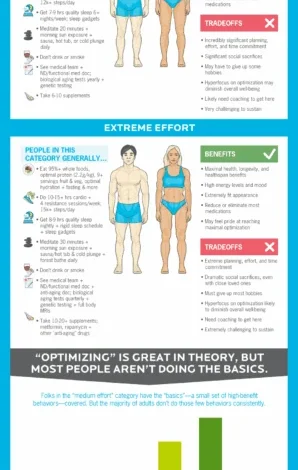
To evaluate the efficacy of these methods, one must distinguish between evidence-based health maintenance and extreme biohacking. Most clinical experts agree that the foundation of longevity is composed of four non-negotiable pillars: consistent physical activity, adequate sleep, nutritional density, and stress management. These foundational elements require significant time and habit-building but incur relatively low financial costs.
In contrast, contemporary optimization protocols often introduce variables with diminishing returns. For instance, while a moderate caloric deficit can improve markers of metabolic syndrome, the addition of intermittent fasting, specific nutraceutical stacks, and daily sauna or cryotherapy sessions adds layers of complexity that may not yield proportional improvements in lifespan. A fact-based analysis of these protocols suggests that for the average individual, the "cost" of these interventions—measured in time, cognitive load, and financial expenditure—often outweighs the marginal biological gains.
Chronology of the Modern Longevity Movement
- 2010–2015: The emergence of wearable fitness trackers allows consumers to monitor heart rate variability (HRV) and sleep quality in real-time, sparking the first wave of widespread personal health data tracking.
- 2016–2019: The "Biohacking" movement gains mainstream traction. Influencers begin publicizing detailed daily routines, including morning light exposure, specific supplement regimens, and cold-water immersion.
- 2020–2022: The global pandemic refocuses public attention on immune health and metabolic resilience, accelerating interest in personalized nutrition and long-term healthspan extension.
- 2023–Present: The market experiences a saturation of "longevity-focused" content. Organizations and health institutions begin to push back against extreme practices, advocating for sustainable, evidence-based lifestyle changes over radical biohacking.
Supporting Data and Research Perspectives
Clinical research consistently demonstrates that the most significant gains in longevity are achieved through behavioral consistency. According to data from the Centers for Disease Control and Prevention (CDC) and various longitudinal health studies, smoking cessation, maintaining a healthy body mass index (BMI), and engaging in at least 150 minutes of moderate-intensity aerobic activity per week remain the primary determinants of reduced all-cause mortality.

Conversely, the "optimization" sector often focuses on data points that, while interesting, are not yet clinically validated as primary drivers of longevity. For example, while some studies suggest that specific compounds may influence markers like sirtuin activation or telomere length in controlled laboratory environments, their impact on human lifespan remains speculative. When individuals prioritize these high-effort, low-certainty interventions at the expense of foundational habits, they risk "optimization fatigue," a state where the psychological stress of maintaining a complex health regimen negatively impacts physical well-being.
Implications for Public Health and Coaching
The professional coaching industry has noted a significant shift in client expectations. Individuals are increasingly arriving at consultations with granular, often confusing data from wearables, seeking "hacks" to solve complex health issues. This trend presents a unique challenge for certified nutrition and health coaches. The prevailing expert consensus, supported by organizations such as Precision Nutrition, emphasizes the necessity of moving away from the "all-or-nothing" mentality that defines many modern health fads.
The implication for the general public is clear: long-term health is not the product of a specific, high-cost protocol, but rather the result of sustainable, habit-based living. The most effective strategies for health optimization are those that an individual can maintain for decades, rather than weeks. As the industry matures, the focus is shifting toward "sustainable longevity," which prioritizes high-impact behaviors that integrate seamlessly into a person’s existing lifestyle.
The Role of Professional Guidance
For those seeking to improve their longevity, the recommended pathway involves three distinct stages: assessment, education, and implementation.
- Assessment: Before adopting any protocol, individuals should establish a baseline through medically supervised diagnostics rather than self-directed testing. Understanding one’s actual physiological needs prevents the waste of resources on unnecessary supplements or interventions.
- Education: Distinguishing between marketing-driven "optimization" and science-based health strategies is essential. Many claims made by fitness influencers lack the rigorous peer review required to substantiate their efficacy.
- Implementation: Success is found in the simplicity of the approach. Experts suggest that if a protocol feels like a full-time job, it is likely unsustainable. True optimization is quiet, consistent, and built upon the fundamental principles of movement, nutrition, and rest.
Broader Societal Impact
The widespread obsession with "optimal" health has significant societal implications. It creates a barrier to entry for lower-income populations who may believe that health is reserved for those who can afford expensive blood work, organic meal delivery services, and private coaching. This narrative is fundamentally flawed. The most potent longevity tools—walking, eating whole foods, maintaining social connections, and prioritizing sleep—are universally accessible.
By reframing the conversation around the "true cost" of health, the industry aims to democratize longevity. Moving forward, the goal is to shift the focus from the extreme, high-cost methods favored by elite biohackers to the practical, accessible habits that provide the highest return on investment for the general population. The future of health optimization lies not in the next technological breakthrough, but in the widespread adoption of foundational, evidence-based lifestyle habits that support healthy aging for everyone.
Conclusion
Ultimately, the desire to live a longer, healthier life is a universally positive ambition. However, the pursuit of this goal should not be clouded by the noise of the modern health-optimization industry. By focusing on the fundamentals—consistent physical activity, nutrient-dense eating, adequate sleep, and effective stress management—individuals can achieve meaningful improvements in their healthspan without the need for complex, costly, and potentially ineffective protocols. Understanding the reality behind the marketing is the first step toward a more sustainable and successful approach to long-term health.