Coordinated Wave of Hoax Bomb Threats Disrupts European Media Outlets and Aviation Networks

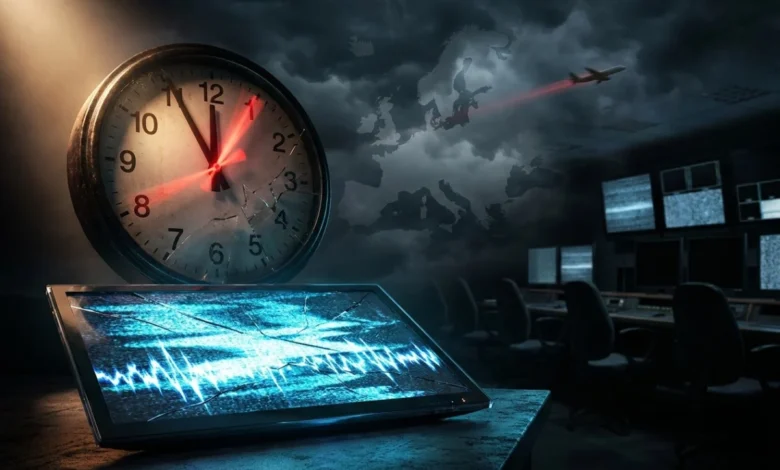
A sophisticated and widespread campaign of malicious bomb threats targeted major television broadcasters and passenger aviation networks across Europe on Friday, triggering mass evacuations, the temporary suspension of live programming, and emergency security protocols. The coordinated nature of the alerts, which reached as far as Ireland, Britain, Bulgaria, and beyond, created a climate of significant operational paralysis, though authorities later confirmed that all threats were unfounded hoaxes. No explosive devices were discovered at any of the targeted sites, and while investigations are ongoing, the incidents have raised urgent questions regarding the vulnerability of critical infrastructure to low-cost, high-impact psychological warfare.
A Chronology of the Disruptions
The cascade of alerts began in the early morning hours of Friday, with various media organizations receiving near-identical email communications. At approximately 8:33 a.m. local time, Ireland’s public service broadcaster, RTÉ, received a chilling notification claiming that an explosive device had been planted within its facilities. The message, which contained the ominous warning, "The clock is ticking," stipulated a 45-minute window before detonation.
In response, RTÉ leadership, in close consultation with An Garda Síochána (the Irish police), initiated a full-scale evacuation of the Donnybrook campus. As a result, the broadcaster was forced to suspend its regular news and current affairs programming, replacing live feeds with pre-recorded music and a standardized security notice. The disruption lasted for over three hours, during which specialized explosive ordnance disposal (EOD) teams conducted a meticulous sweep of the premises.
Simultaneously, similar threats were reported by major broadcasters across the continent, including Britain’s Sky and Bulgaria’s Nova TV. In Sofia, the evacuation of the Nova newsroom was conducted with heightened urgency, as local police cordoned off the building to conduct a thorough search. Across the continent, the atmosphere was one of extreme caution, as the media threats mirrored an ongoing series of hoax alerts that had plagued European aviation throughout the week.
The Nature of the Threats: Psychological Warfare
The emails received by the broadcasters were signed by an individual identifying as "Mikhail Andropov," a name that bears a striking resemblance to the former Soviet leader Yuri Andropov. The content of these messages suggested a broader, more aggressive agenda, characterizing the day’s events as "only the beginning." The authors claimed responsibility for the string of aviation hoaxes that had previously disrupted flights from Serbia to Finland and Spain, asserting that these actions were merely a small fraction of what awaited Europe in the near future.
Security analysts have noted that the messaging exhibits the hallmarks of a campaign designed specifically to cause maximum disruption with minimal material investment. By utilizing digital communication to force physical-world responses—such as the grounding of aircraft or the evacuation of broadcast centers—the perpetrators effectively weaponized the precautionary principle. The goal appears to be the generation of widespread fear, anxiety, and the erosion of trust in the stability of essential services.
Aviation Sector Under Siege
Before the media outlets were targeted, the aviation industry had already been reeling from a multi-day wave of false alarms. On Friday alone, the intensity of these threats escalated. Authorities reported that multiple flights to and from major European hubs, including Lisbon, Rome, Prague, and Sofia, were targeted. The situation became so critical that Hungarian fighter jets were scrambled to escort three commercial planes as a precautionary measure.
These flight disruptions involve significant economic and logistical costs. Each diversion or emergency landing requires a massive coordination effort between air traffic control, ground security, and local law enforcement. In the previous days, flights across the continent were forced into unscheduled landings, subjecting passengers to hours of uncertainty and security interrogations. Despite the severity of the interventions, every search concluded with the same result: no explosives were present.
Official Responses and Government Stance
The response from European leadership has been one of tempered concern and calls for vigilance. Irish Prime Minister Micheál Martin, speaking to RTÉ shortly after the broadcaster resumed normal operations, emphasized the difficulty of attributing these acts to a single source. "It just illustrates how relatively simple it can be to cause disruption and to undermine the normal operation of society through unconventional activities of this kind," Martin stated. He categorized the events as "a disgrace," highlighting that the primary intent was to destabilize the routine operations of society.
Director General of RTÉ, Kevin Bakhurst, expressed his frustration with the impact the threat had on the organization’s staff and its public service mandate. The sentiment across European governments is that while these threats are currently hoaxes, they represent a growing trend of "hybrid threats"—a mix of cyber-enabled intimidation and physical-world disruption that is difficult to counter using traditional defensive measures.
Broader Implications: A New Era of Vulnerability
The events of Friday serve as a grim case study in the vulnerability of modern infrastructure to digital-age harassment. Security experts point out that the barrier to entry for such disruptions is incredibly low. A single individual or a small group with access to encrypted email services can force a multinational corporation or a state entity to halt operations for hours.
This incident follows a broader pattern of instability in the European digital landscape. Over the past few weeks, there has been a noticeable increase in reports regarding cyberattacks, including ransomware attempts on supermarket chains and data breaches at various commercial entities. While it remains unclear if the bomb threats and the cyber incidents are directly linked, the cumulative effect is a palpable sense of unease.
The economic implications are also significant. When a national broadcaster goes dark or a flight is diverted, the financial losses—spanning lost advertising revenue, fuel costs, passenger compensation, and police deployment expenses—amount to millions of euros. The perpetrators, by remaining anonymous, effectively force the state to maintain a high-alert posture, which is both costly and exhausting for security services.
Investigative Challenges
As of this writing, no group has officially claimed responsibility for the campaign, and no arrests have been made. Law enforcement agencies are working to trace the origins of the emails, a task complicated by the use of obfuscation tools and the global nature of internet infrastructure. The lack of a clear motive or a specific demand—other than the desire to cause "disruption"—has led investigators to consider the possibility that the campaign is aimed at testing the response times and protocols of European emergency services.
Cooperation between international law enforcement agencies, including Europol and various national intelligence services, is ongoing. The focus is on determining whether the threats are being coordinated by a state-sponsored actor, a decentralized extremist group, or opportunistic individuals exploiting the current geopolitical climate.
Conclusion: The Need for Resilience
The events of Friday highlight the necessity for a more resilient approach to infrastructure protection. As society becomes increasingly digitized, the distinction between a cyber threat and a physical threat continues to blur. Media organizations and aviation authorities are now re-evaluating their security protocols to better distinguish between credible threats and widespread hoax campaigns without compromising the safety of their personnel or the public.
For now, the European public is urged to remain vigilant but calm. Authorities have cautioned that while the frequency of these hoaxes is concerning, the lack of any actual explosive devices suggests that the threat remains primarily psychological. As investigations continue, the focus remains on identifying the source of the "Mikhail Andropov" messages and ensuring that the institutions targeted are better equipped to handle the challenges of this evolving threat landscape. The "clock may be ticking" according to the hoaxers, but for the time being, the institutions of Europe continue to operate in the face of these unconventional and disruptive attempts to undermine their stability.