Revolutionary Bio-Gel Developed by University of Nottingham Researchers Could Enable Natural Regrowth of Human Tooth Enamel

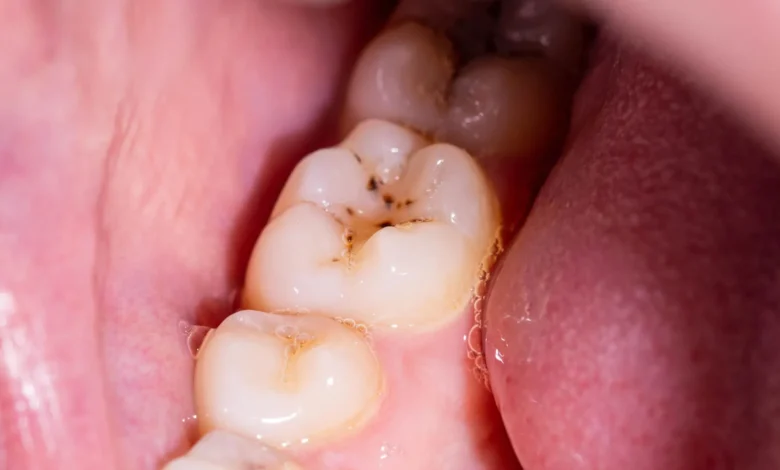
For generations, dental medicine has operated under an immutable biological rule: once human tooth enamel is lost, it is gone forever. Unlike bones, skin, and liver tissue, fully matured tooth enamel contains no living cells, rendering it completely incapable of biological self-repair. When acids from food and bacteria erode this hard, protective outer shell, dentists have historically relied on synthetic interventions—such as composite resins, metal amalgams, ceramic crowns, and fluoride varnishes—to patch, cover, or slow down further deterioration.
However, a groundbreaking scientific breakthrough achieved by a multidisciplinary team at the University of Nottingham could fundamentally rewrite the rules of preventative and restorative dentistry. Researchers from the institution’s School of Pharmacy and the Department of Chemical and Environmental Engineering have successfully engineered an advanced, fluoride-free bio-gel capable of orchestrating the actual regrowth of human tooth enamel. Published in the peer-reviewed journal Nature Communications, this discovery transitions the focus of modern dental care from passive protection to true biological regeneration.
The Genesis of the Innovation: Mimicking Childhood Biology
To understand the significance of the Nottingham team’s achievement, one must examine the complex nature of tooth enamel itself. Enamel is the hardest and most mineralized substance in the human body, composed almost entirely of hydroxyapatite crystals tightly packed into a highly ordered, intricate architecture. This specialized structural arrangement gives teeth their exceptional resilience against extreme physical pressures, chemical wear from acidic foods, and thermal shocks from hot and cold beverages.
When human teeth initially develop during early childhood, specialized biological proteins act as molecular architects, guiding the precise deposition and alignment of mineral crystals to form this protective armor. Once tooth eruption is complete, these cells die off, leaving the adult tooth without the biological machinery required to rebuild its outer shield.
The University of Nottingham researchers looked directly to this foundational developmental process for inspiration. Led by Dr. Abshar Hasan, a postdoctoral fellow and lead author of the study, alongside Professor Alvaro Mata, Chair in Biomedical Engineering and Biomaterials, the team engineered a synthetic material derived from specialized proteins. This bio-gel is designed to mimic the exact biochemical behavior of the proteins responsible for natural enamel formation during embryogenesis and early growth.
Mechanisms of Action: How Epitaxial Mineralization Works
One of the most compelling aspects of the newly developed technology is its clinical simplicity. Rather than requiring invasive surgical procedures or complex laboratory cultivation, the gel is engineered for direct application by dental professionals. The administration procedure closely mirrors routine topical fluoride treatments already standard in dental offices worldwide, potentially ensuring seamless integration into existing dental practices.
Crucially, the formulation contains zero fluoride. While fluoride has been a cornerstone of public dental health for decades by helping to remineralize weakened enamel and prevent cavities, it possesses a fundamental limitation: it can only harden existing mineral structures or facilitate the deposition of disorganized mineral layers. It cannot recreate the intricate, crystalline architecture characteristic of pristine natural enamel.
The Nottingham bio-gel bypasses this limitation through a sophisticated process known to scientists as epitaxial mineralization. When applied to a compromised tooth surface, the protein-based gel forms a remarkably thin yet durable coating that immediately penetrates microscopic fissures, cracks, and areas of mineral depletion.
Once in place, this coating acts as a biochemical scaffold. It actively recruits calcium and phosphate ions—two essential mineral components naturally circulating within human saliva. Rather than allowing these minerals to precipitate randomly, the gel organizes them into new crystals that systematically grow in precise alignment with the underlying, surviving enamel structure.
This structural continuity is the linchpin of the technology. By compelling new mineral growth to integrate seamlessly with the original tooth surface, the regenerated material achieves mechanical and structural properties virtually indistinguishable from healthy natural enamel. The resulting tissue does not merely sit on top of the tooth as a temporary patch; it becomes a structural extension of the tooth itself.
Addressing the Agony of Exposed Dentin and Tooth Sensitivity
Beyond restoring damaged enamel surfaces, the research team discovered that the bio-gel holds profound potential for treating exposed dentine, a condition frequently referred to as dentin in the United States.
Dentin is the dense, porous layer of tissue that lies directly beneath the enamel. Unlike enamel, dentin is significantly softer and contains microscopic tubular channels that extend directly toward the nerve center of the tooth. When gums recede due to periodontal disease, aging, or aggressive brushing, or when the overlying enamel wears away, these dentinal tubules become exposed to the oral environment.
When external stimuli—such as hot coffee, ice water, sweet foods, or acidic citrus fruits—come into contact with exposed dentin, fluid within the microscopic tubules shifts rapidly, stimulating the nerves and triggering sharp, often debilitating pain known as tooth sensitivity. Furthermore, exposed dentin is far more vulnerable to rapid bacterial decay than enamel.
Laboratory tests revealed that the Nottingham bio-gel can be applied directly to exposed dentin, successfully encouraging the formation of an enamel-like mineral barrier over the vulnerable tissue. This protective layer effectively seals the open tubules, neutralizing tooth sensitivity at its source. Additionally, the researchers noted that this mineralized interface could significantly improve the bonding strength of conventional dental restorations, such as fillings, bonding agents, and crowns, thereby increasing the longevity of standard dental procedures.
Rigorous Testing Against Real-World Stressors
To transition from a promising laboratory concept to a viable clinical treatment, the research team subjected their regenerated enamel to rigorous mechanical testing designed to simulate the harsh, unrelenting environment of the human oral cavity.
Teeth endure immense daily abuse. They are subjected to continuous compressive forces during chewing, abrasive friction from daily toothbrushing, and repeated chemical challenges from acidic dietary components such as sodas, wines, and vinegars.
The Nottingham team tested the regenerated material under simulated real-life conditions, measuring its hardness, elasticity, and wear resistance. The outcomes exceeded expectations. The regenerated enamel displayed mechanical strength and durability profiles directly comparable to healthy, native human enamel.
Expounding on the significance of these findings, lead author Dr. Abshar Hasan stated:
"Dental enamel has a unique structure, which gives enamel its remarkable properties that protect our teeth throughout life against physical, chemical, and thermal insults. When our material is applied to demineralized or eroded enamel, or exposed dentine, the material promotes the growth of crystals in an integrated and organized manner, recovering the architecture of our natural healthy enamel. We have tested the mechanical properties of these regenerated tissues under conditions simulating ‘real-life situations’ such as tooth brushing, chewing, and exposure to acidic foods, and found that the regenerated enamel behaves just like healthy enamel."
The Global Burden of Dental Disease and Broader Health Implications
The potential public health ramifications of this discovery are monumental. According to epidemiological data from the World Health Organization (WHO), oral diseases—predominantly dental caries, or cavities—affect nearly half of the global population, making them the most prevalent non-communicable diseases worldwide.
Enamel erosion and subsequent tooth decay are not merely cosmetic issues or sources of localized discomfort. Left untreated, decaying teeth can lead to severe systemic infections, chronic pain, tooth loss, and nutritional deficiencies stemming from an inability to chew properly. Furthermore, a growing body of clinical research links poor oral hygiene and chronic oral inflammation to broader systemic health conditions, including cardiovascular disease, type 2 diabetes, and adverse pregnancy outcomes.
Despite the massive societal burden of dental decay, modern therapeutic options have remained largely palliative or purely restorative. Dentists have long been limited to drilling away decayed tissue and filling the void with foreign materials that eventually degrade, fail, and require replacement over a patient’s lifetime. The ability to biologically regenerate lost tooth structure offers an entirely new paradigm in healthcare, shifting the medical model from management and repair to true restoration.
From Laboratory Bench to Commercial Reality: The Timeline Ahead
Recognizing the immense commercial and clinical potential of their discovery, the research team at the University of Nottingham has moved rapidly to bridge the gap between academic research and commercial healthcare delivery.
The innovation has already been transitioned into the private sector through the establishment of a University of Nottingham spinout company named Mintech-Bio. This startup has been tasked with scaling up the manufacturing process, securing regulatory approvals, and guiding the bio-gel through the necessary clinical validation stages required for widespread medical adoption.
Professor Alvaro Mata, who spearheaded the biomedical engineering and biomaterials aspects of the study, emphasized the team’s intentional focus on practical, scalable translation:
"We are very excited because the technology has been designed with the clinician and patient in mind. It is safe, can be easily and rapidly applied, and it is scalable. Also, the technology is versatile, which opens the opportunity to be translated into multiple types of products to help patients of all ages suffering from a variety of dental problems associated with loss of enamel and exposed dentine. We have started this process with our start-up company Mintech-Bio and hope to have a first product out by next year; this innovation could soon be helping patients worldwide."
According to the commercialization timeline set forth by Mintech-Bio, the company aims to bring an initial consumer or clinical-grade product to market as early as next year, subject to regulatory clearances. If successful, this rapid deployment strategy could see the bio-gel entering dental surgeries and over-the-counter therapeutic lines in record time for a biotechnological innovation of this magnitude.
Future Outlook and Paradigm Shift in Dental Care
While the laboratory results and mechanical testing data published in Nature Communications are exceptionally promising, standard clinical development protocols dictate that extensive human clinical trials must follow before the treatment becomes a universally established standard of care. Researchers must confirm long-term biocompatibility, sustained adhesion under dynamic physiological conditions, and consistent efficacy across diverse patient demographics.
Nevertheless, the prospect of biologically regrowing lost tooth enamel marks a watershed moment in the history of dentistry. By unlocking the capacity to recreate nature’s hardest substance through bio-inspired chemistry, science is moving closer to a future where tooth loss from decay and erosion may become entirely preventable, fundamentally transforming how humanity approaches oral health and hygiene.
Related posts: