The US Food and Drug Administration (FDA) has officially granted 510(k) clearance to the Sleep Analysis Module (SAM), a sophisticated artificial intelligence-driven software developed by Neurotronics, a subsidiary of the global medical technology firm Nihon Kohden. This regulatory milestone marks a significant evolution in the field of sleep medicine, moving away from cumbersome, multi-sensor hardware requirements toward streamlined, software-centric diagnostics that leverage existing data streams to provide more accurate clinical insights.
Bridging the Gap in Sleep Diagnostics
For decades, the gold standard for diagnosing sleep disorders, particularly obstructive sleep apnea (OSA), has been the in-lab polysomnography (PSG) study. PSG requires the simultaneous recording of electroencephalography (EEG) to monitor brain activity, electrooculography (EOG) to track eye movement, and electromyography (EMG) to measure muscle activity. While these signals are highly effective at distinguishing between sleep and wakefulness, they require specialized equipment, patient wires, and supervised clinical environments.
In recent years, the industry has shifted toward Home Sleep Apnea Testing (HSAT). While convenient and cost-effective, many entry-level HSAT devices have historically lacked the ability to measure actual sleep duration. Instead, they rely on total recording time—the duration from the moment the patient begins the recording to the moment they turn it off. This approach often introduces significant inaccuracies, as it includes periods where the patient is awake, restless, or struggling to fall asleep. By failing to isolate actual sleep time, the apnea-hypopnea index (AHI)—a key metric for measuring sleep apnea severity—can be artificially deflated, potentially leading to misdiagnosis or an underestimation of the patient’s condition.
The introduction of the Sleep Analysis Module by Neurotronics addresses this critical deficiency. By utilizing photoplethysmography (PPG) signals—the same data used by pulse oximeters to measure blood oxygen saturation—SAM applies advanced algorithms to estimate total sleep time (TST). This capability allows clinicians to calculate the AHI based on actual sleep duration rather than total recording time, providing a far more accurate representation of the patient’s physiological state during the night.
A Chronology of Innovation
The development of SAM represents the culmination of years of rigorous engineering, clinical validation, and regulatory navigation. The trajectory of this technology can be viewed as part of a broader industry-wide push toward "Software as a Medical Device" (SaMD).
- Foundational Research: Initial efforts focused on identifying non-invasive biomarkers within the pulse oximetry signal that correlate with sleep-wake cycles. Researchers discovered that fluctuations in peripheral arterial tone and heart rate variability, detectable via PPG, could serve as proxies for sleep architecture.
- Clinical Validation: Neurotronics undertook extensive testing to compare SAM’s estimations against traditional PSG benchmarks. The goal was to ensure that the AI-driven software maintained a level of sensitivity and specificity that met the stringent requirements of the FDA.
- Regulatory Submission: Following the collection of validation data, the company submitted a 510(k) notification to the FDA. The 510(k) pathway is utilized to demonstrate that a new medical device is "substantially equivalent" to a legally marketed predicate device.
- FDA Clearance: In the current quarter, the FDA formally cleared SAM for clinical use, recognizing its ability to assist in the evaluation of sleep disorders when used under the supervision of a healthcare professional.
Technical Implications and Data Accuracy
The core innovation of the SAM lies in its algorithmic capacity to extract actionable data from existing hardware. Pulse oximetry is already a standard component of almost all home sleep testing kits because it is essential for monitoring oxygen desaturation events. By "piggybacking" on this established data channel, Neurotronics eliminates the need for patients to attach additional sensors or monitors.
From a clinical data perspective, the implications are profound. In a standard HSAT scenario, a patient might record for eight hours but only sleep for six. If the device uses total recording time, the respiratory events are divided by eight, lowering the AHI score. If the same data is analyzed using SAM, the events are divided by the six hours of actual sleep, yielding a more accurate, and often higher, AHI score. This higher score can be the difference between a diagnosis of mild sleep apnea and a more severe classification that requires immediate clinical intervention, such as CPAP therapy.
Official Perspectives on the Milestone
Jake Johnson, president and CEO of Neurotronics, LLC, highlighted the strategic importance of this clearance during a recent press release. "FDA clearance of the Sleep Analysis Module is a defining milestone for Neurotronics," Johnson stated. "SAM demonstrates how validated software can provide new clinical information from physiological signals already being collected, without requiring additional hardware. This achievement reflects years of collaboration across engineering, clinical validation, quality, and regulatory disciplines and establishes a foundation for continued innovation in software-driven medical technology."
The industry reaction to this development has been largely positive, with experts in sleep medicine noting that the integration of AI into diagnostic software is essential for scaling sleep services. As the prevalence of sleep disorders grows globally, the ability to perform high-fidelity testing in the home environment is expected to reduce the burden on sleep labs and improve patient compliance.
Integration and Implementation
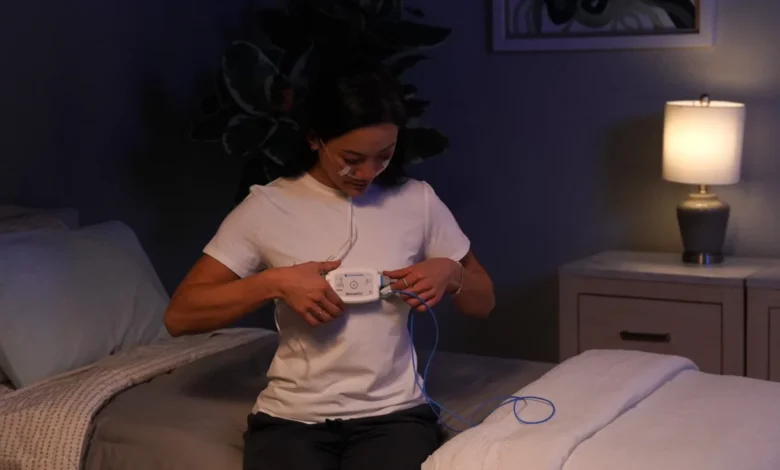
The Sleep Analysis Module is designed to be fully integrated into Neurotronics’ existing Polysmith sleep diagnostic software. Initially, the module will support the NomadAir home sleep apnea testing solution. This ecosystem approach ensures that healthcare providers do not need to overhaul their existing diagnostic workflows. Instead, the SAM acts as an add-on layer that processes the raw data from the NomadAir device, automatically outputting the estimated TST for the clinician’s review.
For the clinician, the process is largely automated. After the patient completes their home study, the data is uploaded to the Polysmith software. The software then runs the SAM algorithm to calculate the estimated sleep duration. The clinician retains full oversight, as the system is explicitly categorized as a prescription-only device intended for use under professional supervision.
Broader Impact on the Healthcare Landscape
The FDA’s clearance of SAM is a bellwether for the future of digital health. It underscores a regulatory trend toward approving intelligent software that enhances the utility of existing diagnostic infrastructure. By focusing on software improvements, manufacturers can iterate faster than they could with physical hardware, allowing for more frequent updates and the integration of machine learning improvements as they become available.
Furthermore, this technology addresses a significant barrier to entry for many patients: the discomfort and complexity of traditional sleep studies. By reducing the number of sensors and simplifying the testing process, companies like Neurotronics are likely to see an increase in the adoption of home sleep testing, potentially narrowing the vast "diagnosis gap" that exists in sleep medicine, where millions of people remain unaware of their sleep apnea due to the inconvenience of testing.
Clinical Limitations and Ethical Considerations
While the SAM is a leap forward, it is important to contextualize its role within the broader clinical framework. The FDA mandate is clear: SAM is not intended for use when full sleep staging signals (EEG, EOG, EMG) are available, nor is it meant to serve as the sole or primary basis for a definitive diagnosis. It is a decision-support tool.
Clinicians must continue to integrate the estimated TST provided by SAM with other clinical information, such as patient history, physical examination, and subjective sleep reports. The reliance on AI also brings the responsibility of algorithmic transparency. As AI-based diagnostics become more prevalent, the medical community will need to maintain a rigorous standard for data privacy, bias mitigation in algorithms, and continuous post-market surveillance to ensure that the software remains as effective in real-world, diverse patient populations as it was during the initial clinical trials.
Conclusion
The clearance of the Neurotronics Sleep Analysis Module marks a pivotal moment in the modernization of sleep diagnostics. By successfully extracting meaningful sleep metrics from the ubiquitous pulse oximetry signal, the company has effectively combined convenience with clinical rigor. As this technology integrates into the NomadAir ecosystem and beyond, it stands to set a new standard for how clinicians approach the diagnostic pathway for sleep-disordered breathing, ultimately improving patient outcomes through more precise, data-driven assessments conducted in the comfort of the home. As the landscape of medical technology continues to evolve, the shift toward software-based intelligence will undoubtedly remain a cornerstone of diagnostic advancement.