Deep Yin Yoga Sequence Offers Targeted Relief for Chronic Quad and Hip Flexor Tightness

Modern sedentary lifestyles, characterized by prolonged periods of sitting at desks, driving, and a general lack of varied movement, have precipitated an epidemic of musculoskeletal tightness. Among the most commonly affected areas are the quadriceps and hip flexors—specifically the psoas muscle, frequently referred to in somatic circles as the "muscle of the soul." When these muscle groups remain chronically contracted, they pull the pelvis into an anterior tilt, often resulting in lower back pain, postural distortions, and restricted range of motion. To combat this widespread physical ailment, wellness practitioners and physical therapists increasingly recommend restorative mobility practices, with advanced yin yoga emerging as a premier therapeutic modality for deep tissue remodeling.
Unlike dynamic forms of physical conditioning, such as vinyasa or power yoga, which rely on muscular engagement to build strength and generate heat, yin yoga operates on entirely different physiological principles. Practitioners eschew muscular effort entirely, allowing gravity and passive resistance to guide the body into specific shapes. By keeping the target muscles relaxed and inactive, the intensity of the stretch transfers past superficial tissue layers and deep into the connective tissues—including fascia, tendons, ligaments, and joint capsules. Because connective tissue possesses a dense, fibrous structure, it requires prolonged, low-load stress combined with stillness to initiate a viscoelastic response, making the traditional three-to-five-minute hold an essential protocol for structural release.
Physiological Mechanisms of Connective Tissue Remodeling
Sports scientists and orthopedic specialists note that while skeletal muscle tissue responds quickly to short bouts of stretching and dynamic movement, connective tissue behaves more like a non-Newtonian fluid. Rapid or forceful stretching triggers the myotatic reflex, causing muscles to contract defensively. In contrast, a slow, sustained approach practiced in yin yoga coaxes the collagen fibers within fascia to gradually lengthen and reorganize.
This deep release mechanism relies heavily on finding what practitioners term "the edge." Rather than pushing into the realm of sharp pain—which registers as a 9 or 10 on a standard perceived exertion and discomfort scale—students are instructed to settle into a sensation rated at a manageable 4 or 5. Staying at this sustainable threshold allows the nervous system to feel safe, downregulating the sympathetic fight-or-flight response and encouraging the parasympathetic nervous system to take over. Consequently, slow, diaphragmatic breathing acts as a crucial catalyst, signaling to the body that it is safe to let go of deeply ingrained tension patterns.
Essential Props and Safety Protocols for Advanced Practice
Because these intense yin yoga shapes place significant stress on the knees, lower back, and hips, proper preparation and the use of supportive props are vital for injury prevention. Instructors emphasize that this specialized sequence is not recommended for absolute beginners, who should instead build foundational mobility through gentler restorative postures. For those ready to explore deep quad and hip flexor work, an array of props—including a yoga mat, a folded blanket for knee cushioning, two blocks or a bolster for postural elevation, and a yoga strap or belt—should be kept within arm’s reach to bridge the gap between body limitations and geometric alignment.
Chronological Sequence of Stretches for Maximum Release
To systematically address tension without shocking the nervous system, a structured sequence moves from prone postures to complex reclined variations, dedicating several minutes of stillness to each shape.
Centering and Assessment
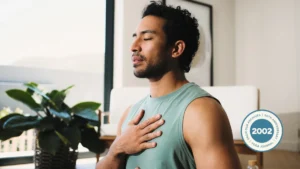
The practice begins with a grounded seated meditation designed to quiet the mind and heighten internal interoceptive awareness. Practitioners close their eyes, rest their hands gently on their knees, and take slow, deliberate breaths through the nose. During this phase, attention is directed specifically toward the quads, hip flexors, and lower back to inventory existing tension, establishing a baseline against which post-practice relief can be measured.
Half Bow Pose
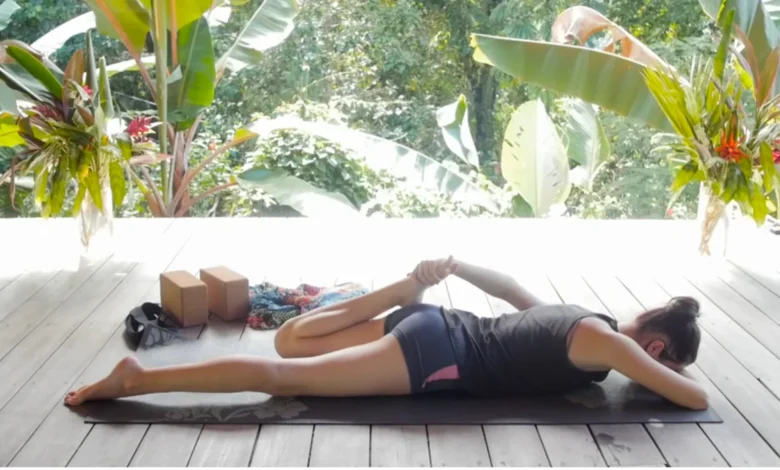
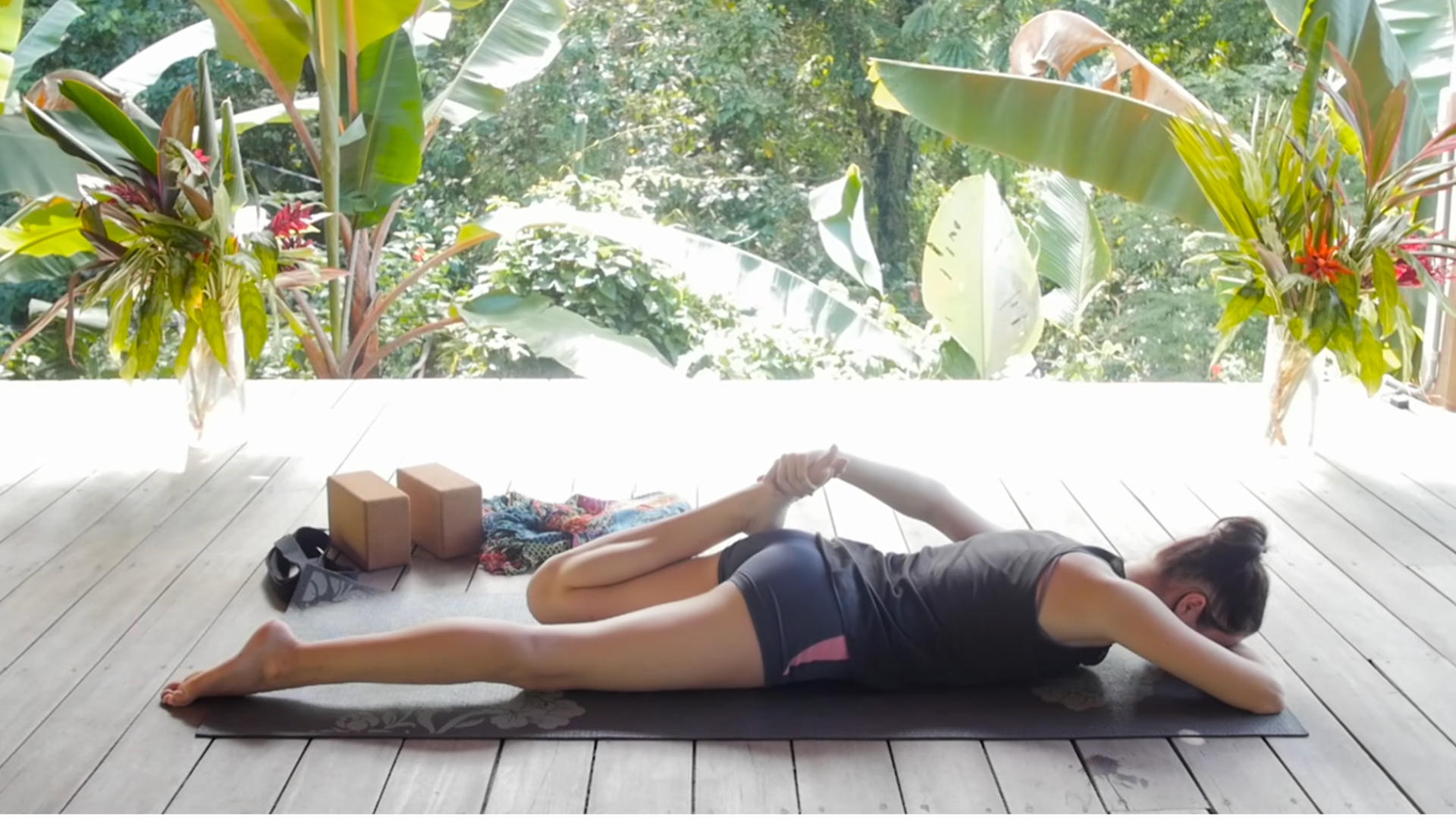
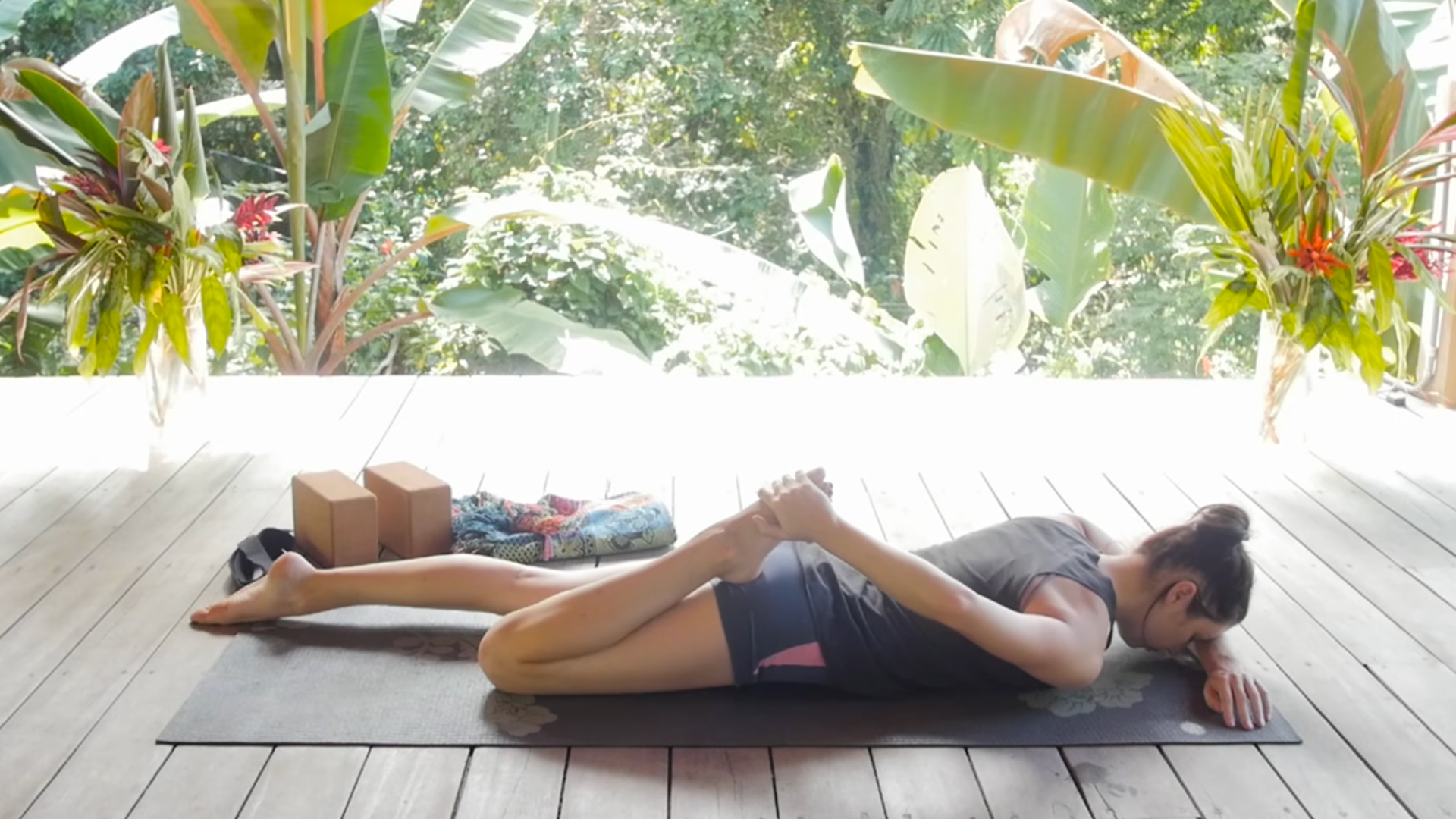
Transitioning to the prone position, practitioners lie flat on their bellies with feet hip-distance apart to execute Half Bow Pose. By propping the upper body on one forearm and bending the opposite knee, the practitioner draws the heel toward the glutes to isolate the quadriceps. Maintaining proper anatomical alignment—specifically ensuring the bent knee does not splay outward—is critical for targeting the correct muscle fibers. For individuals with restricted range of motion, looping a yoga strap around the ankle provides the necessary extension. Lengthening the tailbone toward the mat shifts the focus squarely onto the front of the thigh, where the pose is held in stillness for three to five minutes before repeating on the opposite side.
Lizard or Twisted Lizard With a Quad Stretch
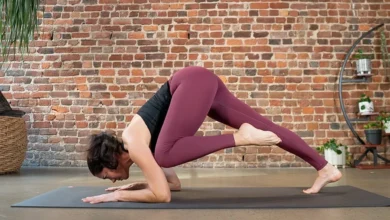
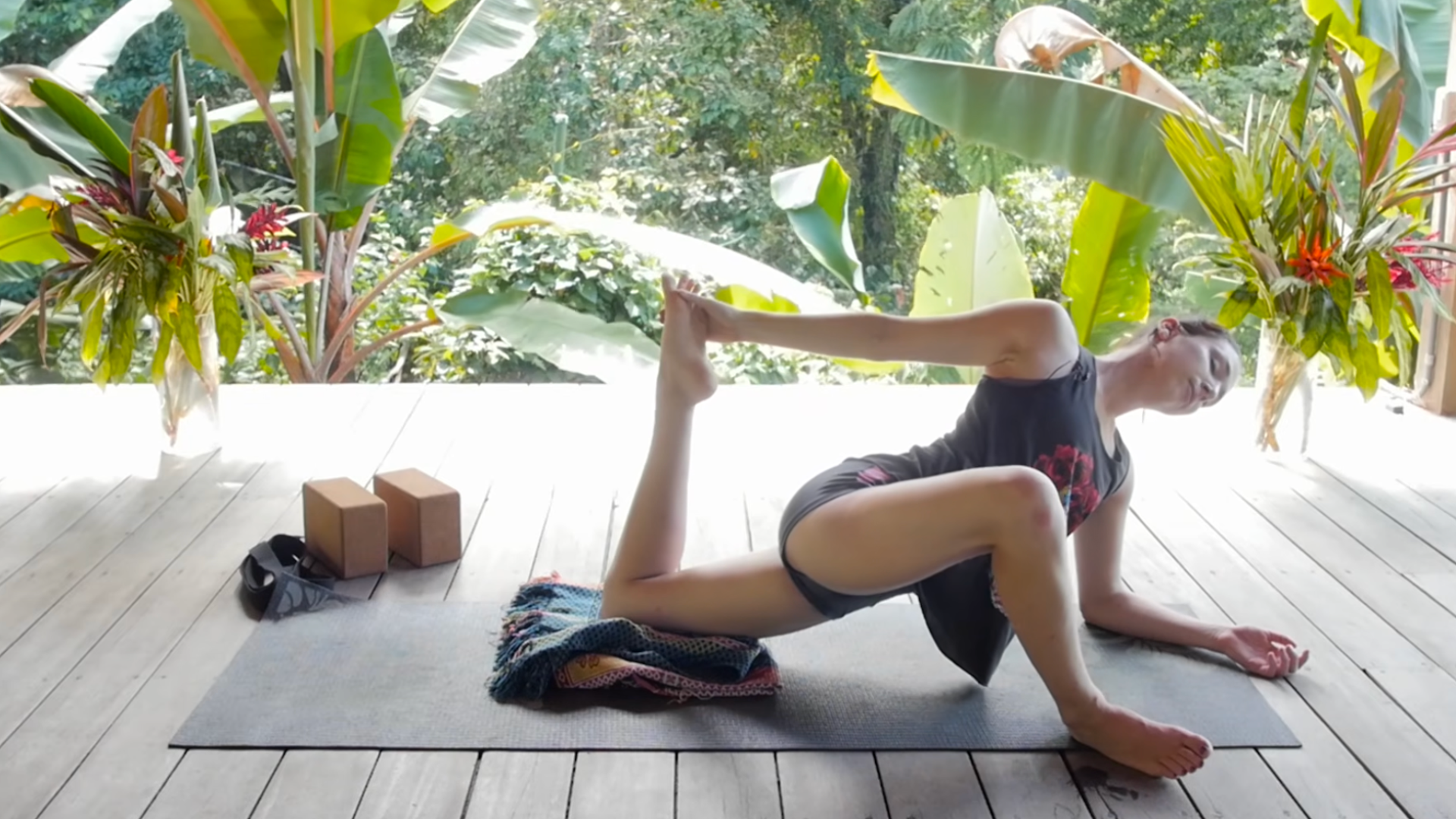
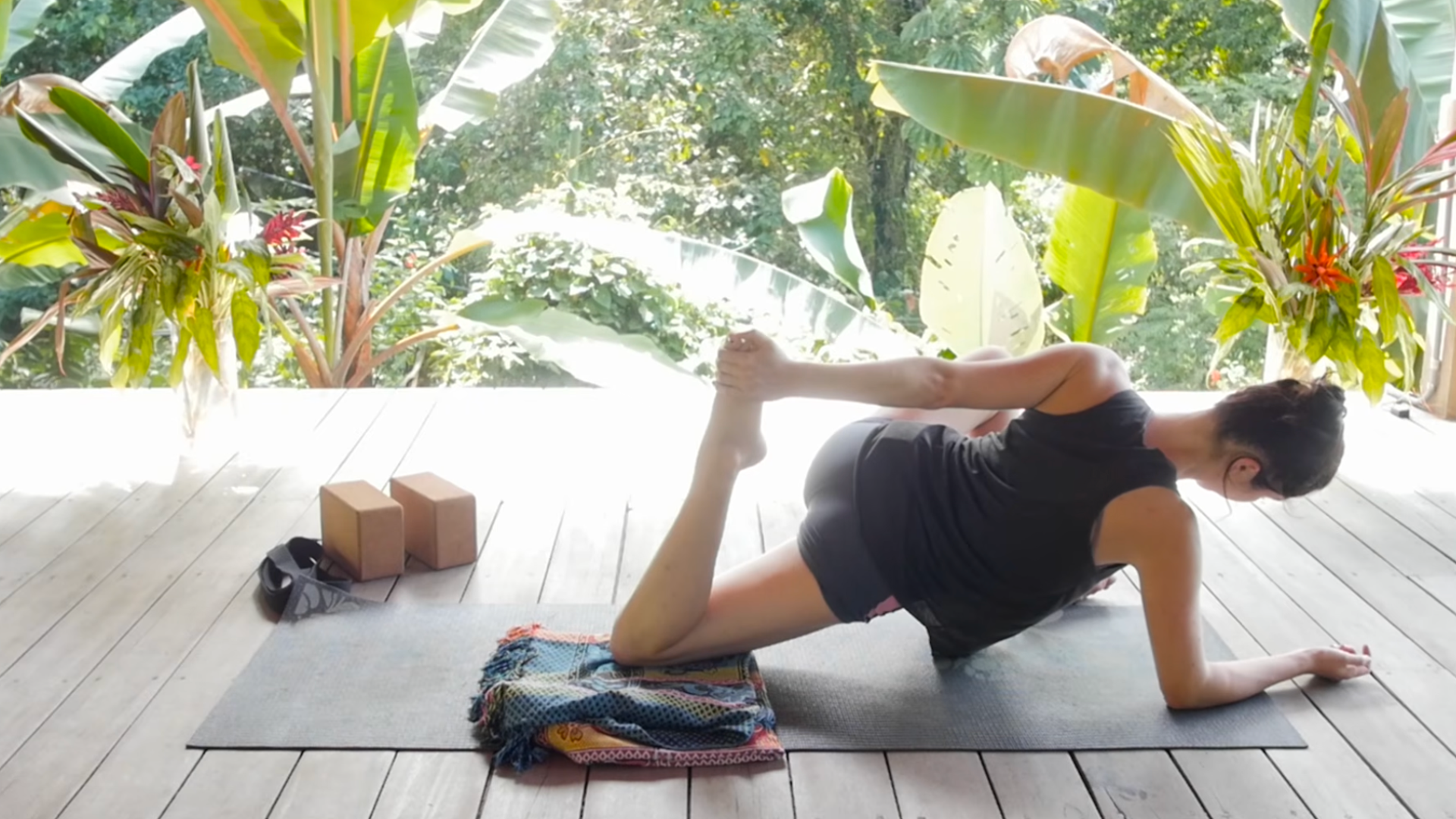
Addressing both the hip flexors and the outer hips, this dynamic variation begins in a low lunge with the back knee padded by a folded blanket. By stepping the front foot to the outer edge of the mat and optionally rolling onto the outer blade of the foot, the hip joint opens laterally. Reaching the matching hand backward to capture the rear foot introduces a potent quad and hip flexor stretch. The head and neck are allowed to hang heavy, facilitating a release of upper body tension while the lower body undergoes deep fascial remodeling.
Reclined Hero Pose
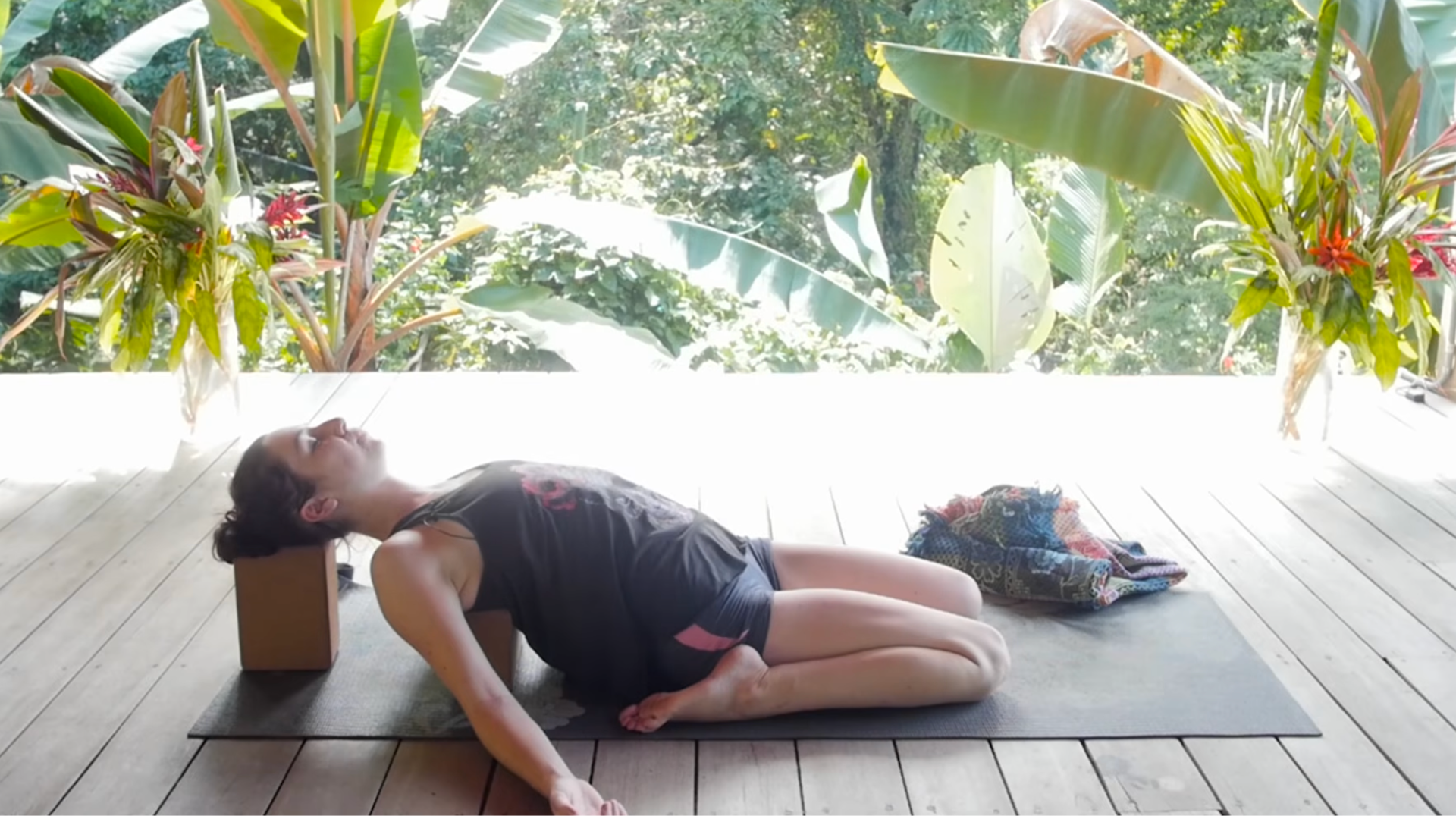
Reclined Hero Pose offers a symmetrical and profound opening for both legs simultaneously. Practitioners position their shins alongside their thighs with ankles resting to the outer edges of the hips, taking care to press the tops of the feet into the mat. To accommodate varying degrees of knee and lower back flexibility, practitioners utilize blocks, bolsters, or folded blankets placed beneath the hips or upper back. This tiered support system allows individuals to recline onto their forearms or all the way to the floor without inducing joint pinch or acute pain.
Cat Pulling Its Tail
As a final asymmetrical restorative shape, Cat Pulling Its Tail combines a spinal twist with a deep quad stretch. Lying on the back, the practitioner draws one knee across the body while reaching back to catch the opposite foot, effectively neutralizing rotational tension in the spine while opening the front of the thigh and the iliotibial (IT) band. The stabilization of the collarbones toward the ceiling ensures balanced thoracic mobility.
Integration and Broader Health Implications
The sequence concludes with an extended period in Savasana, or Corpse Pose, allowing the physical body to integrate the structural changes initiated during the practice. As practitioners return to natural breathing patterns and transition back to a seated position, many report a tangible reduction in pelvic asymmetry and diminished lower back discomfort.
From a broader ergonomic and rehabilitative perspective, incorporating sustained yin yoga protocols into weekly routines offers significant prophylactic benefits for populations vulnerable to repetitive strain injuries. By systematically addressing the fascial restrictions of the quadriceps and psoas, individuals can counteract the deleterious postural adaptations of modern life, restoring natural alignment, improving athletic performance, and fostering long-term musculoskeletal resilience.