The continuous positive airway pressure (CPAP) machine has long been the gold standard for treating obstructive sleep apnea (OSA), yet its effectiveness is fundamentally limited by a persistent clinical challenge: patient adherence. While technological advancements have rendered CPAP devices quieter and more comfortable, a significant portion of the patient population continues to struggle with consistent nightly use. A new study conducted by the telehealth firm Allermi sheds light on a frequently overlooked barrier to successful therapy—nasal congestion—and suggests that addressing this physical obstacle may be the key to unlocking better long-term compliance.
The Scope of the Adherence Crisis
Obstructive sleep apnea affects millions of individuals worldwide, characterized by repetitive collapses of the upper airway during sleep. CPAP therapy works by providing a steady stream of pressurized air to keep these airways open. However, the efficacy of this treatment is entirely dependent on the patient’s willingness to wear a mask for the duration of the night.
Clinical data has historically suggested that adherence rates for CPAP therapy hover between 50% and 80%, depending on the criteria used to define "use." When patients fail to use their machines for at least four hours per night for 70% of nights—the standard metric for compliance—they remain at elevated risk for cardiovascular events, stroke, diabetes, and severe daytime fatigue.
The survey conducted by Allermi, which polled 112 of its own customers, highlights that the "human element" of nasal health is a primary driver of this nonadherence. Among the respondents, a staggering 80% reported that nasal congestion made the physical act of wearing a mask significantly more difficult. Perhaps most alarmingly, 56% of those surveyed admitted that their congestion was so disruptive that they had actively contemplated abandoning their CPAP therapy altogether before seeking an alternative solution.
The Anatomy of Nasal Obstruction in Sleep Medicine
In the broader context of sleep medicine, the role of the nose is often relegated to a secondary concern compared to the pharyngeal airway. Traditional diagnostic and treatment models have historically prioritized the soft palate and the base of the tongue as the primary sites of collapse in OSA patients. However, current research is shifting toward a more holistic view of the upper airway.
Nasal obstruction, whether caused by chronic rhinitis, septal deviation, or inflammation, significantly increases nasal resistance. When a patient is required to wear a CPAP mask—which often involves a nasal or nasal-pillow interface—any underlying congestion creates a sensation of "air hunger" or suffocation. This leads to mouth breathing, which can compromise the seal of the mask, cause dry mouth, and ultimately result in the patient removing the mask in their sleep or refusing to put it on the following night.
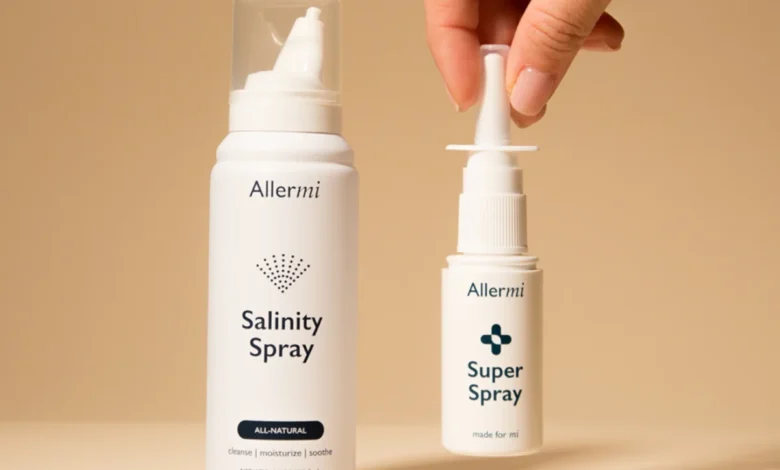
The survey results from late August and early September 2026 provide a snapshot of how personalized nasal therapy can intervene in this cycle. By providing a targeted, prescription-based nasal spray designed to manage inflammation and congestion, patients reported a measurable shift in their tolerance for CPAP. According to the data, these users experienced a higher degree of comfort, allowing them to maintain the nightly routine required for therapeutic success.
Chronology of the Patient Experience
The survey, conducted between August 28 and September 2, 2026, gathered retrospective data from patients who had integrated Allermi’s personalized nasal spray into their existing CPAP regimens. The findings offer a chronological look at the "before and after" of their treatment journey:
- Pre-Intervention Phase: Patients reported chronic discomfort, frustration with mask fit, and a psychological desire to cease therapy due to the physical sensations of congestion.
- Intervention Phase: Participants began using a personalized nasal spray formula aimed at reducing mucosal inflammation and opening the nasal passages.
- Outcome Phase: Following the introduction of the spray, the majority of respondents noted a decrease in the sensation of airway resistance, a better seal with their CPAP masks, and an increase in the number of hours they were able to keep the mask on during sleep.
While these findings are based on self-reported data and do not constitute a double-blinded clinical trial, they mirror observations made by clinicians who specialize in the intersection of rhinology and sleep medicine.
Expert Perspectives on Nasal Health
The medical community is increasingly acknowledging that nasal health is a critical component of successful CPAP therapy. Dr. Shuba Iyengar, chief medical officer and co-founder of Allermi, emphasizes that the patient’s own feedback is the most reliable indicator of treatment success.
"Nasal congestion is one of the most common complaints we hear from patients who use CPAP, and it is rarely treated as part of the therapy itself," says Dr. Iyengar. "When patients tell us in their own words that they can finally keep the mask on, that is a signal worth taking seriously, and it is why we are investing in more research with sleep medicine partners."
Dr. Rafael Pelayo of the Stanford Sleep Medicine Center echoes this sentiment, noting that the clinical training paradigm has evolved significantly over the past few decades. "When I first started my career in sleep medicine, I did not appreciate the importance of nasal breathing," Dr. Pelayo admits. "The early clinical teaching focused more on the soft palate and base of the tongue. But gradually I began to appreciate more the importance for my sleep apnea patients of having open nasal passages."
Implications for Future Sleep Therapy
The implications of these findings for the sleep medicine industry are twofold. First, it underscores the need for a multidisciplinary approach to OSA treatment. Instead of viewing CPAP as an isolated mechanical solution, clinicians may need to integrate nasal health management—ranging from saline irrigation to prescription anti-inflammatories—as a standard part of the patient onboarding process.
Second, the data suggests that "personalization" in medical care is yielding tangible improvements in patient behavior. By tailoring a nasal spray to the specific needs of an individual patient, rather than relying on a "one-size-fits-all" over-the-counter decongestant, patients are more likely to find relief that is sustainable over the long term.
However, researchers caution that while nasal spray can be a helpful adjunct, it should not replace comprehensive sleep evaluations. Patients suffering from chronic congestion should consult with an otolaryngologist or a sleep specialist to rule out structural issues, such as nasal polyps or significant septal deviations, which may require surgical or procedural intervention beyond pharmaceutical management.
Moving Toward Higher Adherence Standards
The path toward higher CPAP adherence is rarely a simple one. It requires addressing the complex interplay between the machine, the mask, the environment, and the patient’s own anatomy. As the medical industry looks to move beyond current adherence plateaus, studies like this highlight that the solution may lie in the "small" details.
By prioritizing nasal patency, clinicians may be able to significantly reduce the rate of therapy abandonment. For the patient, the ability to breathe through the nose while using a CPAP machine represents a shift from "enduring" therapy to "accepting" it. As further research continues, the integration of nasal health into the standard sleep apnea care model could prove to be one of the most effective strategies for improving the health outcomes of millions currently struggling with sleep-disordered breathing.
In conclusion, while the Allermi survey is a limited, self-reported dataset, its findings provide a strong impetus for larger-scale clinical investigations into the efficacy of nasal-centric treatments for CPAP users. As the landscape of sleep medicine continues to prioritize patient-centered care, the recognition of nasal congestion as a primary, treatable barrier will likely become a cornerstone of future clinical guidelines, ultimately leading to higher adherence, better sleep quality, and improved long-term health for the millions of patients relying on CPAP therapy.
Related posts: