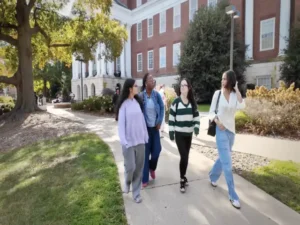
The Courage to Expand Our Circles at Bowie State University & University of Maryland

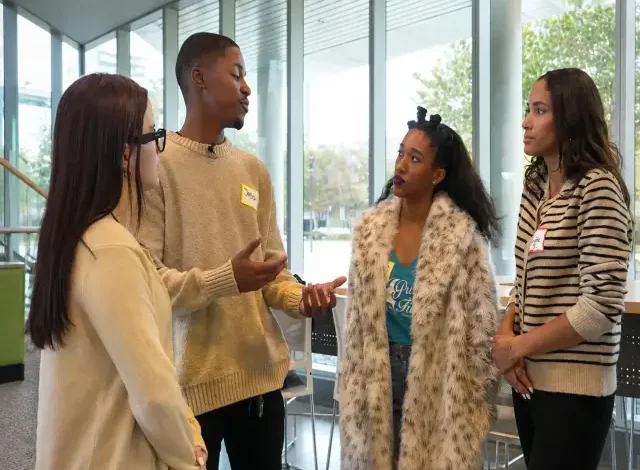
The Context of Campus Polarization
In the current academic climate, the challenge of fostering cross-cultural competence has never been more critical. Universities serve as microcosms of the broader national landscape, where shifting demographics and ideological tensions often lead to self-segregation within student bodies. Research from the Greater Good Science Center indicates that when students remain within homogeneous social bubbles, they are less likely to develop the cognitive flexibility necessary for democratic participation. By bringing together students from BSU and UMD, this initiative aims to disrupt these patterns, providing a structured environment where participants can confront their implicit biases and explore the lived experiences of their peers.
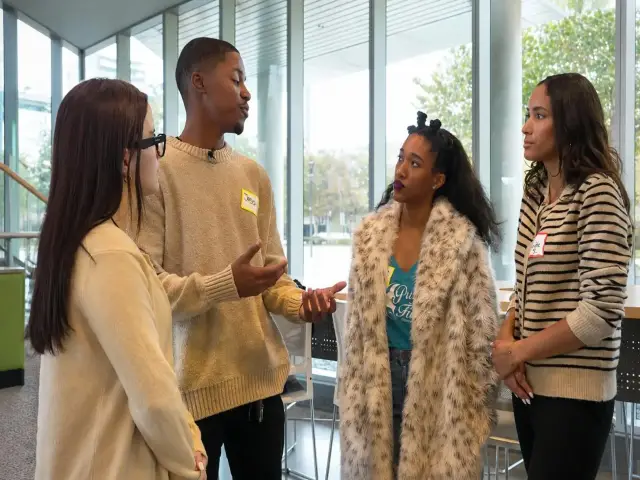
The collaboration is rooted in the "contact hypothesis," a psychological framework which suggests that under specific conditions—such as equal status, common goals, and institutional support—intergroup contact can effectively reduce prejudice. By facilitating sessions where students engage in deep, meaningful conversations rather than superficial exchanges, the program creators are attempting to move beyond performative diversity initiatives toward substantive relational growth.
A Chronology of Collaboration
The partnership between Bowie State and the University of Maryland has evolved over several months, marked by a series of workshops, facilitated discussions, and collaborative project-based learning.
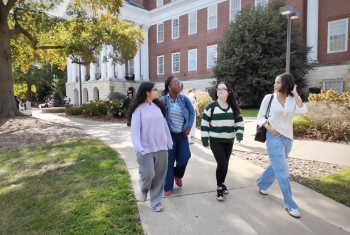
- Phase One (Early Spring): Preliminary meetings between university administrators and student leaders were held to establish the core values of the initiative: transparency, vulnerability, and mutual respect.
- Phase Two (Mid-Semester): Small-group cohorts were formed, consisting of a diverse mix of students from both institutions. These cohorts participated in guided exercises designed to surface underlying assumptions about race, socioeconomic status, and institutional identity.
- Phase Three (Current Stage): The production of the video series, including the feature "Connecting on Campus," marks the public-facing dissemination of these lessons. The goal is to document the emotional trajectory of students as they move from initial hesitation to authentic connection.
Data-Driven Insights on Social Bridging
Supporting the initiative is a body of evidence suggesting that institutional interventions significantly improve student outcomes related to empathy and social integration. According to longitudinal studies on campus climate, students who engage in regular, high-quality intergroup contact report a 35% increase in "perspective-taking" abilities—the cognitive capacity to understand the world from another person’s viewpoint.
Furthermore, data from the American Council on Education suggests that graduates who participated in cross-cultural dialogue programs during their undergraduate years are more likely to work in diverse environments and demonstrate higher levels of civic engagement in their post-collegiate lives. The BSU-UMD project aligns with these findings by prioritizing "emotional literacy"—a skill set that includes identifying one’s own triggers and managing interpersonal conflict with curiosity rather than defensiveness.
Perspectives from the Field
Student participants have described the experience as both challenging and necessary. One participant noted that the most significant barrier to the program was not ideological disagreement, but the initial fear of saying the "wrong thing" or being misunderstood. By creating a space where intellectual and emotional risk is rewarded, the facilitators have enabled students to move past these inhibitions.
"The courage to expand our circles isn’t about ignoring our differences," said a representative from the Greater Good Science Center, which has been instrumental in providing the pedagogical framework for the program. "It is about leaning into those differences with the understanding that our collective well-being is inextricably linked. When students from a historically underrepresented institution and those from a large state research university sit down to talk, they aren’t just exchanging ideas; they are dismantling the walls that keep our society fragmented."

Implications for Higher Education
The broader impact of this initiative extends beyond the borders of the two Maryland campuses. As the nation faces persistent questions regarding equity and inclusion, the model established by Bowie State and the University of Maryland offers a blueprint for other institutions. The implications are three-fold:
- Curriculum Integration: The success of this initiative suggests that social-emotional learning (SEL) should be integrated into higher education, not just primary or secondary schools.
- Policy Shifts: Universities are encouraged to incentivize cross-campus partnerships, providing funding and administrative support for initiatives that bring students into contact with outside peer groups.
- Societal Resilience: By equipping the next generation of leaders with the tools to navigate disagreement, universities are fulfilling their mandate to serve the public good.
Addressing Value Collisions
A common theme in the video series is the phenomenon of "staying curious when values collide." In an era where online discourse often devolves into hostility, the BSU-UMD initiative emphasizes the importance of the pause. Students are taught to view moments of disagreement not as a signal to withdraw, but as a critical opportunity to investigate the values driving their peer’s perspective.

This approach is mirrored in related programs featured by the Greater Good Science Center, such as those held at the Iliff School of Theology, where participants learn to manage the psychological discomfort that arises when fundamental beliefs are challenged. The scientific consensus, supported by these programs, is that curiosity functions as an emotional regulator, lowering the physiological stress response that usually accompanies social conflict.
Future Trajectory
As the program enters its next phase, the organizers plan to expand the number of participating students and incorporate more diverse academic departments. The long-term goal is to move from episodic workshops to a permanent, embedded component of the student experience.

The "Connecting on Campus" initiative serves as a timely reminder that while the structural problems of inequality and prejudice are immense, the individual capacity for connection remains a potent, underutilized resource. By fostering environments where empathy is treated as a skill to be honed rather than an abstract concept, Bowie State University and the University of Maryland are contributing to a necessary evolution in how young adults interact with one another.
The documentation provided by these videos will continue to serve as a resource for educators, administrators, and students nationwide who are seeking to replicate these results. As the featured content demonstrates, the process of building a more loving and just world begins with the fundamental, sometimes difficult, but always rewarding act of listening to the person sitting across from you. The future of democratic participation may well depend on the ability of the next generation to master this specific, essential form of courage.