Trump Threatens Further Strikes on Iran as U.S. Generals Warn of Overstretched Forces

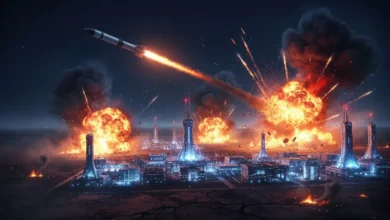
The escalating confrontation between the United States and Iran has reached a volatile inflection point, characterized by direct military engagement, the effective closure of a critical global energy artery, and growing friction between the White House and the Pentagon. Following a retaliatory missile strike by Iranian forces on the Muwaffaq Salti Air Base in Jordan, President Donald Trump declared on August 31 that the United States would respond with significant force. This rhetoric, coupled with social media commentary suggesting the potential targeting of Iran’s Kharg Island energy hub, has sent shockwaves through global energy markets, with Brent crude surging 2.5% to $90.35 per barrel.
The current hostilities represent the culmination of months of deteriorating diplomatic relations and the total collapse of the June ceasefire framework. As the administration signals a policy of "all options open," senior U.S. military leadership has expressed profound concern regarding the sustainability of current operations. A series of warnings from the heads of the Army, Navy, and Air Force, as well as commanders of regional combatant commands, underscores a growing strategic anxiety: that a prolonged, high-intensity conflict with Iran risks exhausting U.S. munitions stockpiles and leaves the nation vulnerable to threats in other global theaters, including Europe and the Pacific.
A Chronology of Escalation: From Blockades to Missile Exchanges
The current crisis did not emerge in a vacuum but is the result of a long-standing "gray zone" conflict that has progressively shifted toward conventional warfare. The timeline of recent volatility highlights a rapid deterioration:
- April 2026: A U.S.-led naval blockade of Iranian ports commences following the collapse of marathon diplomatic talks in Islamabad. This move triggered an immediate global spike in oil prices and solidified the Strait of Hormuz as a primary theater of conflict.
- Late August 2026: Tensions flared when the U.S. conducted strikes against two Iranian rocket launchers near the Strait of Hormuz, which officials claimed were preparing to deploy sea mines.
- August 30–31, 2026: Iran responded by launching a barrage of missiles at the Muwaffaq Salti Air Base in Jordan. Jordan reported the interception of eight missiles, though the incident confirmed the reach of Iranian capabilities against U.S. personnel.
- September 10, 2026: The Islamic Revolutionary Guard Corps (IRGC) destroyed a U.S. Saildrone Explorer reconnaissance vessel, broadcasting footage of the unmanned craft’s destruction—a symbolic assertion of control over the waterway.
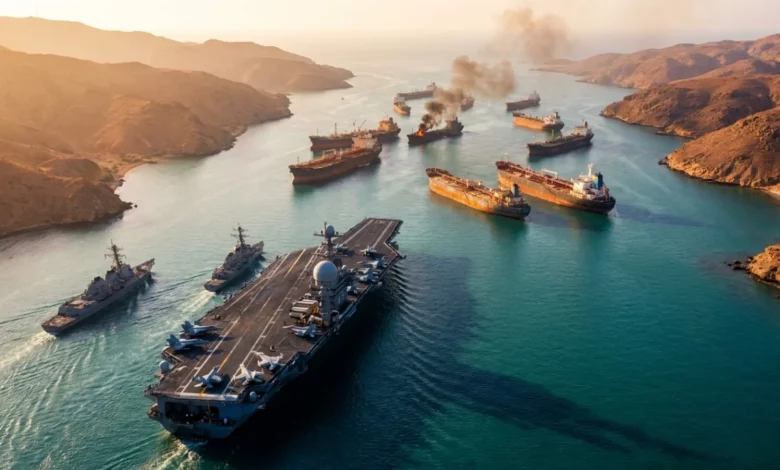
Throughout this period, the Strait of Hormuz has remained effectively impassable for commercial shipping. The combination of active minefields, recurring ship seizures, and the total withdrawal of maritime insurance coverage has crippled the flow of energy exports, creating a de facto isolation of regional markets.
The Strategic Divide: Military Readiness vs. Executive Policy
A critical fissure has emerged between the Trump administration’s tactical objectives and the professional assessment of the U.S. military establishment. According to reports from the Washington Post, the leadership of U.S. European Command (EUCOM), U.S. Pacific Command (INDOPACOM), and U.S. Southern Command (SOUTHCOM) issued a formal "non-concur" response to an August 14 order from Secretary of War Pete Hegseth.
The order mandated the extension of deployments for U.S. forces in the Middle East through September and into 2027. While the commanders agreed to execute the order—adhering to the civilian chain of command—their formal dissent reflects a deeper organizational fear. Military analysts note that the U.S. has been forced to divert significant military assets from Europe and East Asia to Central Command (CENTCOM) to sustain the current operational tempo in the Middle East. This reallocation has left gaps in other regions, which critics argue emboldens adversaries elsewhere, such as Russia’s posture toward NATO or potential shifts in the Taiwan Strait.
The logistical burden is perhaps most visible in the dwindling supply of advanced weaponry. Operation "Epic Fury" has placed a "beyond critical" strain on the U.S. inventory of missile interceptors. Specifically, the high rate of expenditure of Patriot batteries—essential for defense against ballistic missiles—has created a supply chain bottleneck. Reuters reports that the U.S. has nearly exhausted its stockpiles of long-range precision munitions, including Army Tactical Missile Systems (ATACMS). For a military designed for global power projection, this depletion represents a significant erosion of conventional deterrence.
Economic Fallout and the Global Energy Crisis
The geopolitical tension has translated directly into domestic and international economic instability. The Strategic Petroleum Reserve (SPR) has been drawn down to 285.4 million barrels, the lowest level since 1982. This depletion limits the administration’s ability to buffer the economy against further oil price shocks, should the conflict escalate to target key infrastructure like Kharg Island.
In the United States, the agricultural sector, particularly in the Corn Belt, is reeling from the consequences of these geopolitical choices. Diesel prices have soared to over $6 per gallon, a 60% increase year-over-year, significantly raising the overhead for food production and transport. This has led to the most severe economic pressure on American farmers in four decades, complicating the political landscape ahead of the midterm elections.
Internationally, the BRICS nations have adopted a cautious but critical stance. In a joint declaration on September 12, the group expressed "deep concern" regarding the conflict, calling for a multilateral approach to regional security. China, in particular, has openly condemned the proposed naval blockades, characterizing the U.S. strategy as "irresponsible and dangerous." These reactions suggest that the U.S. is facing growing diplomatic isolation as the conflict continues to threaten global supply chains.
Analysis: The Perils of Entanglement
The current impasse is viewed by some experts, such as former Pentagon analyst Scott Ritter, as a failure to balance national interest with the dangers of regional entanglement. In his analysis, the U.S. policy toward Iran is increasingly driven by specific alliances rather than long-term strategic necessity. By allowing the Iranian nuclear program dispute to expand into a wider regional war, the U.S. risks a conflict that transcends the Middle East, drawing in global powers and complicating international security architectures.
The administration’s current position—that an agreement may only be possible once the current Iranian regime is toppled—represents a shift from containment to regime change. U.S. Energy Secretary Chris Wright recently articulated this, noting that an agreement might be replaced by the systematic destruction of Iranian nuclear capabilities. However, this policy relies on the assumption that the U.S. can sustain the necessary military pressure indefinitely.
As the midterm elections approach, President Trump has promised that the conflict will end "immediately" thereafter, with oil prices expected to plummet. Whether this is a achievable tactical goal or a rhetorical bridge to the next phase of the election cycle remains a subject of intense debate. For now, the reality on the ground remains frozen in a cycle of missile strikes, naval tension, and a military hierarchy struggling to reconcile its global commitments with a war that shows no sign of cooling.
The combination of a depleted arsenal, economic strain on the domestic front, and a lack of clear diplomatic exit ramps suggests that the coming weeks will be a defining period for U.S. foreign policy. With no independent confirmation of new operational plans, the world watches to see if the rhetoric of "hitting them hard" will lead to a broader conflagration or if a new framework for de-escalation can be found before the window for negotiation closes entirely.