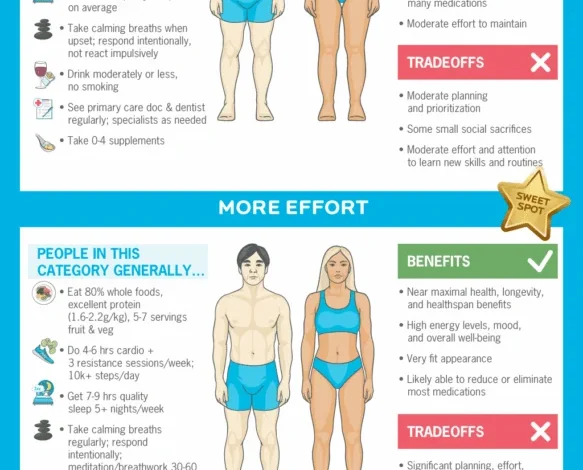
The modern quest for extended longevity has transcended medical necessity to become a central pillar of contemporary lifestyle culture. From high-profile biohackers like Bryan Johnson to influential health podcasters such as Dr. Peter Attia and Dr. Andrew Huberman, the narrative surrounding aging has shifted from passive acceptance to active optimization. Yet, this surge in "longevity culture" has created a paradox: while the goal is to live longer and healthier, the barrier to entry—often framed as an endless array of complex protocols, costly supplements, and time-intensive habits—has left the general public feeling that peak health is an exclusive pursuit for the wealthy or the obsessive.

The Evolution of the Longevity Movement
Over the past decade, the democratization of health data has fueled a massive industry. Wearable technology, at-home blood panels, and the proliferation of "longevity influencers" have transformed health management into a data-driven science. However, this shift toward extreme optimization often ignores the law of diminishing returns.

Historical data suggests that the most significant gains in life expectancy are achieved through the adoption of foundational behaviors rather than experimental biohacking. While the cultural fascination with "cutting-edge" interventions—such as cold plunges, hyperbaric oxygen therapy, and specific pharmacological cocktails—dominates social media feeds, the clinical reality remains anchored in the basics: movement, nutrition, sleep, and social cohesion.

The Foundational Pillars of Human Health
Clinical evidence consistently demonstrates that the most effective health interventions are the ones that are accessible and sustainable. According to longitudinal studies from institutions like Harvard Medical School, the divergence between the "average" lifespan and the "optimal" lifespan is primarily driven by the consistent execution of four core pillars.

1. Movement as Medicine
The "Extreme Exercise Hypothesis" suggests a U-shaped curve regarding physical activity. While sedentary lifestyles are a primary driver of chronic disease, including cardiovascular illness and metabolic dysfunction, there is a point where the benefits of exercise plateau. Data indicates that achieving 7.5 to 15 MET-hours (Metabolic Equivalent Hours) per week provides the steepest decline in all-cause mortality risk. Beyond this threshold, additional exercise continues to provide benefits, but at a decreasing rate. For older populations, the inclusion of resistance training is critical; it is not merely about aesthetic muscle growth but about maintaining bone density and preventing falls—a leading cause of mortality in adults over 65.

2. The Nutritional Continuum
Nutritional science has moved away from rigid dieting toward a focus on food processing levels. The consensus among researchers is that 70 to 80 percent of an individual’s caloric intake should consist of whole or minimally processed foods. Ultra-processed foods (UPFs) have been linked to over 30 adverse health outcomes, including obesity, type 2 diabetes, and depression. A study involving nearly 10 million participants underscored that diets high in UPFs correlate with a 62 percent increase in all-cause mortality. The recommendation is simple: prioritize whole proteins, fiber-rich fruits and vegetables, and limit intake of hyper-palatable, industrial-grade food products.

3. The Biological Necessity of Sleep
Sleep is often the first casualty of a high-performance lifestyle, yet it is the most potent recovery tool available. Research indicates that individuals who secure seven to nine hours of quality sleep nightly have a significantly lower risk of dementia and cardiovascular disease. Deep sleep is essential for the glymphatic system, which clears metabolic waste—including beta-amyloid plaques—from the brain. Conversely, chronic sleep deprivation acts as a systemic stressor, elevating cortisol levels and inflammation markers that mirror the effects of poor diet and lack of exercise.

4. The Social Determinant of Longevity
Perhaps the most overlooked factor in the longevity conversation is social connection. The Harvard Study of Adult Development, which has tracked participants for over 87 years, identifies strong social relationships as the single most significant predictor of life satisfaction and longevity. The mortality risk associated with chronic social isolation is statistically comparable to smoking 15 cigarettes per day. This finding challenges the "lone wolf" mentality often associated with extreme biohacking; true health is inherently communal.

The Economic and Opportunity Costs of Optimization
The "optimizer" lifestyle requires a significant investment of both capital and cognitive load. A comparative analysis of a "moderate effort" individual versus an "optimizer" reveals that the latter may spend three to four times the amount of time and money to achieve a marginal increase in health outcomes.

For the average person, the cost of specialized testing, frequent diagnostic imaging, and an extensive supplement regimen can exceed $10,000 annually. When these efforts are added to the time required for daily tracking, the result is often "optimization fatigue." This fatigue frequently leads to a total abandonment of health habits, as the psychological burden of maintaining a "perfect" protocol becomes unsustainable.

Bridging the Gap: The Realistic Approach
The implications of this data for public health are clear: we must pivot away from the culture of perfectionism and toward a culture of consistency. For the vast majority of the population, "peak" health is not found in the latest supplement or the most expensive diagnostic test; it is found in the "boring" basics performed with 80 to 90 percent consistency.

- Clarify Personal Objectives: Define what "healthspan" means to you. Is it the ability to remain mobile into your 90s? Is it the mental clarity to pursue intellectual interests? These goals should dictate your effort level.
- Prioritize Foundational Habits: Before investing in fringe technologies, ensure you are meeting the minimum requirements for movement, nutrition, sleep, and social connection.
- Guard Against Obsession: Health optimization should not come at the expense of "Deep Health," which includes emotional, mental, and existential well-being. When the pursuit of health begins to erode your quality of life, it has become counterproductive.
Conclusion: A Sustainable Path Forward
The longevity industry will continue to promote high-cost, high-complexity interventions as the key to immortality. However, the journalistic and clinical reality is far more grounded. The most successful aging strategy is a balanced approach that respects the biological requirements of the human body while leaving space for a full, meaningful life. By focusing on the foundational behaviors that have been scientifically validated for decades, individuals can secure the vast majority of health benefits without falling victim to the diminishing returns and high costs of the "optimization" trap. The goal of health should be to support the life you want to lead, not to turn the maintenance of your body into a full-time, high-stress occupation.